



Indonesia’s Animation Industry Seeks Incentives and Global Growth
- 02 Sep 2026 08:36 WIB
- Voice of Indonesia
Poin Utama
- Indonesia’s animation industry is projected to reach around IDR 882 billion (USD 54.1 million) in 2026, up from IDR 798.15 billion in 2025.
- The country has 262 animation studios employing 3,448 people, with 308 original animation works active on global platforms.
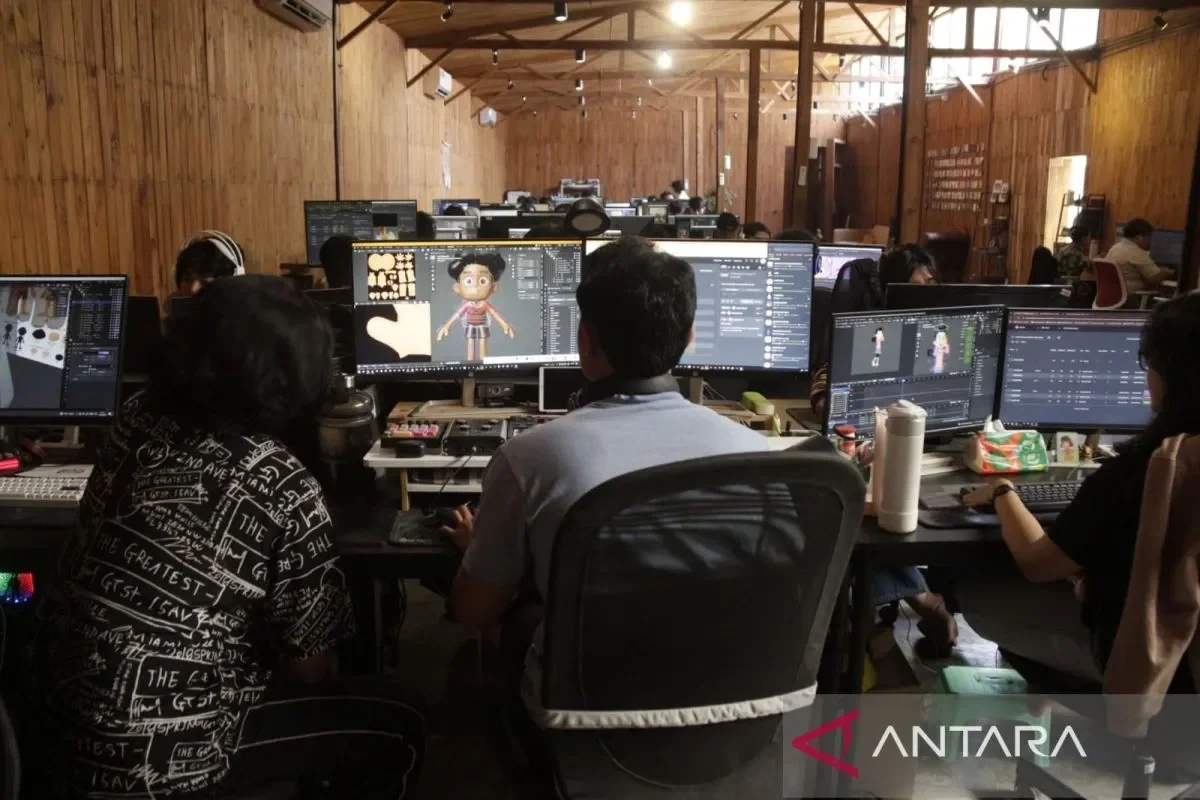
RRI.CO.ID, Yogyakarta - Indonesia’s animation industry, projected to grow to hundreds of billions of rupiah by 2026, will not reach its full potential if local studios continue to serve merely as outsourced production hands for foreign projects. Industry players are urging the government to offer production incentives and pursue cross-border deals to attract investment and elevate local creators globally.
According to the Creative Economy Ministry’s Indonesia Animation Report 2026, Indonesia has 262 animation studios employing a total of 3,448 people. These studios have produced 308 original animation works currently active across various global platforms.
The value of Indonesia’s animation industry reached IDR 798.15 billion (USD 45.0 million) in 2025, more than 3.3 times higher than a decade earlier. It is projected to reach around IDR 882 billion (USD 54.1 million) in 2026.
Indonesian animation studios’ works and services have also reached global markets and produced hundreds of original animated titles. Dipadira Studio in Sleman, Yogyakarta, is among those contributing to that growth.
For Dipadira Studio Founder, Diki Suprayogi, establishing an animation studio was not initially part of a grand plan. When he left his previous job, his simple intention was to take a year off. However, several of his colleagues joined him, and he eventually established his own studio.
Dipadira Studio was first developed in late 2018 and officially began operations in February 2019. Diki, who had enjoyed animated films since childhood, studied at the Indonesian Institute of the Arts Yogyakarta.
He previously worked at Infinite Studios in Batam before continuing his career as an animator in Singapore and Jakarta. That experience became the foundation for building the studio with his colleagues. Initially, Dipadira had only around seven members and operated out of a rented house in Bintaro that was converted into a studio. As the team grew, they moved to Yogyakarta.
“We moved to Yogyakarta and expanded the team. There were 20 people in one house until it was full, and now we have a total of 100 people,” said Diki on Tuesday, September 1, 2026.
Dipadira now operates from two bases, in Yogyakarta and Malang. The number of employees at each location is deliberately limited to around 50 because Diki wants everyone in the studio to remain familiar with one another.
Over its seven years of operation, Dipadira Studio has been involved in a number of national and international animation projects. Diki said the studio had worked on projects for major United States companies, including Disney and DreamWorks. Dipadira also contributed to the animated film Jumbo, which set a record as the highest-grossing Indonesian film of all time, attracting more than 10 million cinema-goers.
While service-based work remains the studio’s primary source of sustainability, Dipadira has also developed the ambition to own its own intellectual property (IP). That ambition gave rise to a three-dimensional animated series titled Kwartet.
Diki said around 90 percent of Dipadira’s current work still comes from animation services, both for domestic and overseas clients. This business model is more stable because the studio receives projects and has greater certainty over its income.
Developing Intellectual Property (IP) carries greater risks. However, if it succeeds in finding an audience and building a fan base, its value can grow considerably.
For Diki, IP can be compared to building a celebrity. Once a character becomes known and liked by the public, a wide range of possibilities can emerge, from brand collaborations and licensing to games and derivative products. For that reason, Dipadira does not view Kwartet solely as an animated series; it also sees the need to introduce its characters to audiences.
Diki said one of the Indonesian animation industry’s challenges is maintaining a balance between the number of available workers and the jobs on offer. The number of schools and educational institutions teaching animation continues to grow, as does the supply of new talent. However, the growth in the number of studios and projects has not always kept pace with the human resources available.
This differs from several years ago, when studios faced a shortage of workers with the skills required for animated-series production. For that reason, stronger links between education and industry are important. Dipadira subsequently established a partnership with State Vocational High School 4 Malang.
According to Diki, many students from the school undertake internships at Dipadira and later work at various studios after graduating. However, he said the purpose of education should not be limited to producing workers for a single company.
Based on that view, Dipadira developed Akselo, a learning platform expected to be accessible to schools free of charge. The platform is designed to connect educational materials with industry needs. ***
News Recomendation
Memuat berita terbaru.....