



RRI.CO.ID, Semarang - The transition to a circular economy cannot rely on regulations alone. A collaborative study involving researchers from Indonesia, Malaysia, and Nigeria has found that behavioural intention, environmental values, and ecological awareness are important factors in encouraging sustainable practices.
The study brought together researchers from Universitas Negeri Semarang (UNNES), Indonesia, Universiti Pendidikan Sultan Idris (UPSI), Malaysia, and the University of Maiduguri, Nigeria. It examined why people choose to sort waste, recycle, reuse products, and adopt other environmentally responsible practices.
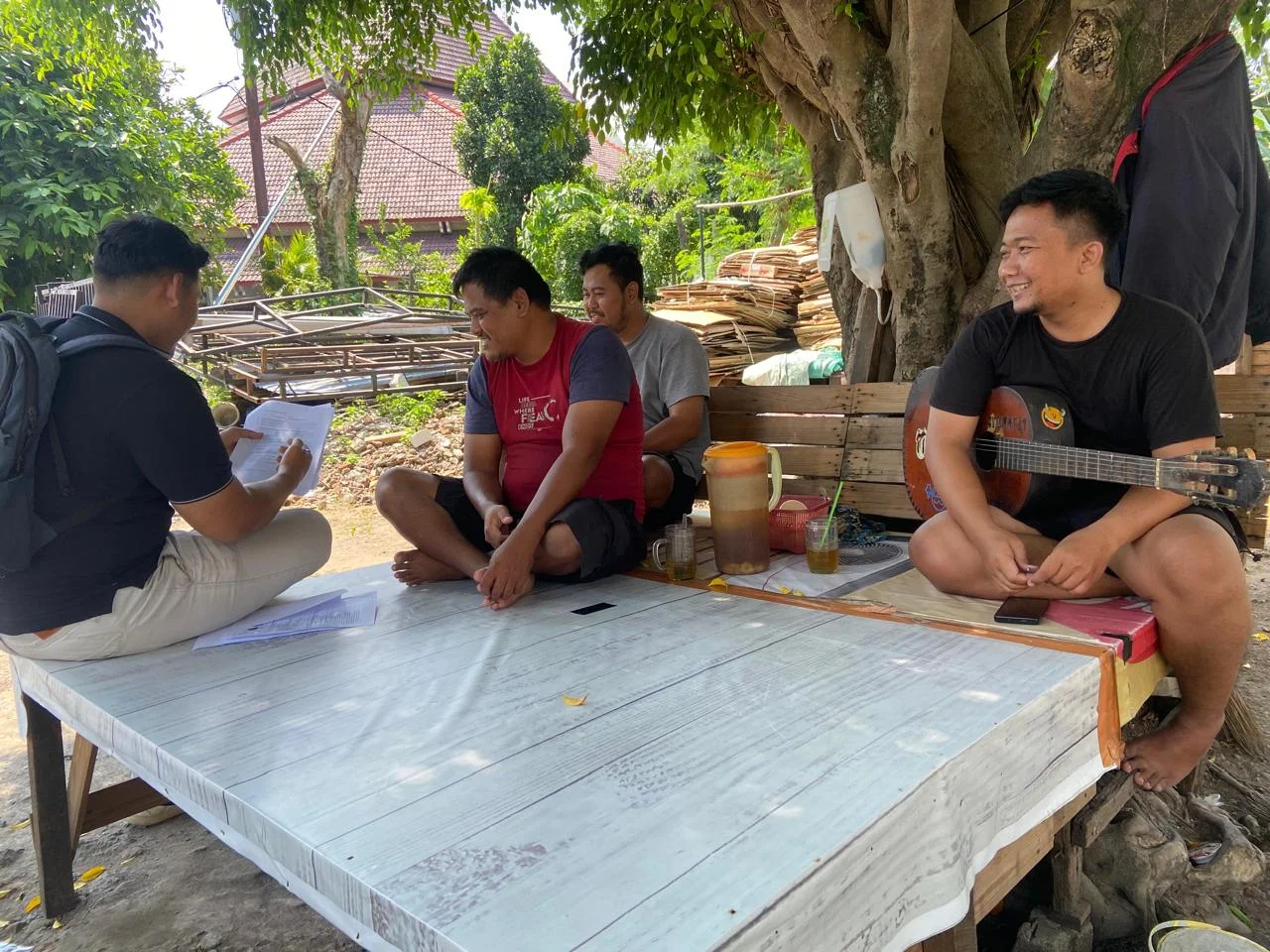
The research involved 275 households, comprising 165 in Indonesia and 110 in Nigeria. Using Structural Equation Modeling and Multi-Group Analysis, the researchers examined factors influencing circular economy behaviour and compared patterns between the two countries.
In Nigeria, Muhammad Bello Ibrahim of the University of Maiduguri was involved in the field research conducted in May 2026. He said behavioural intention emerged as the strongest predictor of circular economy practices.
“We found that behavioural intention remains the strongest predictor of circular economy practices,” Ibrahim said. He explained that individuals with stronger intentions to engage in environmentally responsible activities were more likely to translate those intentions into actual behaviour.
At the same time, some factors commonly emphasized in traditional behavioural theories did not show a significant influence. Social pressure and perceived behavioural control, or people's belief in how easily they can perform a behaviour, did not emerge as decisive factors in determining circular economy practices.
The study also highlighted environmental spirituality as a strong influence on people's willingness to adopt circular economy behaviours. “An individual's spiritual beliefs can significantly influence how they perceive and fulfil their responsibilities toward the environment,” Ibrahim added.
The researchers said the finding is consistent with the religious and cultural contexts of Indonesia and Nigeria, where faith and moral values can shape people's understanding of their responsibilities towards the environment. This suggests that ecological awareness may be influenced not only by rational considerations, but also by spiritual and religious values.
The comparison also revealed differences between the two countries. Dr. Edi Kurniawan of UNNES, who led the study, said circular economy behaviour in Nigeria was influenced primarily by personal attitudes towards the environment.
“In contrast, respondents in Indonesia were influenced more strongly by moral norms, support from their surrounding communities, and enabling policy environments,” Kurniawan said. He added that the differences indicate that strategies for promoting circular economy practices need to consider local social and cultural contexts.
George Godwin Glanda of the University of Maiduguri, who specializes in agriculture and rural development, said the findings are expected to contribute to the development of pro-environmental behaviour models in developing-country contexts. The research could also provide practical input for city governments developing behaviour-based education programmes and policies for sustainable urban development in line with SDG 11 and SDG 12.
For the researchers, the transition to a circular economy extends beyond technology and policy. “It is fundamentally a process of transforming how people understand, value, and interact with the environment around them,” Glanda said.
Writer: Dr Edi Kurniawan M.Pd, Lecturer at Department of Geography, Universitas Negeri Semarang
News Recomendation
Memuat berita terbaru.....