



ITB Launches Living Lab to Tackle Plastic Waste
- 10 Jun 2026 17:24 WIB
- Voice of Indonesia
Key Points
- ITB-PISCES Living Lab launched at IPST Sabuga to co-create evidence-based solutions for plastic waste.
- Collaboration hub connects researchers, government, communities, and businesses to test real-world innovations..
- Circular economy approach strengthens sustainability, linking science, policy, and society to reduce plastic pollution.
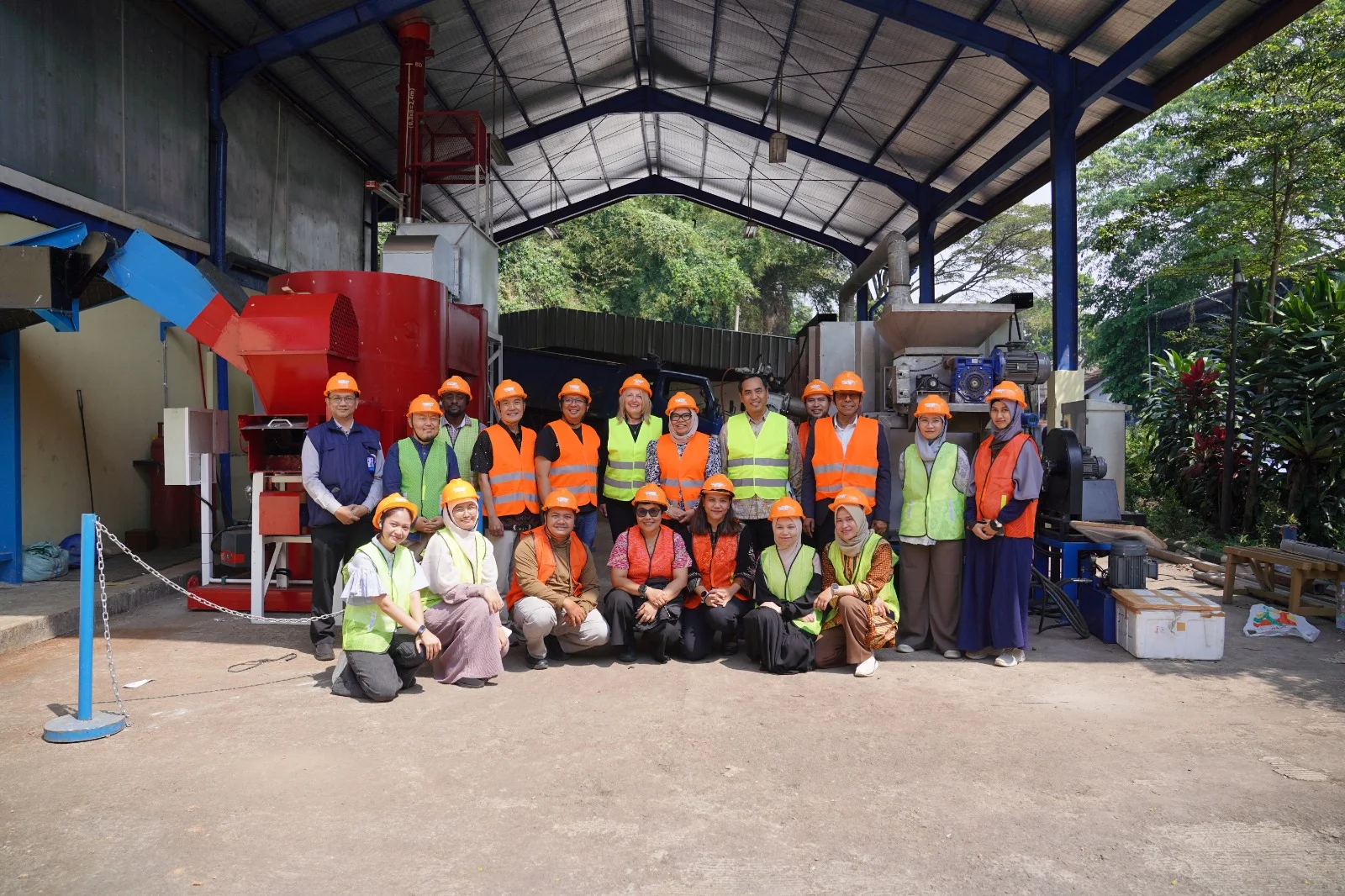
RRI.CO.ID, Bandung - Bandung is taking a bold step toward sustainable innovation. On Tuesday, June 9, 2026, Institut Teknologi Bandung (ITB), in collaboration with the PISCES (Plastics in Indonesian Societies) Programme, inaugurated the Living Lab ITB-PISCES at the Integrated Waste Processing Facility (IPST) Sabuga, Ganesha Campus.
The initiative is designed as a collaborative hub where researchers, government, communities, businesses, and civil society organizations can co-create evidence-based solutions for plastic waste management.
This marks the second living lab under PISCES, following the first in Banyuwangi, with a dedicated focus on plastic waste. The facility allows ideas and innovations to be tested and refined in real-world settings, ensuring they meet community needs.
Coordinator of the Living Lab ITB-PISCES and Professor at ITB’s Faculty of Civil and Environmental Engineering, Emenda Sembiring, explained that the concept grew out of multidisciplinary research on plastic waste in Indonesia, funded by UK Research and Innovation (UKRI).
“Living labs connect research, innovation, and real-world challenges. They help us see whether solutions can be developed and implemented by communities,” he said, as quoted on ITB's official website..
Emenda hopes the lab will reduce waste leakage into the environment and serve as a model adaptable to local contexts across Indonesia.
ITB’s Director of Community Service and Expertise, Zulfiadi, praised the collaboration, calling the lab “not just a research facility, but a collaborative movement linking learning, innovation, and community service.” He emphasized its role in supporting the green economy and sustainability.
From the government side,, Assistant Deputy for Circular Economy and Environmental Impact at the Coordinating Ministry for Food Affairs, Rofi Alhanif, highlighted the urgency of waste management.
He stressed that circular economy approaches are vital to reduce waste, improve resource efficiency, and support climate-friendly policies. “The living lab is a commitment to tackling plastic waste through science, social engagement, and policy integration,” he noted.
International partners also underscored the importance of the initiative. Susan Jobling of Brunel University London, principal investigator of the PISCES Programme, pointed out Indonesia’s complex challenges in plastic waste management, spanning social, economic, cultural, and infrastructural dimensions.
She explained that PISCES (2021–2025) was designed to support Indonesia’s national strategy by combining environmental, technical, social, and economic perspectives. “Living labs are real-world innovation environments where stakeholders jointly design, test, and refine solutions,” she said.
Prof. Susan added that the ITB-PISCES Living Lab will serve as a platform for experimentation, education, and entrepreneurship, while offering opportunities for replication across regions and integration into policy.
Through this initiative, ITB strengthens its role in ensuring research translates into practical impact. The Living Lab ITB-PISCES is expected to advance inclusive, innovative, and sustainable waste management practices, contributing to Indonesia’s broader efforts in building a circular economy and reducing plastic pollution. ***
News Recomendation
Loading latest news.....