



Tracing Early Humans Through Indonesia's Karst Regions
- 11 Mei 2026 14:29 WIB
- Voice of Indonesia
Key Points
- The Indonesian Karst Museum in Wonogiri offers numerous illustrations and depictions of prehistoric remains in the karst region.
- Discoveries of human specimens and ancient paintings provide evidence of prehistoric life in Indonesia's karst regions.
RRI.CO.ID, Jakarta – Indonesia's karst regions hold a profound wealth of human civilizational history and breathtaking geological evolution. These remarkable natural phenomena stand as a vital heritage, enriching both scientific knowledge and the cultural identity of the nation.
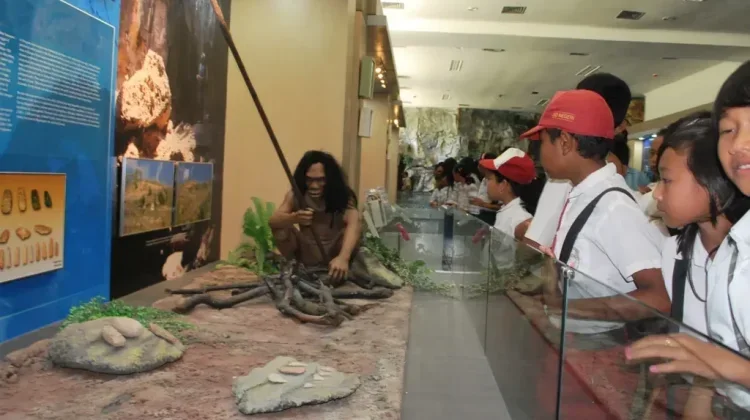
Among the most notable is the Indonesia Karst Museum in Wonogiri, Central Java, which houses artefacts and prehistoric human specimens discovered across the archipelago.
"There are several samples of prehistoric humans found inside caves," said Prasetyaningsih, a guide at the Wonogiri Karst Museum, on Sunday, May 10, 2026.
She noted that the collection includes specimens linked to Homo floresiensis as well as ancient humans from the Pacitan tradition. These findings serve as compelling evidence that karst landscapes once functioned as shelters where early humans struggled and endured to survive.
The region's geological history also documents a dramatic transformation in the course of the ancient Bengawan Solo River. As the landmass shifted upward, the river's flow was redirected from the southern coast northward across Java, a striking testament to the dynamic forces that have shaped the island over millennia.
Beyond Wonogiri, a rich trove of historical significance has also been uncovered at the Istana Karst site in Maros. Local Tourism Awareness Group (Pokdarwis) Chairperson Asmar revealed that thirteen cave points within the area carry exceptionally high historical value.
"There are ancient paintings, towering karst formations, and labyrinthine caves here," Asmar said, describing the site's many attractions.
The prehistoric paintings adorning the cave walls stand as tangible proof of human activity dating back thousands of years. The site has drawn considerable international attention, with foreign tourists frequently visiting to witness firsthand the historical evidence preserved within these caves. Many come with deep enthusiasm, eager to study early human life through the symbols and archaeological remains left behind.
Karst landscapes, in their vast and layered complexity, hold countless secrets of life from the distant past. Visitors can observe how these formations were once part of the ocean floor, shaped over millions of years into the towering limestone terrain that exists today.
Through such exploration, the public is encouraged to develop a deeper appreciation for history and a stronger commitment to preserving Indonesia's geological heritage. These natural wonders must be carefully protected so that the story of human civilization is not swallowed by the passage of time. (Annaila Azzahra/EN)
News Recomendation
Loading latest news.....