



Omah UGM Offers Journey Through Javanese Architecture, Culture
- 20 Mar 2025 17:47 WIB
- Voice of Indonesia
/7jc8clyqn9jpijr.jpeg)
KBRN, Yogyakarta: Nestled within the narrow alleyways of Kotagede, Yogyakarta, lies a gem of Javanese architecture known as Omah UGM, or fondly called Joglo UGM.
This building is more than just a typical traditional house. It authentically represents Kotagede's unique dwellings with their meaningful Javanese spatial arrangements.
Hidden on Gang Soka in Bodon Hamlet, Jagalan Village, Kotagede Subdistrict, about 8 kilometers from downtown Yogyakarta, this cultural heritage building, now open to the public, invites visitors to explore the beauty and wisdom of traditional Javanese architecture.
Omah UGM stands as a silent witness to the passage of time, weaving harmony between the past and present in the heart of Kotagede.
"Joglo UGM is one of 80 traditional Javanese houses in Kotagede," says Ibu (Mrs) Muharjo, the caretaker of Omah UGM, on Thursday, March 20, 2025.
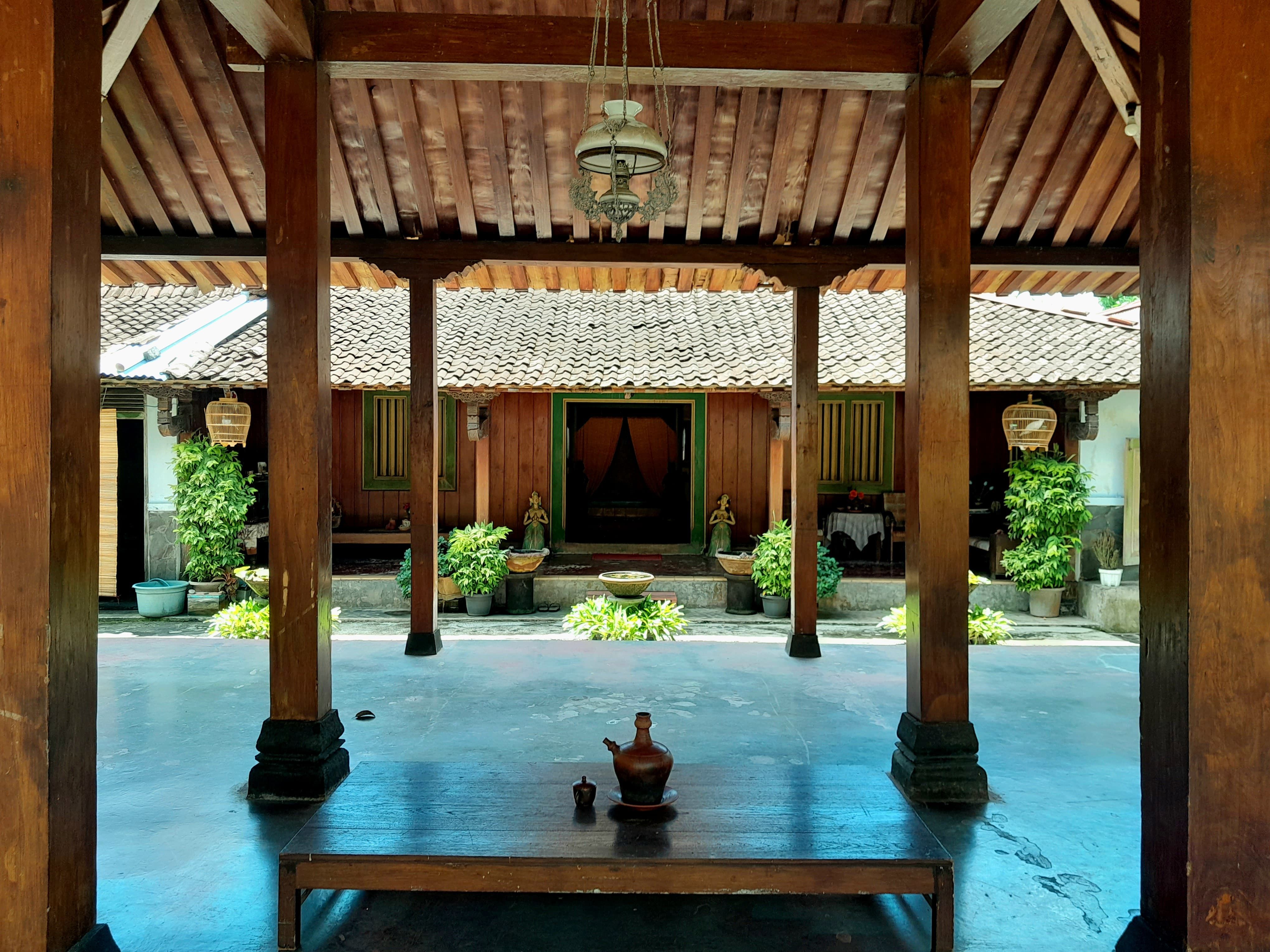
The pendapa (hall) of Omah UGM stood as a testament to the warmth and openness of Javanese hospitality. It serves as a welcoming space, a place where community thrived. (Photo: RRI English/Diva Rifdah Rizkia Puspitaningnala)
The 70-year-old woman recounts that Omah UGM was built in 1860 on a 900 square-meter plot. It was initially owned by a married couple, Parto Darsono. His wife was a batik artisan selling her products at Beringharjo Market, while her husband was a silversmith in Kotagede.
"As they were childless, the house was given to their nephew, an architecture lecturer at Gadjah Mada University (UGM)," Ibu Muharjo said.
She added that in 2007, UGM purchased the land, house, and its contents for IDR 250 million, then Sri Sultan Hamengkubuwono X of Yogyakarta Palace later inaugurated it as a cultural heritage site.
When a major earthquake struck Yogyakarta in 2006, Omah UGM stood resilient, preserving its authenticity. Although the roof and parts of its exterior walls sustained damage, the charm of this historic building remained undiminished.
The cool and serene atmosphere of the house provides immense comfort to visitors. Unsurprisingly, many linger and enjoy the tranquility of Omah UGM until late afternoon.
As an authentic representation of Kotagede's traditional houses, Omah UGM showcases the beauty of Javanese architecture with intricate details. The main building, or ndalem, houses three senthong (room) which once served as private spaces.
/v8ezpgkdbqmi763.jpeg)
The senthong in the ndalem (main building) of Omah UGM held profound symbolic significance, with its position and design reflecting the cultural values of the era. More than just a room, it embodied family, tradition, and served as the spiritual heart of the home. (Photo: RRI English/Diva Rifdah Rizkia Puspitaningnala)
"Inside the house, there are three senthong (rooms): the middle senthong for meditation, the right senthong for sleeping, and the left senthong for storing heirlooms," Ibu Marjono explains.
At the front, the pringgitan or emperan (veranda) warmly welcomes guests, while the spacious pendapa (front hall) now serves as a versatile space for community activities such as gymnastics, dance, and social gatherings.
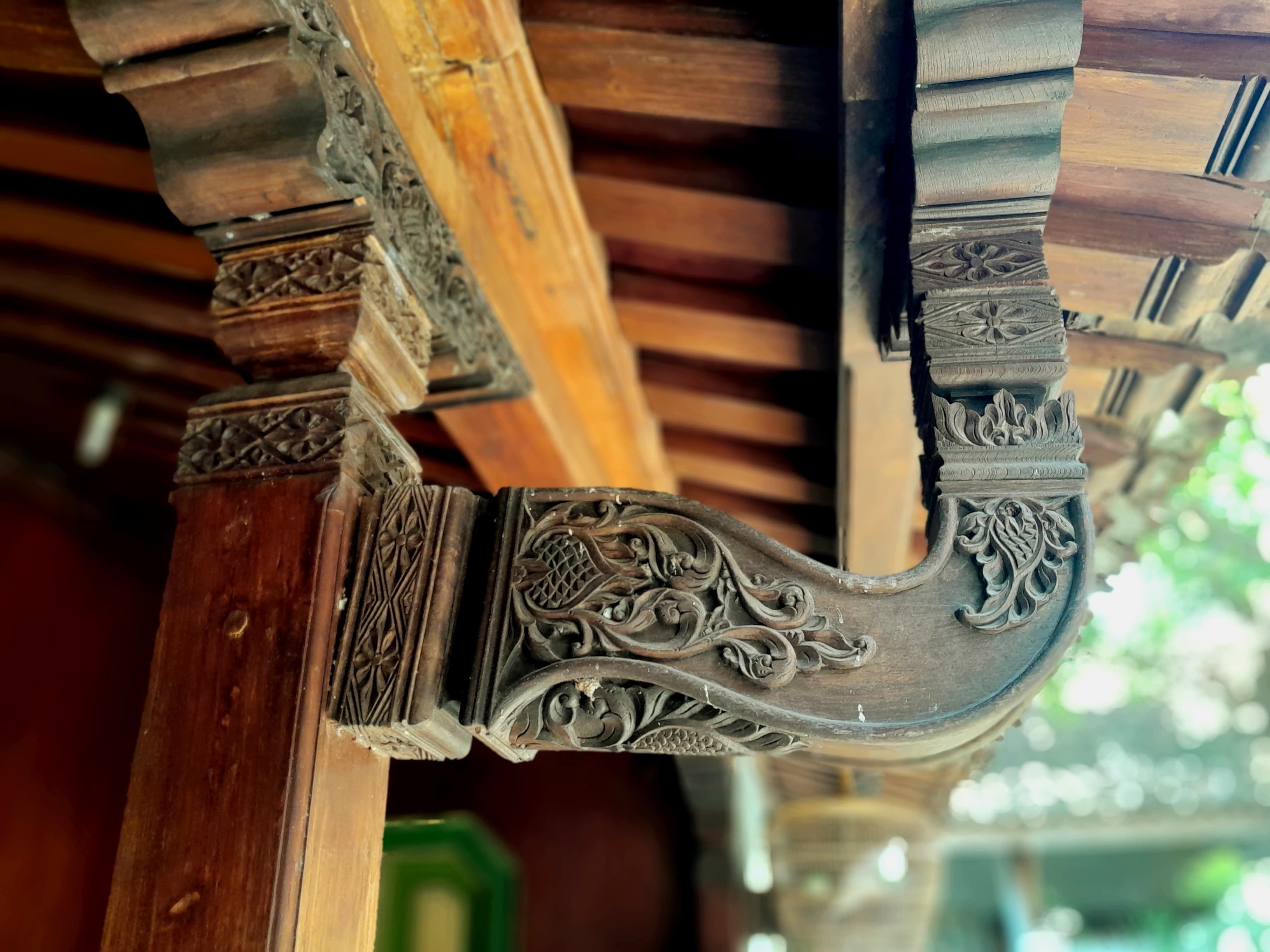
The bahu dhanyang, a console-like support for the tririsan (eaves), was a hallmark of Kotagede's traditional architecture. Shaped like a human upper arm (bahu), it was named for the spirit believed to protect the sacred place (dhanyang). Constructed from old teak, this element, like other parts of the house, proved its sturdiness against earthquakes. (Photo: RRI English/Diva Rifdah Rizkia Puspitaningnala)
The gandok tengen (right gandok) located on the right side of the ndalem, offers a resting area that was once exclusive for women, while the gandok kiwa (left gandok) provides sleeping quarters for men, as well as a dining area and storage for Mrs. Parto's batik collection, which now serves as a workspace for lecturers.
Gandok is an additional structure attached to the main building of a traditional Javanese house.
At the back, despite partial damage, the pekiwan (bathroom), pawon (kitchen), and sepen (food storage) still paint a vivid picture of traditional household life. Adding to its charm, beautiful alamanda plants grace the backyard, creating a refreshing and inviting atmosphere.
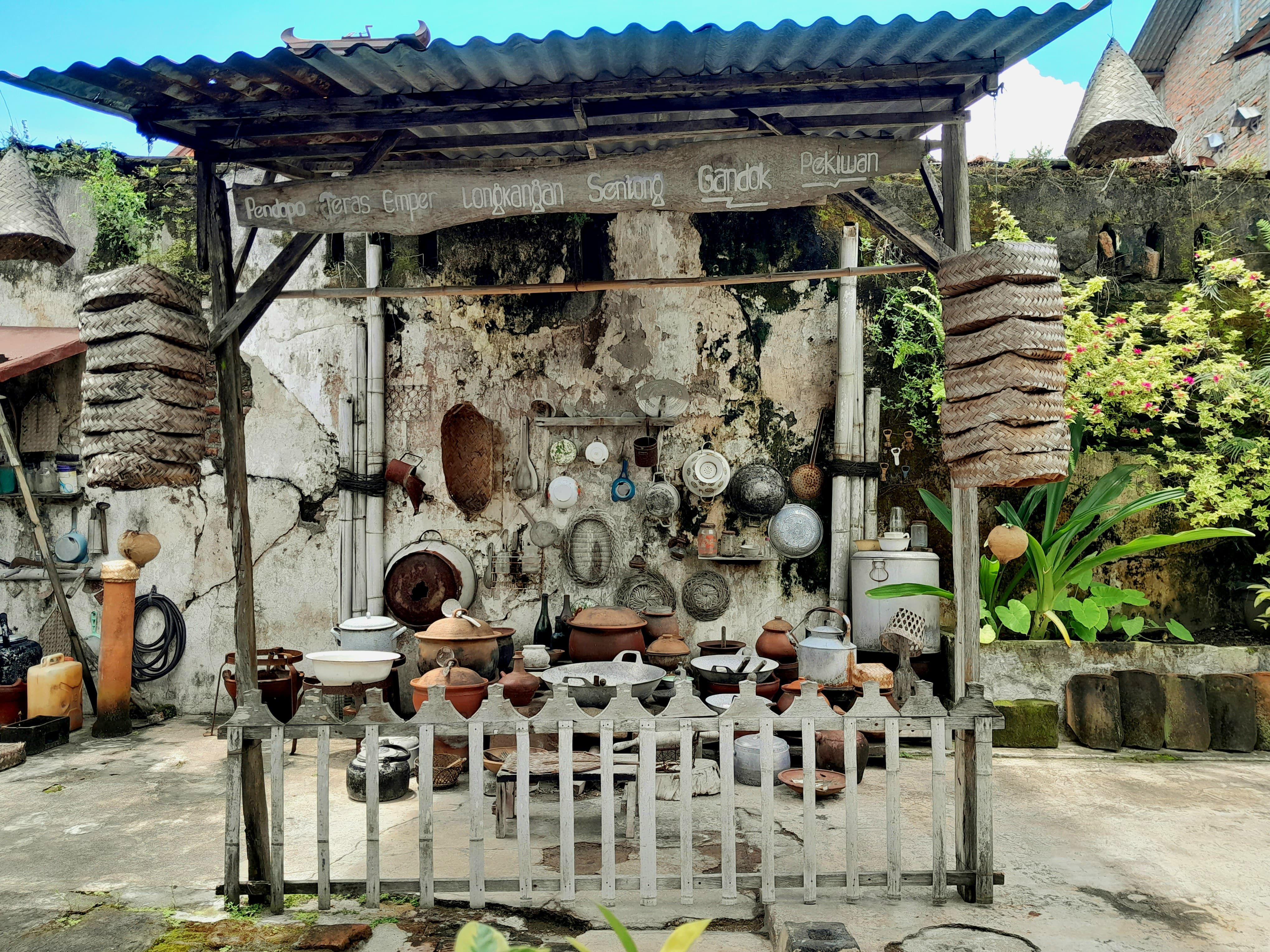
A sense of simplicity permeated the pawon (kitchen) behind the house. Traditional cooking utensils, displayed with care, evoked the warmth of a family kitchen. It was a space where the aroma of traditional dishes once filled the air. (Photo: RRI English/Diva Rifdah Rizkia Puspitaningnala)
Omah UGM also opens its doors for a pre-wedding photo location, utilizing the vintage and charming corners of the house as a unique backdrop. Visitors are eager to capture moments in every corner, enjoying the rich historical ambiance.
"Visitors only need to pay a cleaning fee of IDR 10,000 (USD 0,60) to visit. Omah UGM is open daily from 8 AM to 5 PM. I hope more people will visit while maintaining cleanliness, preserving, and cherishing this place," said Ibu Muharjo. ***
News Recomendation
Loading latest news.....