



Climate-Smart Rice Production Key to Addressing Drought Threats
- 14 Sep 2026 22:16 WIB
- Voice of Indonesia
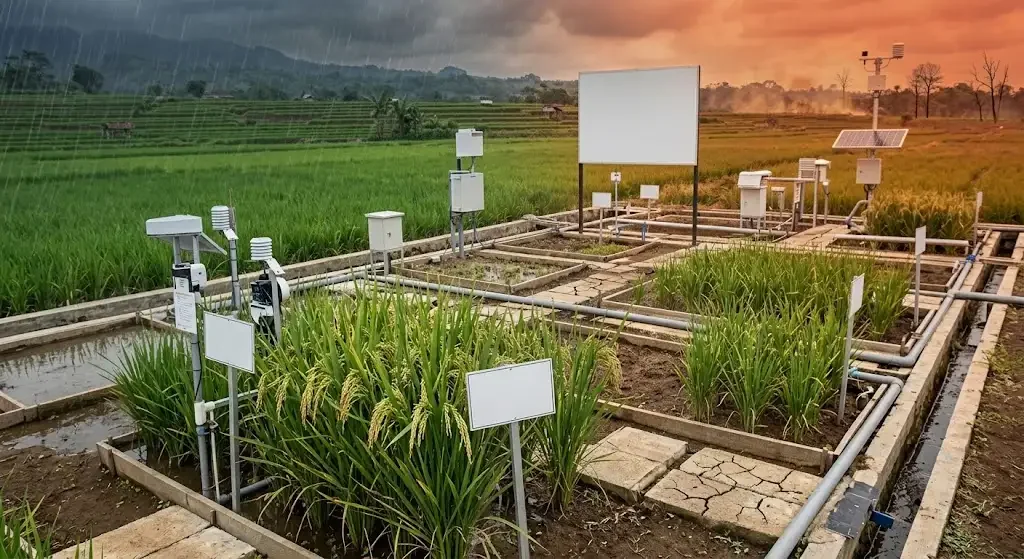
RRI.CO.ID, Jakarta - The threat of climate change, which could disrupt national rice production, necessitates the comprehensive adoption of climate-smart rice production concepts. Researchers from the Food Crops Research Center (PRTP) at the National Research and Innovation Agency (BRIN) state that this concept must focus on three primary objectives: increasing productivity, adapting to climate change, and mitigating environmental impacts.
This approach is viewed not merely as the application of a single technology, but as an integration of various components tailored to environmental conditions and the practical needs of farmers.
These three goals, namely productivity, adaptation, and mitigation, are emphasized to have to go hand in hand. Increases in rice yields will not be sustainable if they fail to address the challenges of climate change while simultaneously minimizing the environmental impact of the production process itself.
Several approaches can be integrated to achieve these goals, including the use of climate-resilient rice varieties, more efficient water and nutrient management, soil quality improvement, integrated pest management, and the use of digital technology in cultivation.
One technology receiving significant attention is the "alternate wetting and drying" (AWD) method, which conserves water while reducing methane emissions from paddy fields. Additionally, "site-specific nutrient management" (SSNM) is being developed to enable fertilizer application tailored to the specific soil conditions and crop requirements of each region.
Relying on a single technology is considered insufficient to address the challenges of rice production amidst climate change. The most optimal intervention involves a package of technologies tailored to local conditions and needs; this includes integrated pest and disease management combining pest-resistant varieties, appropriate cultivation practices, biological control, and judicious pesticide use.
Furthermore, the use of sensors, drones, satellites, and weather data is being encouraged to help farmers make faster and more targeted decisions. The use of digital technology is considered to yield optimal benefits only when the information generated is localized, timely, easily understood by farmers, and directly linked to field-level decision-making.
Meanwhile, the Head of BRIN’s PRTP noted that national rice reserves are approaching five million tons, aligning with the goal of eliminating reliance on rice imports. However, this achievement remains vulnerable given warnings of a potential early-onset dry season expected to be drier than normal.
Rice production is considered to face a two-pronged challenge, namely being impacted by climate change while also contributing to greenhouse gas emissions, especially methane produced from rice fields. Consequently, innovations in cultivation technology and pest and disease management are no longer merely optional; they have become urgent necessities requiring immediate, widespread implementation in the field.
News Recomendation
Loading latest news.....