



BRIN Discovers More Optimal Nickel Ore Processing Technology with Minimal Waste
- 08 Jul 2026 14:35 WIB
- Voice of Indonesia
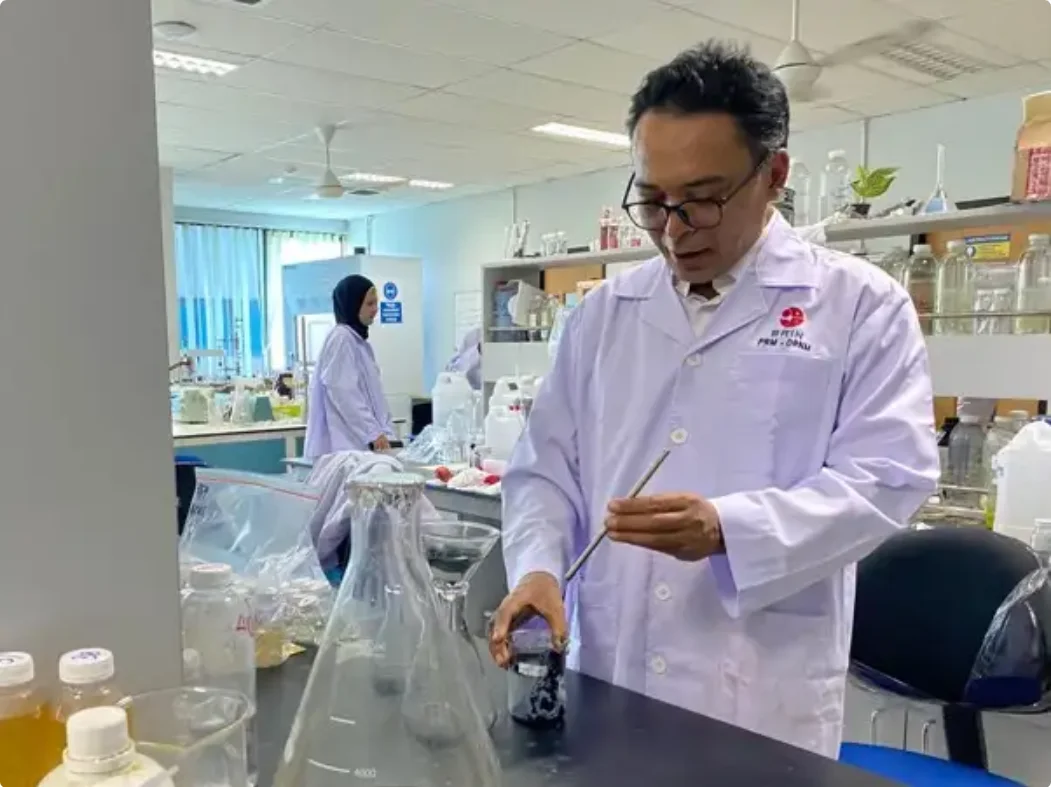
RRI.CO.ID, Jakarta - A researcher at the Metallurgical Research Center of the National Research and Innovation Agency (BRIN), Iwan Setiawan, has discovered an innovative nickel ore processing technology that is more efficient, flexible, and reduces waste because it optimizes the overall use of resources. He explained that this technology can utilize 98 percent of the waste material from nickel ore.
This innovation has also resulted in around five patents related to the nickel processing process. Iwan explained that currently widely used technologies generally only process one type of nickel ore, namely saprolite or limonite.
Furthermore, these processes produce large amounts of waste because the nickel content in the ore is relatively low. "Therefore, any processing method must be able to optimize the utilization of all components contained in the ore," Iwan said in Jakarta on Tuesday, July 7, 2026.
According to him, the innovation developed by BRIN has the advantage of being able to process two types of nickel ore simultaneously, namely saprolite and limonite, in a single process approach. This technology is a modification of the Caron process that has been adapted to Indonesia's current nickel reserves.
He believes that with the increasingly diverse quality of nickel ore, technological innovations that can utilize nickel waste are necessary. "Therefore, new technology is needed that is more adaptive to the characteristics of the available ore," he explained.
In addition to being able to process various types of ore, this technology is also designed to reduce energy consumption compared to conventional pyrometallurgical processes. One of its main advantages is minimizing waste by utilizing other elements that have not been optimally utilized.
In the process developed by BRIN, not only nickel is extracted, but also the iron and magnesium contained in the ore. Iron can be processed into value-added products such as Fe2O3 for pigments or as iron oxalate for battery raw materials, while magnesium is processed into compounds that can be used for various industrial needs.
He added that this approach aligns with the concepts of resource efficiency and a circular economy, which are currently guiding the development of the mineral industry in various countries. "The principle is that no resources are wasted. "Nickel, iron, and magnesium are all being processed into products with economic value so that waste can be minimized," Iwan said.
As a country with abundant mineral resources, Indonesia has a significant opportunity to increase added value through the development of mineral processing technology derived from domestic research. According to Iwan, metallurgical research plays a strategic role in supporting national industrial independence, not only for nickel but also for other strategic metals such as titanium, rare earth metals, and the platinum group.
News Recomendation
Loading latest news.....