



BRIN Showcases Climate-Smart Irrigation Innovation to Conserve Water
- 24 Jun 2026 17:45 WIB
- Voice of Indonesia
Key Points
- BRIN Senior Researcher I Gusti Komang Dana Arsana introduced the Alternative Wetting and Drying (AWD) system.
- BRIN demonstrated that eight-day AWD intervals optimize water efficiency.
- Komang recommended integrating the AWD technology with Bali’s traditional Subak irrigation management.
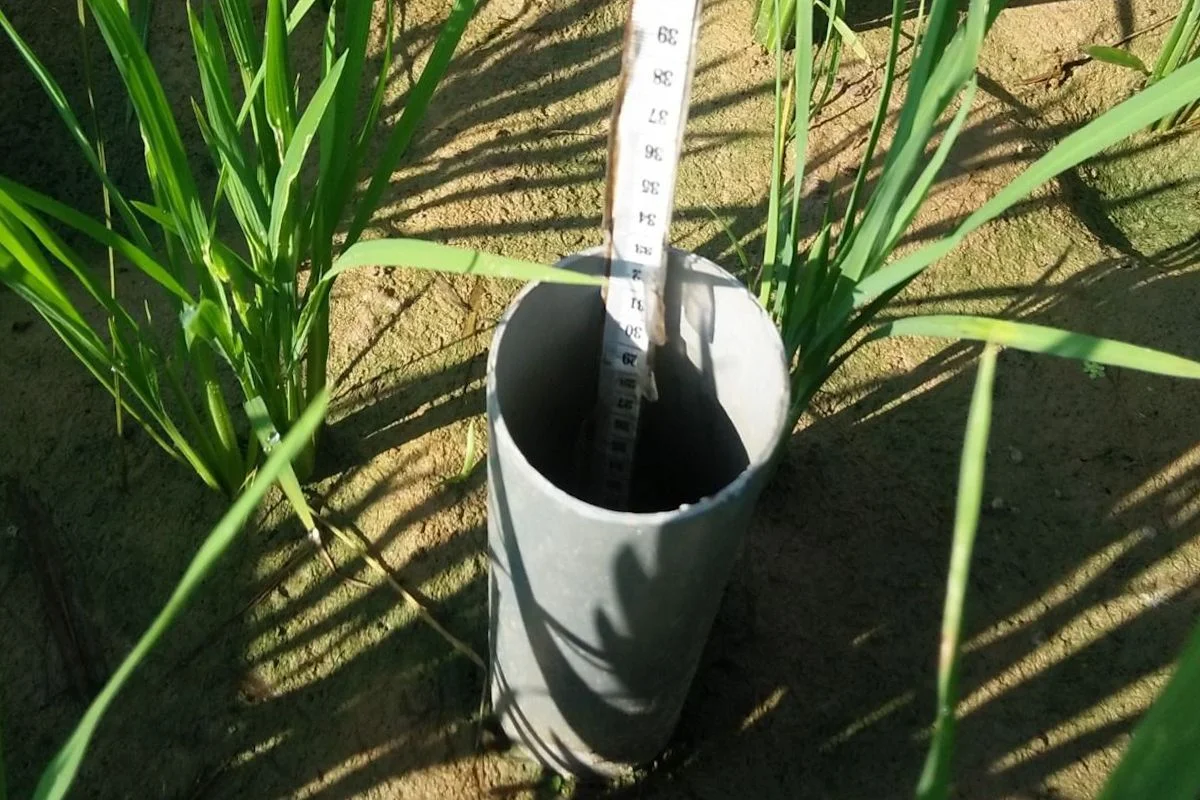
RRI.CO.ID, Jakarta - The Indonesian National Research and Innovation Agency (BRIN) is spotlighting a breakthrough in sustainable agriculture with the development of Alternative Wetting and Drying (AWD) irrigation technology.
The system, designed by senior researcher I Gusti Komang Dana Arsana, aims to reduce methane emissions from rice paddies while improving water efficiency--a critical step in climate change mitigation.
Speaking at his inaugural research professor lecture in Jakarta on Wednesday, June 24, 2026, Komang explained that continuous flooding of rice fields creates anaerobic soil conditions that generate methane, a potent greenhouse gas.
AWD, by contrast, allows fields to dry periodically before re-irrigation, cutting emissions and conserving water. “Alternating irrigation makes water use more efficient while reducing methane formation,” he said, as quoted on BRIN's official website.
Research shows that applying AWD at intervals of around eight days significantly improves water efficiency compared to traditional flooding. The system also reduces soil anaerobiosis, thereby lowering methane output.
Yet, Komang stressed that technology alone is not enough; farmer mindsets and institutional support must evolve. Many farmers still believe rice requires constant flooding for optimal yields.
He pointed to Subak, Bali’s traditional irrigation system, as a proven model for equitable water distribution through community consensus. “Subak has long demonstrated the ability to manage water fairly and collectively,” Komang noted, adding that such local institutions are vital for scaling innovations like AWD.
Looking ahead, BRIN envisions integrating AWD with modern tools such as soil moisture sensors and digital monitoring systems to enhance precision irrigation.
Komang also emphasized the need for cross-disciplinary collaboration--from hydrology and soil science to climatology and public policy--to ensure sustainable water management in agriculture.
“Efficient water management is essential for food security and emission reduction. Integrating technology with local institutions will be key to applying AWD widely and sustainably,” he concluded.
This innovation underscores BRIN’s leadership in advancing climate-smart agriculture and highlights Indonesia’s commitment to reducing emissions while safeguarding food resilience. ***
News Recomendation
Loading latest news.....