



BRIN Introduces Palm Oil-Based BioPAS for Batik Industry
- 09 Jun 2026 11:12 WIB
- Voice of Indonesia
Key Points
- BRIN introduced BioPAS, a palm oil-based substitute designed to reduce the batik industry’s reliance on imported paraffin wax.
- The innovation supports sustainable batik production while strengthening the connection between Indonesia’s palm oil sector and creative economy.
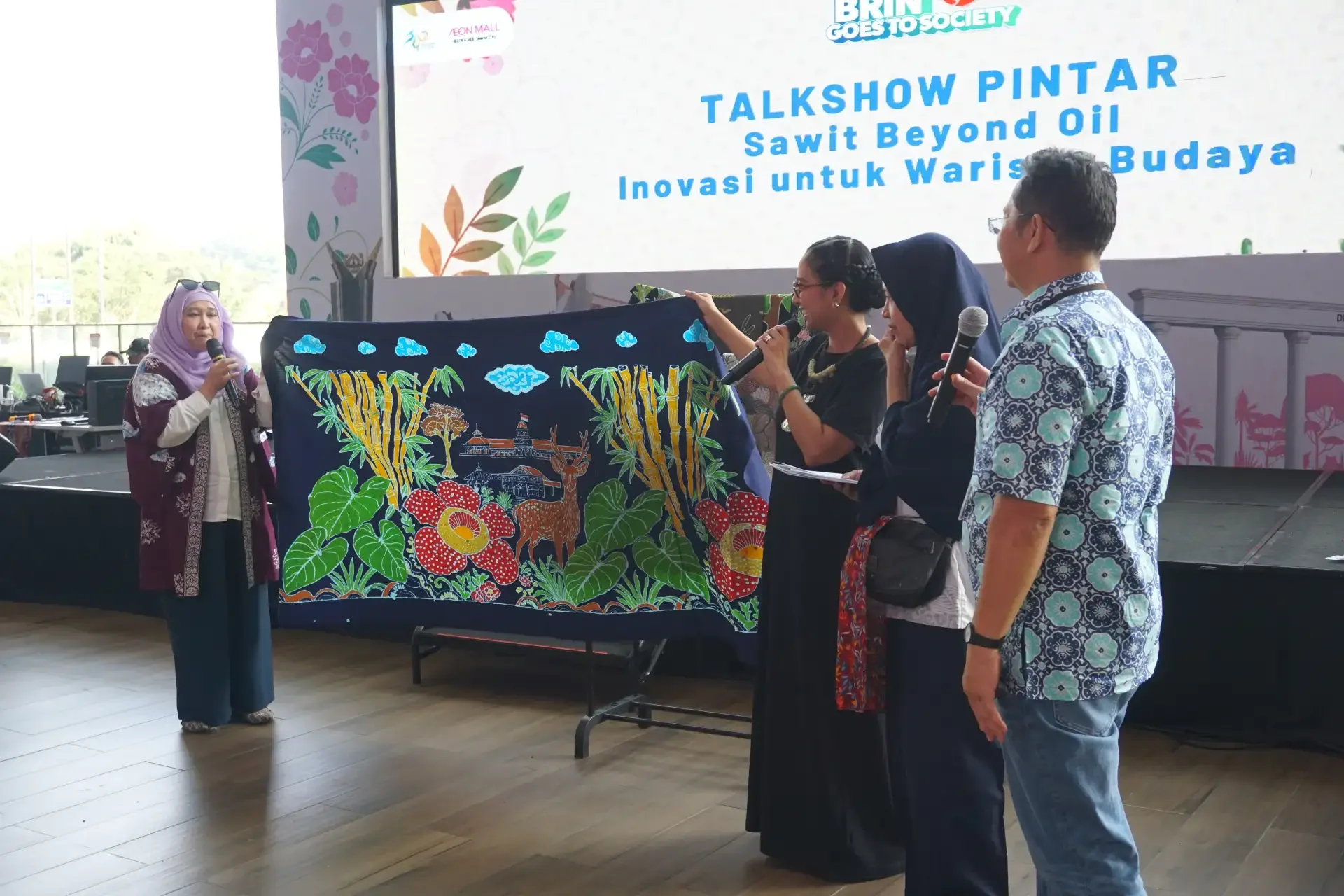
RRI.CO.ID, Cibinong - The National Research and Innovation Agency (BRIN) has introduced a groundbreaking alternative to petroleum-based wax for the national batik industry, utilizing Indonesia’s vast palm oil reserves to create a sustainable, locally sourced substitute for imported paraffin.
Known as Bio Paraffin Substitute (BioPAS), the innovation targets the 80 percent of traditional batik wax composition that currently relies on petroleum derivatives. With nearly all of Indonesia’s paraffin supply originating from foreign imports, BioPAS represents a strategic shift toward resource independence and environmental sustainability for one of the country's most vital creative sectors.
The technology, developed by Agus Triputranto and a team of researchers at BRIN’s Manufacturing Equipment Technology Research Center, involves the modification of triglyceride structures in domestic palm oil. Having secured a patent in 2024, the innovation is now positioned for large-scale industrial adoption.
“BioPAS was developed as a substitute for petroleum-based paraffin so that the batik industry has an alternative raw material derived from renewable national resources,” Agus said during the BRIN Goes to Society exhibition at AEON Mall Sentul City, Bogor Regency, West Java, which ran from June 1 to 7, 2026, as qupoted on BRIN's official website.
The strategic value of BioPAS lies in its ability to bridge two of Indonesia's most significant assets: palm oil as an economic powerhouse and batik as a UNESCO-recognized cultural heritage. By integrating palm oil derivatives into the creative process, BRIN aims to create a symbiotic link between the plantation sector and the creative economy.
Technologically, BioPAS offers a versatile one-formula solution compatible with various traditional techniques, including batik tulis (hand-drawn), batik cap (stamped), and cold wax methods. According to BRIN, the biowax provides excellent fabric penetration, creates sharp motif lines (ngawat), and remains flexible enough to prevent cracking. Crucially, it is easily removed during the final boiling process (lorot).
As a biowax, BioPAS also boasts a significantly lower carbon footprint than fossil-fuel-based paraffin, making it safer for the ecosystem.
“The primary advantage of BioPAS is its ability to be applied to various batik methods at a more competitive price, while offering the technical characteristics required by artisans,” Agus added.
The economic stakes are high. Indonesia’s batik industry comprises approximately 55,000 business units, mostly micro and small enterprises, that sustain hundreds of thousands of jobs. With national wax demand estimated at 84,000 tons per year, the shift to BioPAS could save substantial foreign exchange reserves.
“With such a massive national demand for batik wax, the use of BioPAS has the potential to provide foreign exchange savings while increasing the domestic absorption of palm oil derivatives,” Agus explained.
The innovation has already seen limited replication by artisans within the Indonesian Batik Cooperative in Pekalongan, Central Java. However, researchers noted that periodic technological assistance remains essential, as the wax's performance can be influenced by local climate conditions and specific artisan habits. ***
News Recomendation
Loading latest news.....