



BRIN Develops Plant-Duck Bioindustry Model to Optimize Swamp Productivity
- 30 Apr 2026 08:13 WIB
- Voice of Indonesia
Key Points
- National Research and Innovation Agency introduces a plant-duck bioindustry model to optimize swamp land productivity.
- The system integrates crops and livestock, increasing yields and farmer income through a circular economy approach.
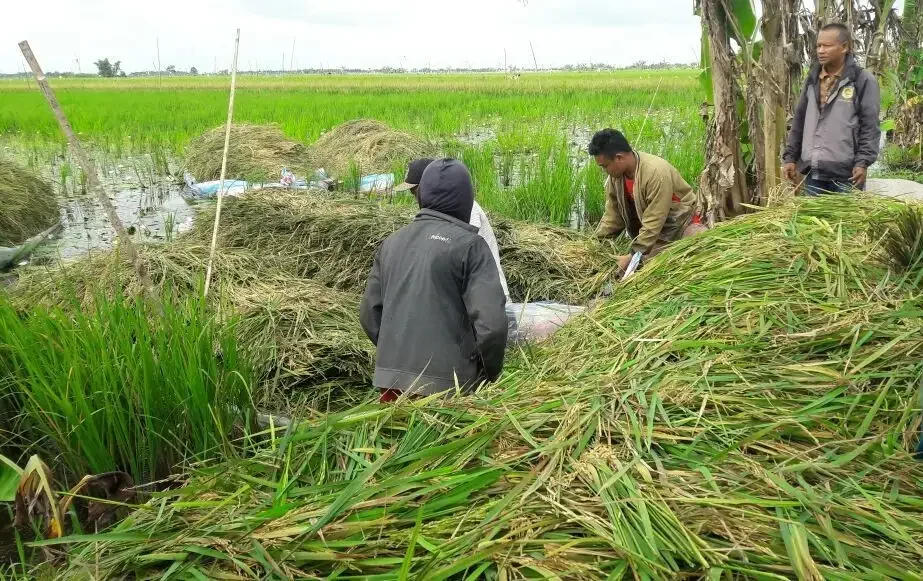
RRI.CO.ID, Bandung - Researchers from the National Research and Innovation Agency (BRIN) have successfully developed an integrated plant-duck bioindustry model designed to boost the productivity of rawa lebak (shallow freshwater swamp) areas. This innovation addresses the historical challenges of unpredictable flooding and low technological adoption in regions like Hulu Sungai Utara, South Kalimantan.
A Senior Researcher at BRIN’s Climate and Atmosphere Research Center (PRIMA), Aris Pramudia, explained that the model utilizes a circular economy approach to turn biological waste into valuable agricultural inputs. By integrating crops with livestock, farmers can better adapt to the extreme seasonal shifts characteristic of swamp environments.
“Through the plant-duck bioindustry in swamp lands, we see the need to integrate adaptation to rainfall variability and promote a circular economy through the application of several technologies,” Aris said on Tuesday, April 28, 2026, as quoted by BRIN's official website.
The model creates a self-sustaining loop between three main components: duck farming, rice cultivation, and eggplant horticulture. In this system, ducks provide eggs and meat for income, while their manure is processed into organic fertilizer to nourish both the rice and eggplant crops.
The rice component contributes beyond its grain harvest by yielding bran, which is repurposed as nutritious duck feed, and straw, which serves as essential mulch for the horticulture plots. The eggplant sector produces fresh and processed goods, benefiting directly from the organic inputs and waste products provided by the other two agricultural sectors.
A study involving 97 households managing 75 hectares and approximately 1,000 ducks showed significant improvements across all commodities. By shifting planting schedules to align with climate data from the Meteorology, Climatology, and Geophysical Agency (BMKG), the research team achieved substantial yield increases, with eggplant production surging by 76.57 percent, rice by 5.85 percent, and duck egg production rising by 14.69 percent.
These productivity gains translated into impressive income growth, as overall household earnings rose by 26.1 percent from duck farming, 9.3 percent from rice, and a staggering 221.5 percent from eggplant cultivation. Furthermore, the implementation of herbal supplements (jamu) successfully extended the productive laying period of the ducks from 12 months to 21 months by significantly improving their health.
A key breakthrough of the research is the integration of scientific climate analysis with local farming wisdom. Aris noted that during La Niña events, the dry season in swamp areas can start up to 20 days earlier than during normal or El Niño conditions.
Farmers can use Plant Growth Promoting Rhizobacteria (PGPR) to lower rice production costs by 28 percent while still increasing output by identifying these patterns. This model effectively reduces reliance on external chemical inputs and minimizes environmental waste, offering a sustainable blueprint for Indonesia’s vast swamp territories. ***
News Recomendation
Loading latest news.....