



BRIN Turns Indonesian Frankincense into Luxury Styrax Perfume
- 17 Apr 2026 12:42 WIB
- Voice of Indonesia
Key Points
- BRIN has transformed Indonesian frankincense into a high-value luxury perfume, significantly increasing its economic potential through downstream processing.
- The innovation supports forest conservation and empowers local communities by shifting production from raw exports to premium finished products.
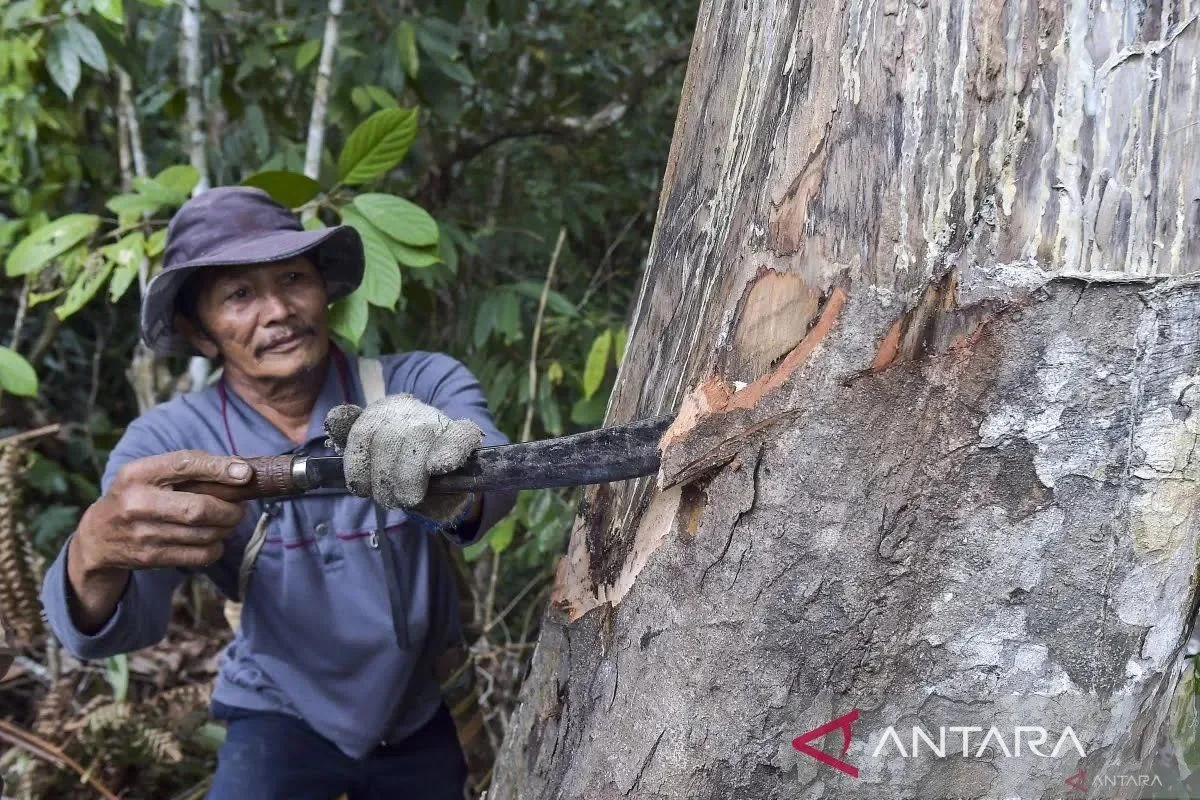
RRI.CO.ID, Jakarta - Indonesia is reimagining the image of frankincense (kemenyan), moving it away from mystical rituals and toward the high-end lifestyle market. Researchers at the National Research and Innovation Agency (BRIN) have successfully transformed the raw resin into a premium fragrance line branded as "Styrax Perfume."
The innovation was showcased during the BRIN Goes to Industry 3 event at the B.J. Habibie Building in Jakarta, on Thursday, April 16, 2026. This project serves as a prime example of successful research downstreaming, turning raw natural resources into high-value consumer goods.
For decades, Indonesia has exported thousands of tons of raw frankincense resin to approximately 40 countries at relatively low prices, roughly IDR 200,000 (USD 11.6) per kilogram. A Senior Researcher at BRIN’s Center for Applied Botany, Aswandi, highlighted the massive economic missed opportunity.
"We have a potential of IDR1 trillion per year that has not been optimally processed domestically," Aswandi explained.
He noted that through extraction technology, the resin can be converted into Styrax oil. "While the resin costs IDR 200,000 per kilogram, the price of frankincense oil on the market can reach at least IDR 5 million per kilogram," he said as quoted on BRIN's official website.
The value increases exponentially when processed into finished products. "The comparison is very profitable; it only takes about 2 kilograms of frankincense to produce 1 liter of oil. That's just the oil. If we process it again into ready-to-use perfume, the added value can reach 100 times more per gram," he added.
Developed under the pillars of being first, better, and different, Styrax Perfume holds patent number S00202314472. Aswandi emphasized that this fragrance offers a scent profile that is uniquely Indonesian.
"This frankincense provides a scent that is very typical of Indonesia, or 'very Nusantara.' This is our identity. Compared to expensive foreign branded perfumes, the aroma quality and longevity are not inferior. This is a 'different' product because it won't be found in any perfume in the world other than from Indonesia," Aswandi clarified.
Beyond commercial gains, the project supports national goals for rural economic development. By creating a demand for processed frankincense, the government aims to preserve hundreds of thousands of hectares of frankincense forests in the Lake Toba region, North Sumatra.
This ecosystem provides a steady livelihood for local communities. The goal is for village-level SMEs to become the main drivers of this new economy, shifting from raw material collection to high-value production.
"Through this perfume, we protect the forest, protect the ecosystem, and at the same time build the welfare of the community from the village," Aswandi concluded.
"Our raw materials are abundant and there are no issues. Now is the time for us to prove that the scent of frankincense is not as scary as imagined, but rather an exotic aromatherapy luxury," he added.
BRIN's transformation of Kemenyan is a masterful pivot in cultural branding. By decoupling the scent from its "spooky" connotations and realigning it with exotic aromatherapy, they are following the global trend of "niche perfumery" where consumers crave rare, origin-specific ingredients like Oudh or Sandalwood.
The math provided by Aswandi, turning a IDR 200,000 raw material into a product worth 100 times more, is the definition of economic sovereignty. By processing the resin in the Lake Toba region, Indonesia ensures that the "luxury markup" stays within the local community rather than being captured by European fragrance houses. This isn't just a new smell, it's a new, sustainable economic model for Indonesian forestry. ***
News Recomendation
Loading latest news.....