



Tangerang Students Launch AI-Powered Food Safety Innovation
- 15 Apr 2026 18:16 WIB
- Voice of Indonesia
Key Points
- Tangerang students developed an AI based system called 'Si Amanzi' to support the Free Nutritious Meal Program.
- The innovation was unveiled to help reduce the risk of food poisoning through advanced technological monitoring.
- Local administration officials praised the project as a vital grassroots solution that requires investment for mass production.
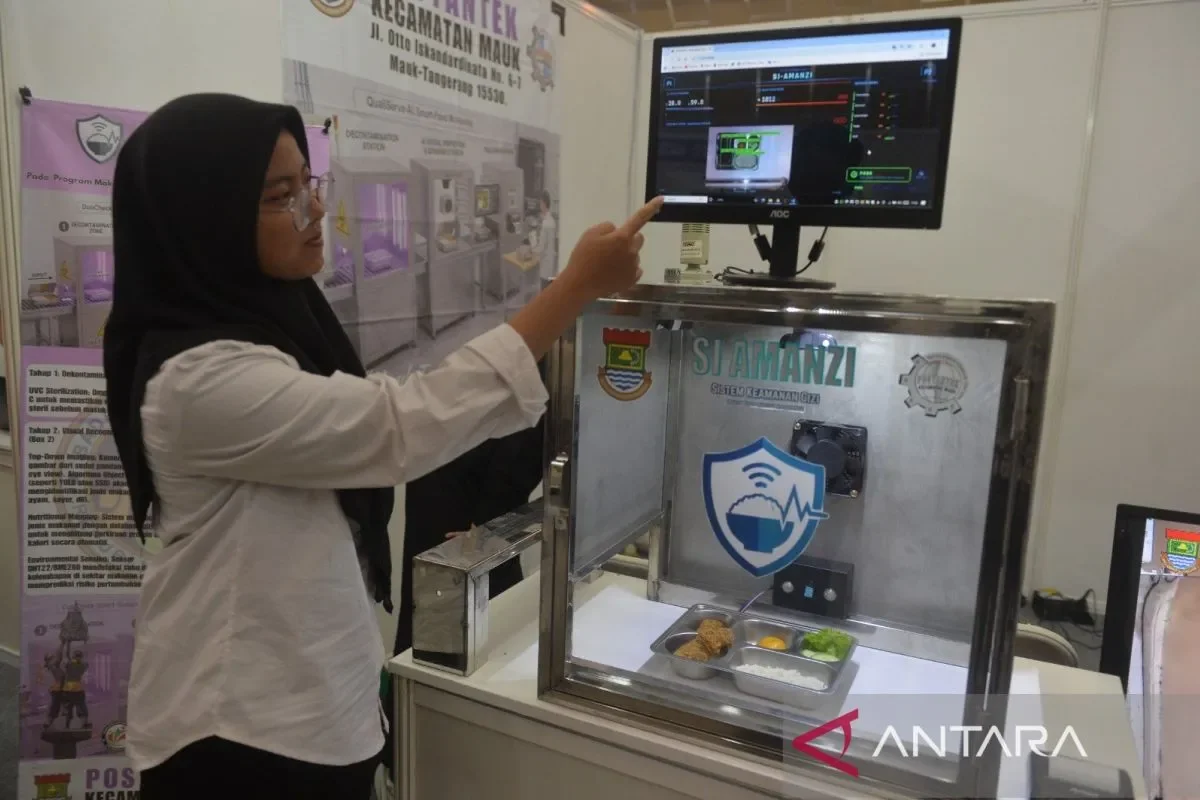
RRI.CO.ID, Tangerang - A group of students from Tangerang, Banten, has developed an artificial intelligence-based food safety system called Si Amanzi to support Indonesia’s Free Nutritious Meal (MBG) program.
The innovation was unveiled at the Appropriate Technology Competition organized by the Tangerang Regency administration, on Wednesday, April 15, 2026.
Alwan Azriel, a member of the research team from the Mauk Subdistrict Technology Service Post, explained that the project was inspired by recurring cases of mass food poisoning linked to MBG. “Our tool is designed to help the government’s MBG program by reducing risks like that,” he said, as quoted by Antara.
The system integrates AI technology from local developers and was developed over four months through academic research, field observations, and interviews with teachers and MBG recipients.
The process begins with sterilizing food containers using ultraviolet light, followed by automated analysis of meals with AI-powered cameras that assess calories, nutrition, and food condition.
Additional sensors detect ammonia and methane, indicators of food spoilage. Once testing is complete, the machine prints a barcode sticker containing the safety results, which is then attached to each meal container.
“Realistically, it’s about 70 percent accurate, but at least it helps minimize the risk of unsafe food consumption,” Alwan noted.
Tangerang Regency Secretary Soma Atmaja praised the competition as a platform for grassroots innovation. “Events like this spark creativity. We’ve seen technology solutions not only in food safety but also in agriculture, renewable energy, and even efficient septic systems,” he said.
“Mass production requires support from larger companies as investors, so these innovations can be applied in everyday life,” Soma concluded. ***
News Recomendation
Loading latest news.....