



BRIN Unveils Sorghum-Based Granulated Sugar Technology to Boost Farmer Income
- 10 Apr 2026 12:26 WIB
- Voice of Indonesia
Key Points
- National Research and Innovation Agency (BRIN) developed integrated technology to process sorghum into gula semut.
- The innovation supports farmers and SMEs by increasing crop value.
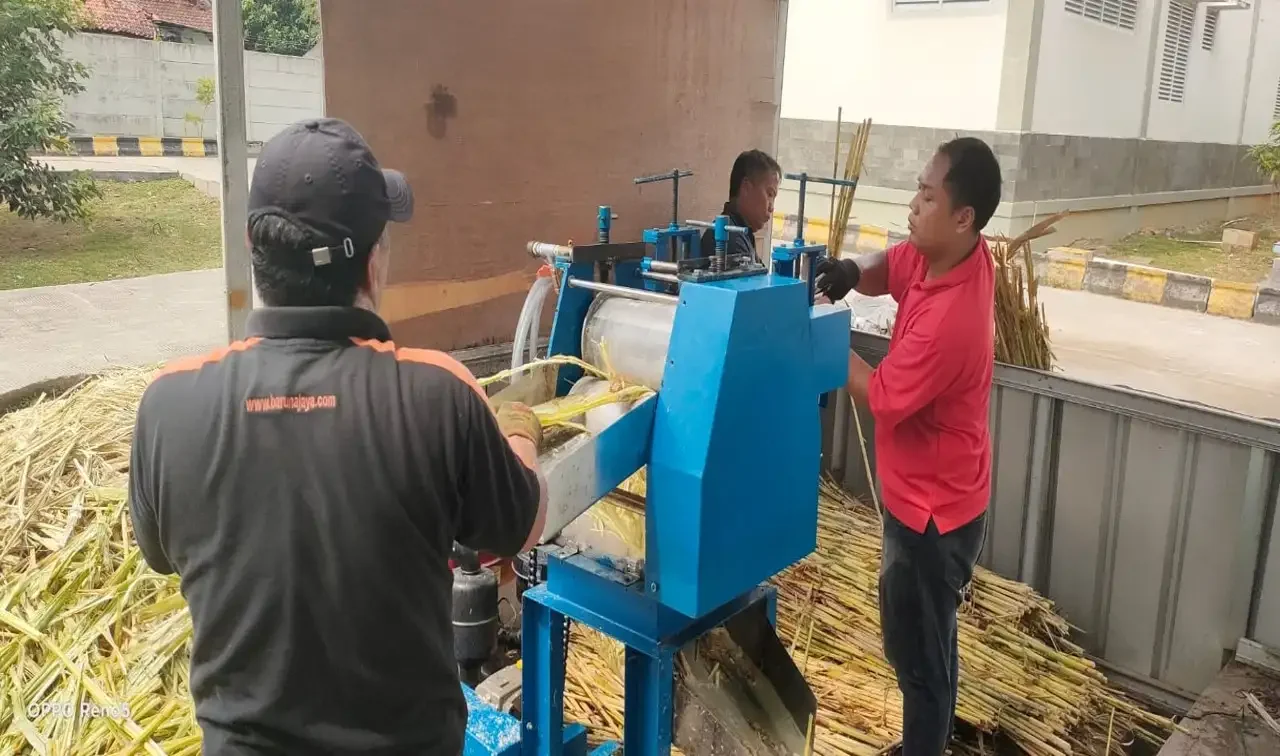
RRI.CO.ID, Jakarta - The National Research and Innovation Agency (BRIN) has pioneered an integrated technology for processing sweet sorghum sap into granulated sugar (gula semut). This innovation serves as a strategic alternative to cane sugar while significantly increasing the market value of local crops for small-scale farmers and small-to-medium enterprises (SMEs).
A Senior Researcher at BRIN’s Manufacturing Equipment Technology Research Center, Sandi Darniadi, highlighted that while sorghum is in the same family as sugarcane, it offers greater versatility.
"Sorghum is more flexible in its utilization. Besides sugar, it can be used for bioethanol and animal feed; every part of the plant is useful," Sandi said on Wednesday, April 8, 2026, as quoted by BRIN'S official website.
Although its sugar content of 11–15 percent is lower than sugarcane, its resilience and multi-purpose nature make it an ideal alternative for regional agricultural development.
The processing technology consists of a modular series of machines designed to handle the entire production cycle from raw stalk to packaged granules. During the extraction phase, a roller press machine is used to squeeze sap from the sorghum stalks, with 100 kilograms of stalks yielding approximately 20 liters of nira.
The next step is evaporation, where the sap is processed using a vacuum evaporator at lower temperatures (60–70°C) to create liquid syrup, or an open pan cooker at higher temperatures (90–100°C) to produce granulated sugar. Finally, the refinement stage involves drying the cooked sugar in an oven dehydrator before it is passed through a crusher to achieve the fine, granular texture required for "gula semut."
"To produce granulated sugar from 15 liters of sap, it takes about 3 to 5 hours, depending on the initial sugar content," Sandi noted, emphasizing the precision required to reach a 5–6 percent moisture level.
A major advantage of BRIN's technology is its shift from traditional firewood to gas-based heating, which offers better temperature control and lower costs. Furthermore, all equipment is manufactured using food-grade stainless steel, ensuring a level of hygiene often missing in traditional artisanal tools. The modular design also makes the machinery portable and accessible for rural farmer cooperatives.
To ensure this research reaches the public, BRIN has partnered with the Sorghum Center Indonesia (SCI) for testing and has begun licensing components to industrial partners like CV Sentosa Teknik.
"The goal is for this technology not to stop at research, but to actually be used by the community and industry," Sandi said.
Despite the technological breakthrough, Sandi admitted that the primary hurdle remains the sustainability of sorghum cultivation. Farmers often weigh sorghum's economic value against dominant crops like corn or rice.
"If the selling price is not yet competitive, farmers will think twice about planting sorghum, even though the harvest time is similar, about three months," he explained.
Sandi hopes that by providing the tools to create high-value products like granulated sugar, an end-to-end ecosystem will emerge, making sorghum a staple of Indonesia’s future food security.
The development of this technology is a strategic response to the need for local food diversification and energy security. By focusing on integrated machinery, BRIN aims to reduce the post-harvest losses that often discourage farmers from planting alternative crops.
Moreover, the licensing of these tools to the private sector ensures that the innovation is scalable and commercially viable. As the downstream industry grows, it is expected to create a "pull factor" that stabilizes sorghum prices, providing a reliable and profitable alternative income stream for Indonesian farmers. ***
News Recomendation
Loading latest news.....