



BRIN Designs Nature-Based Shield for YIA Tsunami Risks
- 10 Feb 2026 11:20 WIB
- Voice of Indonesia
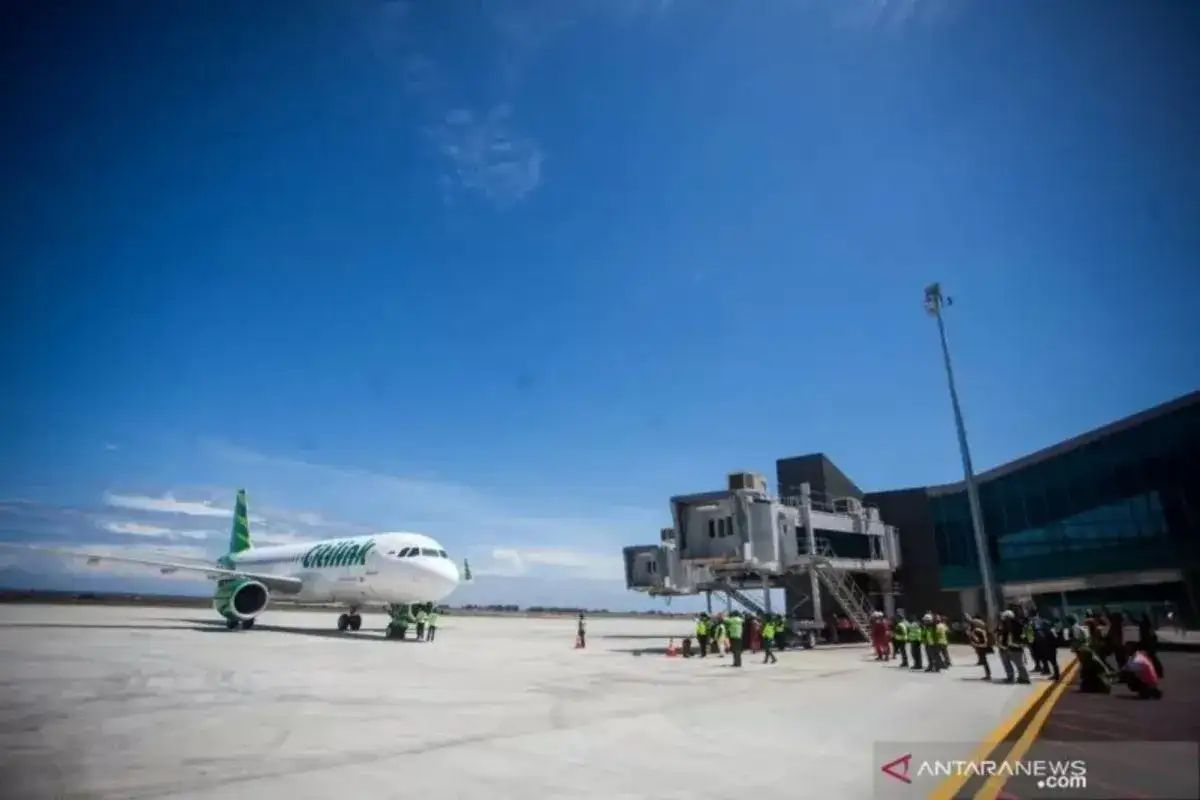
RRI.CO.ID, Jakarta - The National Research and Innovation Agency (BRIN) is pioneering a sophisticated "Nature-based Solutions" (NbS) framework to protect Yogyakarta International Airport (YIA) from the looming threats of extreme waves and megathrust-triggered tsunamis.
This hybrid strategy departs from traditional concrete-only defenses, integrating natural ecosystems to create a sustainable, multilayered security barrier for one of Indonesia's most vital strategic assets.
Khusnul Setia Wardani, a researcher from BRIN’s Hydrodynamic Technology Research Center, explained in Jakarta on Tuesday, February 10, 2026, that this approach is specifically designed to harmonize with the natural dynamics of the southern coast.
The protection of the YIA area requires a "multi-layer defense" that combines hard engineering with biological elements. According to the research, this involves the use of seawalls and groins alongside sand dunes, coastal vegetation, and sand nourishment.
"In the marine zone, groynes are built seaward to control longshore currents and sediment movement, thereby reducing abrasion and weakening wave energy. Meanwhile, sandy beaches on land act as natural initial dampers for extreme wave energy," Khusnul elaborated, as quoted by Antara.
A critical component of this NbS approach is the "green belt," consisting of specialized coastal flora. BRIN recommends a strategic mix of Sea Pine (Casuarina equisetifolia L.) and Sea Pandan (Pandanus tectorius).
These plants serve as a living filter, slowing water flow, trapping sediment, and dissipating the residual energy of seawater runoff before it reaches the airport's infrastructure.
The project faces unique geographical and social challenges, as the land south of the airport, known as Pakualaman Ground, is currently utilized for tourism and local agriculture. This makes the choice of vegetation particularly sensitive.
"The southern side of Yogyakarta International Airport is the Pakualaman Ground area, which is used for tourism and community agriculture. This condition makes selecting coastal protection vegetation crucial, especially types that can be combined with food crops and are safe for airport operations because they don't attract birds," Khusnul explained, noting the importance of aviation safety.
The urgency of this mitigation effort is underscored by the airport’s location, which faces the active subduction zone of the Java southern coast. Khusnul warned that the combination of rising sea levels and tectonic activity poses a permanent threat to coastal infrastructure.
"Yogyakarta International Airport is a strategic infrastructure facility that faces a high risk of extreme sea waves. Built on the southern coast of Java, it faces an active plate subduction zone, making it vulnerable to extreme waves and tsunamis caused by tectonic activity," she revealed.
Looking ahead, BRIN envisions a hybrid structure in which a seawall lies behind the vegetation zone, serving as the final protective barrier. This structure could be designed for multifunctionality, such as serving as a roadway to enhance regional connectivity.
Khusnul concluded that the goal is a win-win for the economy and the environment. "Through this research, the implementation of NbS is expected to be a coastal disaster mitigation solution that protects airport infrastructure, benefits surrounding communities, and maintains the sustainability of coastal ecosystems," she said. ***
News Recomendation
Loading latest news.....