



Indonesian Scientists Turn Geothermal Waste into Crop-Boosting Nanosilica
- 26 Jan 2026 12:25 WIB
- Voice of Indonesia
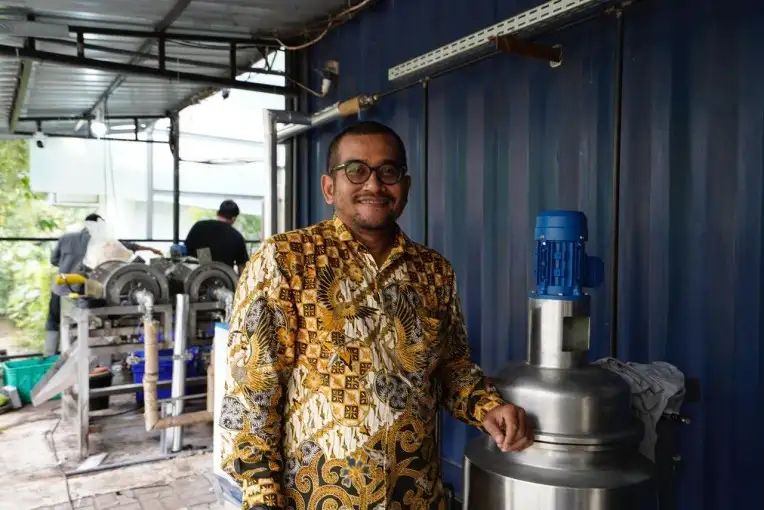
RRI.CO.ID, Yogyakarta - Researchers at Gadjah Mada University have transformed silica from geothermal fluid into nanosilica, enhancing crop yields by up to 50 percent and offering new applications in green technology. The innovation, developed since 2013, shows Indonesia’s geothermal potential extending beyond energy production.
Indonesia, home to 40 percent of the world’s geothermal potential totaling 23,965.5 MW, is exploring ways to utilize this resource beyond electricity generation. Researchers at UGM have developed a method to transform silica extracted from geothermal fluid into nanosilica, a high-value material that can enhance plant growth and support green technology.
The innovation was led by Himawan Tri Bayu Murti Petrus, a chemical engineering professor at UGM, who recently received the Best Innovation award at the Hitachi Global Foundation Asia Innovation Awards 2025.
Through material engineering and step-by-step process control, geothermal silica has been successfully transformed into nanosilica with superior, stable, and consistent characteristics. “This process is also designed to have replication potential and scalability, thereby opening opportunities for downstream applications and industrial implementation in the future,” he said on Monday, January 26, 2026, as quoted on UGM's official website.
In agriculture, nanosilica strengthens plant cell walls, improves nutrient transport efficiency, and enhances crop resilience. Its high bioavailability allows plants to absorb nutrients efficiently with only 1-2 kilograms per hectare, significantly lower than conventional fertilizers such as NPK.
Field trials have shown productivity increases of 30-50 percent in crops like rice, corn, avocado, papaya, and grapes. The results benefit from synergistic effects with added components like humate and boron, designed to improve overall soil and plant health.
Beyond agriculture, nanosilica is being applied in technology and energy sectors. When combined with hydrogel, it improves water absorption in cooling systems for data centers and batteries by three to five times, enhancing performance and efficiency. Himawan noted that ongoing research is expanding into air moisture absorption, biosensors, and biomaterials to support green technology and smart systems.
Despite its potential, challenges remain in commercialization, particularly transitioning the technology from laboratory research to industrial implementation. The team is actively developing derivative products to create a sustainable circular economy and ensure practical benefits for communities and industries.
Since 2013, this research has been conducted through multidisciplinary collaboration with international partners including NTU Singapore, Swinburne University, Kyushu University, and the University of the Philippines. These collaborations have strengthened knowledge exchange, advanced material and process integration, and reinforced sustainability perspectives.
“Our goal is that research does not stop at international journals or patents, it should deliver real impact and benefits to society,” he concluded. ***
News Recomendation
Loading latest news.....