


Digital Humanities As a Modern Approach to Ancient Texts
- 06 Feb 2025 12:39 WIB
- Voice of Indonesia
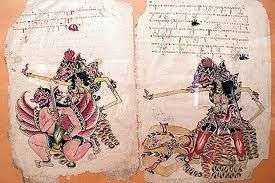
KBRN, Jakarta: Digital humanities is seen as a modern step in transferring manuscripts or ancient texts into performing arts. This creative step makes the public more easily understand the meaning of ancient manuscripts.
Herry Jogaswara, the National Research and Innovation Agency (BRIN)'s Archaeological, Linguistic, and Literary Research Organization (OR Arbastra) Head, explained that starting in 2026, his team will introduce the term "purwarupa" (prototype), which refers to transforming ancient texts into media that can be enjoyed by the public, such as performing arts, comics, or games.
Meanwhile, Sastri Sunarti, BRIN's Manuscript and Oral Tradition Research Center (PR MLTL) Head, hoped that with digital humanities, all manuscript sources resulting from her researchers can be utilized.
“We can use digital humaniora to spread the ancient manuscripts,” she said.
Alan Darmawan, a postdoctoral fellow at SOAS University of London examined how to ‘sound’ and present the digital manuscripts through performing arts by considering their social and cultural contexts.
Alan's research mapped manuscript cultures in Sumatra, focusing on Islamic texts. He categorized manuscripts from Aceh, Minangkabau, and Palembang, tracing their journeys and analyzing their material aspects.
Alan also highlighted the Resonant Pages Project, which reimagined text presentation for contemporary audiences using digital manuscripts through three repositories, like the Leiden Digital Collection, Qalamos, and EAP.
This collaborative effort involved researchers, dancing artists and music artists. The artists used manuscripts as sources of creations while the researcher used art performances to understand the ancient manuscripts.
“They produce creative works, in addition to scientific articles, books, and manuscript edits,” said Alan on Thursday, January 30, 2025, as quoted by rri.co.id.
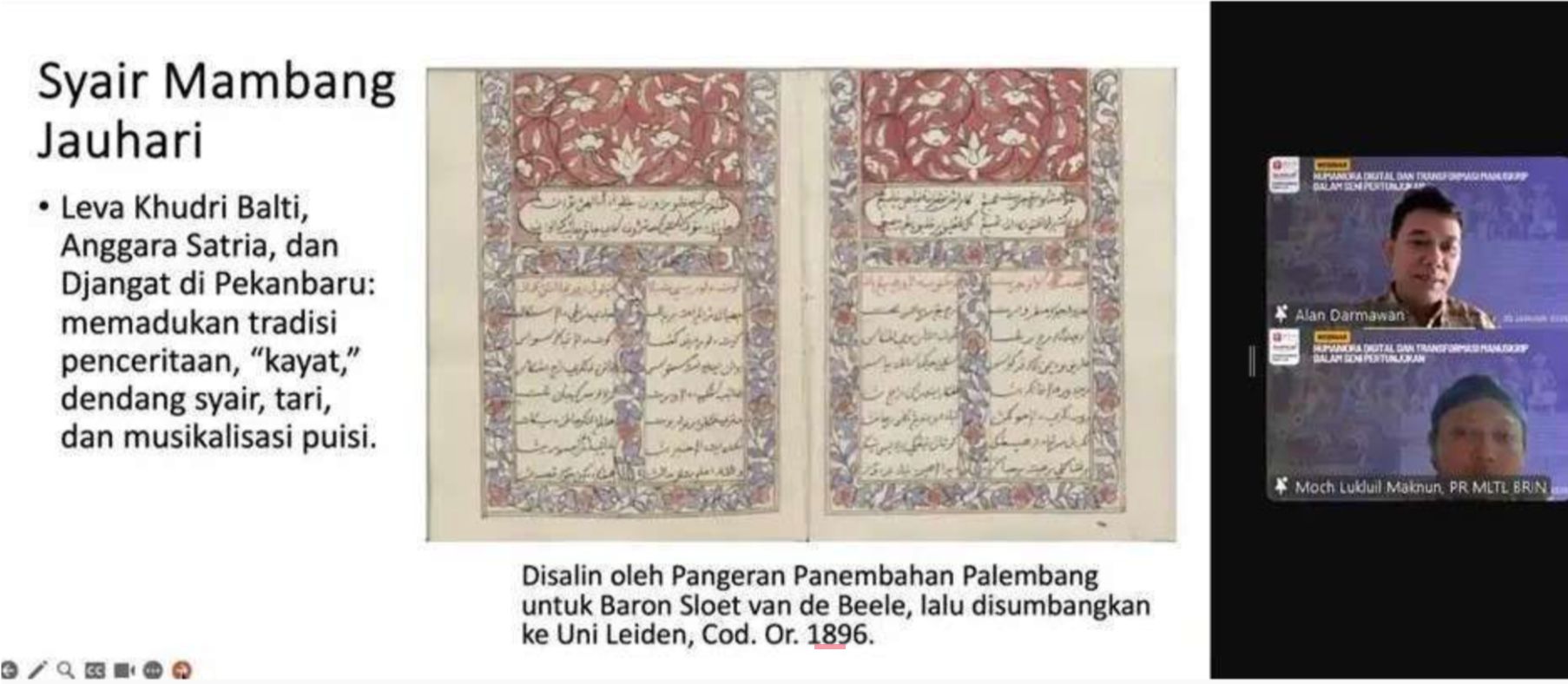
Webinar “Digital Humanities and Manuscript Transformation in Performing Arts” (Photo: BRIN's Public Relation)
Alan cited some manuscript-inspired performances, such as dance creations from the Dala'il al-Khayrat manuscript, Southeast Asian Islamic prayers, and shalawat reading tradition.
Agus Heryana, BRIN's PR MLTL Public Relation explained the transformation of manuscripts into performing arts. He emphasized that text and performance are distinct, with text conveying implicit and explicit meaning from the manuscript, while performance expresses the emotional experience of the art.
“Text is not performance, and performance is not text. Text is meaning, implied and expressed in manuscripts, while performance is the emotional expression of the artist,” said Agus. ***