



Indonesia’s Women’s Doubles Show Progress at 2026 Indonesia Open
- 07 Jun 2026 15:41 WIB
- Voice of Indonesia
Key Points
- In previous Indonesia Open editions, no Indonesian women’s doubles pair advanced to the semifinals, with quarterfinal finishes being the best results.
- At the 2026 Indonesia Open, Rachel Allessya Rose and Febi Setianingrum broke through by reaching the semifinals, marking a significant improvement.
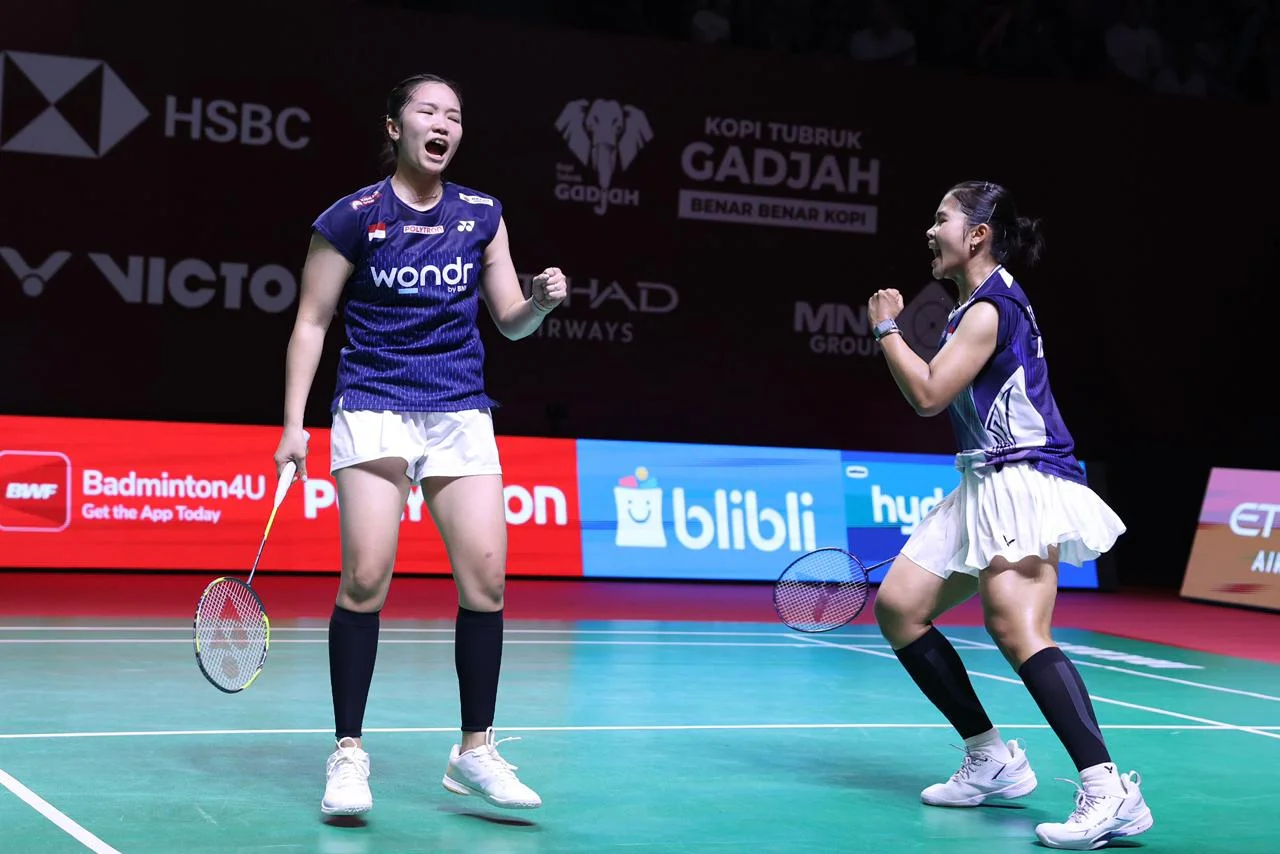
RRI.CO.ID, Jakarta - Indonesia’s women’s doubles shuttlers showed promising progress at the Polytron Indonesia Open 2026, a BWF World Tour Super 1000 tournament. Rachel Allessya Rose and Febi Setianingrum delivered the best result by advancing to the semifinals, while two other pairs reached the quarterfinals.
Rachel/Febi’s run ended after losing to the top‑seeded Chinese duo Liu Sheng Shu/Tan Ning 17‑21, 16‑21. Other Indonesian pairs, Siti Fadia Silva Ramadhanti/Amallia Cahaya Pratiwi and Febriana Dwipuji Kusuma/Meilysa Trias Puspitasari, also reached the quarterfinals.
Meanwhile, Apriyani Rahayu/Lanny Tria Mayasari and Isyana Syahira Meida/Rinjani Kwinnara Nastine were eliminated in the first round.
Head Coach of the Indonesian Badminton Federation (PBSI) Women’s Doubles Team, Karel Mainaky, noted an improvement in performance throughout the tournament. “I’m trying to get them to stop worrying about who their opponents are. Before we get completely defeated, we should fight first,” Karel said in Jakarta on Sunday, June 7, as quoted by Antara.
He added that Rachel/Febi had the potential to put up a stronger fight but hesitated at crucial moments. Despite the loss, Karel stressed that reaching the semifinals of a Super 1000 event is an important milestone for the young pair, who still need more experience against world‑class opponents to perform consistently under pressure.
Karel explained that the women’s doubles team benefited from more intensive preparation ahead of the Indonesia Open. He skipped tournaments in Thailand, Malaysia, and Singapore to focus on training and shaping the players’ mindset. Each pair followed tailored programs, with additional sessions to strengthen specific aspects of their game.
“For example, Rachel/Febi, the youngest pair, trained in the morning. Fadia/Tiwi and Ana/Trias had late‑afternoon sessions because their performance often drops in the final points, so I added extra work when they were tired,” Karel said.
PBSI hopes the positive trend in women’s doubles will continue in upcoming international tournaments and serve as a foundation for greater competitiveness on the world stage. ***
News Recomendation
Loading latest news.....