



RRI.CO.ID , Jakarta - Chess did not start in Europe. The game began in India around the 6th century. It was called chaturanga, which means “four parts of an army.”
Players used pieces for soldiers, horses, elephants, and chariots. From India, the game traveled to Persia. There, it was named shatranj. When Muslim armies took over Persia, they learned the game and loved it.
The Islamic world helped chess grow. Muslim chess masters like Al Adli and Al Suli studied the game in the 9th and 10th centuries.
They wrote books about openings, smart moves, and famous matches. They made chess more than just a game. It became a science of thinking. Because of them, chess had clear rules and real strategies before it came to Europe.
Chess entered Europe through the Muslim world. Muslim traders, scholars, and soldiers brought the game to Spain and Sicily. The city of Córdoba in Al Andalus was a key place for chess. The Crusades also helped spread it. By the 11th century, European nobles were playing chess. In 1008, a Spanish count even left his crystal chess pieces to a church. That shows how valuable the game was.
Chess fit life in medieval castles very well. Nobles spent long, quiet winters inside thick walls. They needed a game that was smart, not violent. Chess was perfect. It looked like their own world. There was a king, a queen, knights, bishops, and pawns. Playing chess taught young nobles how to plan and make good choices. It became part of a knight’s training.
Europeans changed some rules to make chess faster. Pawns could move two squares first. Bishops could move across the whole board.
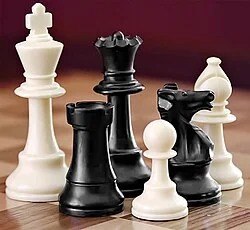
The queen became the strongest piece, maybe because of powerful queens like Isabella of Spain. Castling was added to protect the king. The pieces also changed. The elephant became a bishop to show the church’s power. The chariot became a rook, which looked like a castle.
After nobles, other people started to play too. Merchants in growing towns had more free time, so they played chess. Jewish communities played in their neighbourhoods.
Traveling singers carried chess sets with them. Women played as well. Old pictures show young men and women playing chess together. The game gave people a place to think and talk as equals.
In the 1300s, playing cards came to Europe and became very popular. Cards were fast and easy, so many people chose them for fun. But chess never died.
New rules in the 1400s made it exciting again. Today, chess is loved around the world. When archaeologists found 1,000-year-old chess pieces in Germany, it showed us something clear. The game that started in India, grew in the Islamic world, and came to Europe is still alive after all this time.
Source : Nat Geo
News Recomendation
Loading latest news.....