



Pancasila Remains Relevant as Indonesia’s National Foundation
- 29 Sep 2026 14:08 WIB
- Voice of Indonesia
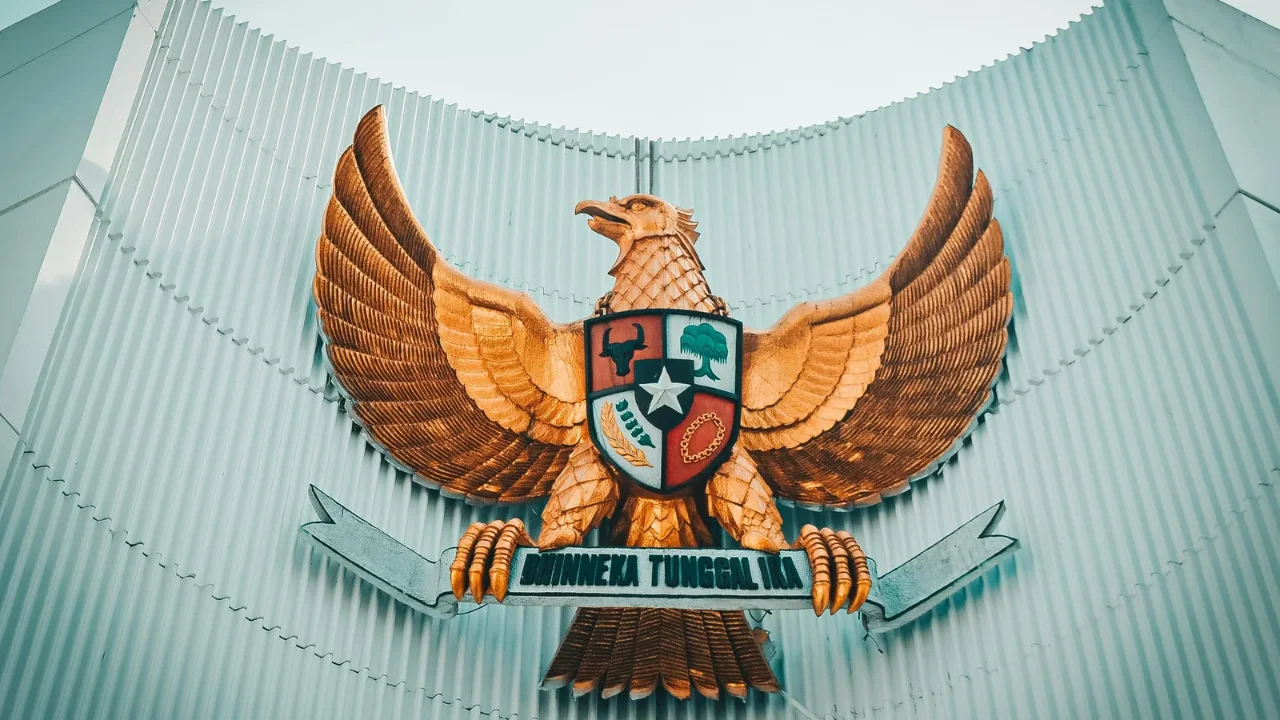
RRI.CO.ID, Jakarta - Indonesia’s national ideology, Pancasila, serves not only as the philosophical foundation of the nation but also as the cornerstone of an independent legal system. This message was highlighted in the latest episode of the Sampan (Salam Pancasila) Podcast, which explores the historical evolution and contemporary relevance of Pancasila.
The podcast featured two guest speakers: former Constitutional Court Chief Justice Prof. Arief Hidayat, who served from 2015 to 2018, and historian Dr. Bondan, who collaborates with the Agency for Pancasila Ideology Development (BPIP) and the National Archives of the Republic of Indonesia (ANRI). They shared insights into Pancasila and its role in shaping Indonesia’s sovereign legal framework, state philosophy, and national identity.
“An amazing process of how Pancasila, which was originally a foundation of the state and philosophy, philosophische grondslag, according to Bung Karno, was then developed into a legal system. As Prof. Arief said, it also became the basis for an economic system, a political system, a social system, and so on,” Dr. Bondan said.
Meanwhile, Prof. Arief Hidayat explained that although Indonesia’s colonial history introduced the Continental European civil law tradition, the nation’s founders chose to establish an independent legal system grounded in Pancasila. He noted that foreign and religious legal concepts could serve as source materials, provided they were contextualized in accordance with Pancasila’s values.
“I have said in international forums that Indonesia has its own legal system. The raw materials can be based on civil law, common law, or religious law, but they must be consistent, coherent, and in correspondence with Pancasila,” he emphasized.
Prof. Arief and Dr. Bondan also discussed the historical process behind the formulation of Pancasila. Between May and July 1945, documents from meetings of the Investigating Committee for Preparatory Work for Independence (BPUPK) were compiled and published, providing important records of the discussions that shaped Indonesia’s state ideology.
“This process is recorded in various documents from the BPUPK meetings, which BPIP compiled together with ANRI, historians, and various stakeholders. The source documents from the first BPUPK meeting, held from 29 May to 1 June 1945, were published, and recently, the book covering The Recess and the second BPUPK meeting, held from 10 to 17 July 1945, was also published,” Dr. Bondan added.
These historical events were pivotal in shaping the foundations of the Indonesian state. On 22 June 1945, a committee formulated the document known as the Jakarta Charter, which outlined the nation’s aspirations, the means to achieve them, and the fundamental principles upon which the state would be established.
As the nation’s ideology and guiding philosophy, Pancasila remains relevant today amid growing challenges to national identity. Younger generations need to understand and appreciate its historical origins and meaning to strengthen their understanding of Indonesia’s national identity.
The Sampan (Salam Pancasila) Podcast is a program organized by the Business Service and Development Division (LPU) of Radio Republik Indonesia, featuring discussions on state ideology, Indonesian history, law, and national identity with expert guests. The podcast aims to promote public awareness and understanding of Pancasila, particularly among younger generations.
News Recomendation
Loading latest news.....