



Pancasila Sanctity Day and the History of the G30S Movement
- 28 Sep 2026 10:20 WIB
- Voice of Indonesia
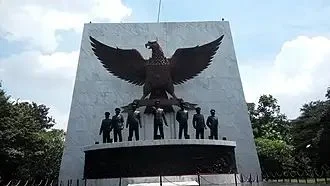
RRI.CO.ID, Jakarta - Pancasila Sanctity Day, observed every 1 October, is closely associated with the 30 September Movement, known as G30S, which took place from the night of 30 September to the early hours of 1 October, 1965. The event marked a significant turning point in Indonesia’s history and influenced the country’s political direction for years to come.
During the coup attempt, a group calling itself the 30 September Movement abducted and killed several Indonesian Army officers. Six generals—General Ahmad Yani, Major General R. Suprapto, Major General M.T. Haryono, Major General S. Parman, Brigadier General D.I. Panjaitan, and Brigadier General Sutoyo Siswomiharjo—were killed along with First Lieutenant Pierre Tendean, who was an aide to General A.H. Nasution.
The officers’ bodies were later found in an old well in the Lubang Buaya area of East Jakarta. The tragedy caused widespread shock and was followed by actions by the Army, under the leadership of Major General Soeharto, to take control of several strategic facilities and restore order in Jakarta.
Following the G30S event, the Indonesian Communist Party (PKI) was accused of being the main force behind the movement. The government subsequently took action against PKI members and alleged sympathizers in various parts of the country. The crackdown resulted in a large number of casualties and left lasting social and political consequences for Indonesian society.
Over time, the G30S tragedy became an important part of the historical narrative during the New Order era. The film Pengkhianatan G30S/PKI was also widely screened every year as part of efforts to remind the public of the government’s official narrative of the events. After the Reformasi era began, the film was no longer required to be screened, while the history of G30S has continued to be studied and debated by historians and researchers.
Various studies have since offered different analyses of the masterminds behind G30S. In addition to narratives identifying the PKI as the main party responsible, other studies have examined the possible involvement or roles of other actors. These differing interpretations have kept G30S as one of the most widely studied and debated episodes in Indonesian history.
1 October was subsequently designated as Pancasila Sanctity Day. The commemoration serves as an opportunity to remember the victims of the 1965 events while reaffirming Pancasila’s position as Indonesia’s state ideology.
Pancasila Sanctity Day is not only a historical commemoration but also an opportunity to strengthen the implementation of Pancasila’s values in social, national, and civic life. These values include belief in God, humanity, national unity, democracy, and social justice.
Amid Indonesia’s diverse society, the values of unity and respect for humanity play an important role in preserving national diversity. The implementation of Pancasila can also be reflected in everyday life through mutual cooperation, respect for others, deliberation, and efforts to promote social justice.
The commemoration of Pancasila Sanctity Day, therefore, provides an opportunity to reflect on history and draw lessons from the political and social conflicts of the past. The spirit of unity is expected to remain a foundation for Indonesia as the country faces various challenges and developments in the future.
News Recomendation
Loading latest news.....