



BMKG Emphasizes Preparedness Alongside Earthquake Warning Systems
- 28 Sep 2026 20:50 WIB
- Voice of Indonesia
Key Points
- BMKG emphasized that early warning systems must be accompanied by community preparedness through regular training and earthquake simulations.
- The agency conducted an Earthquake Field School (SLG) in Karanganyar, Central Java, to strengthen local disaster response capacity.
- Indonesia operates hundreds of BMKG seismic sensors and other monitoring technologies to detect earthquakes and potential tsunami impacts.
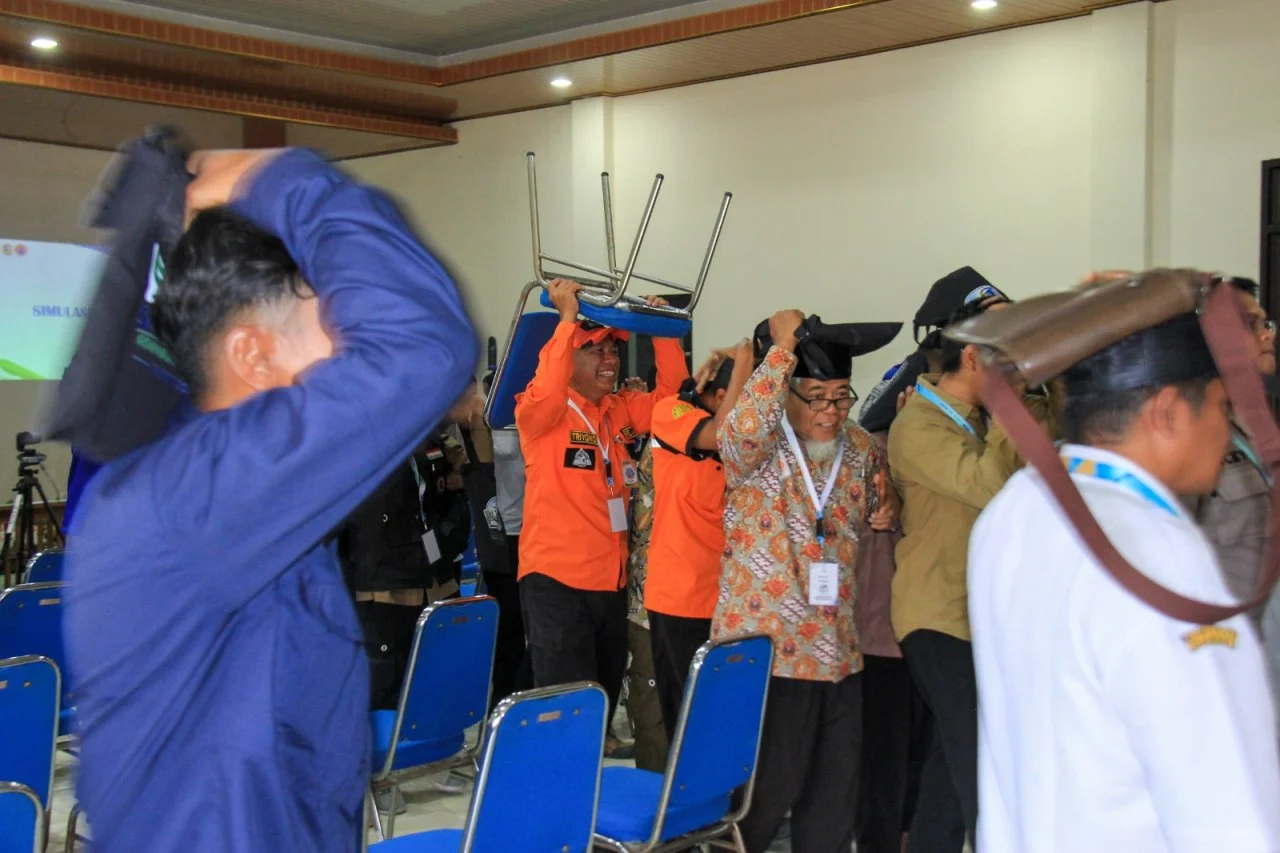
RRI.CO.ID, Jakarta - The Meteorology, Climatology and Geophysics Agency (BMKG) has emphasized that community and local administration preparedness must be strengthened through training programs to reduce earthquake risks, as earthquakes remain impossible to predict precisely in terms of time and location.
BMKG head Teuku Faisal Fathani said in a statement in Jakarta on Monday that the agency held its latest Earthquake Field School (SLG) for residents of Jatiyoso Subdistrict in Karanganyar Regency, Central Java.
Karanganyar's proximity to an active fault and the southern Java subduction zone requires residents to develop trained safety responses and reflexes, he said.
The program involved not only local residents but also 53 participants from the Regional Disaster Mitigation Agency (BPBD), relevant government agencies, educational institutions, volunteer groups, and media organizations in Karanganyar.
"Participants were introduced to the earthquake early warning system (EEWS), earthquake simulations and decision-making simulation exercises, or table-top exercises," Teuku Faisal said.
He explained that instructors from the Sleman Class I Geophysical Station sought to translate disaster information into practical mitigation measures that could be implemented in the field.
According to Teuku Faisal, the absence of technology capable of precisely predicting when and where an earthquake will occur highlights the need for all stakeholders in disaster-prone areas to receive preparedness training from an early stage.
Indonesia currently operates hundreds of seismic sensors managed by BMKG. The government also uses other technologies, including buoys, tide gauges and undersea fiber-optic cables owned by various ministries and agencies, to detect secondary hazards triggered by earthquakes, such as tsunamis.
"Therefore, the SLG program is aligned with the global Early Warning, Early Action and Early Warning for All initiatives," he said.
BMKG hopes participants will share the disaster mitigation knowledge and skills they have acquired with their families and surrounding communities to help reduce earthquake risks. ***
News Recomendation
Loading latest news.....