



September Fire Control Measures Focus on Rapid Detection
- 04 Sep 2026 14:39 WIB
- Voice of Indonesia
Key Points
- The Ministry of Forestry is strengthening early detection and rapid response to prevent fires from spreading and to reduce their impact on communities and economic activities.
- Operations are concentrated in areas with high hotspot and fire activity, including West Kalimantan, Central Kalimantan, Riau, Jambi, South Sumatra, and South Kalimantan.
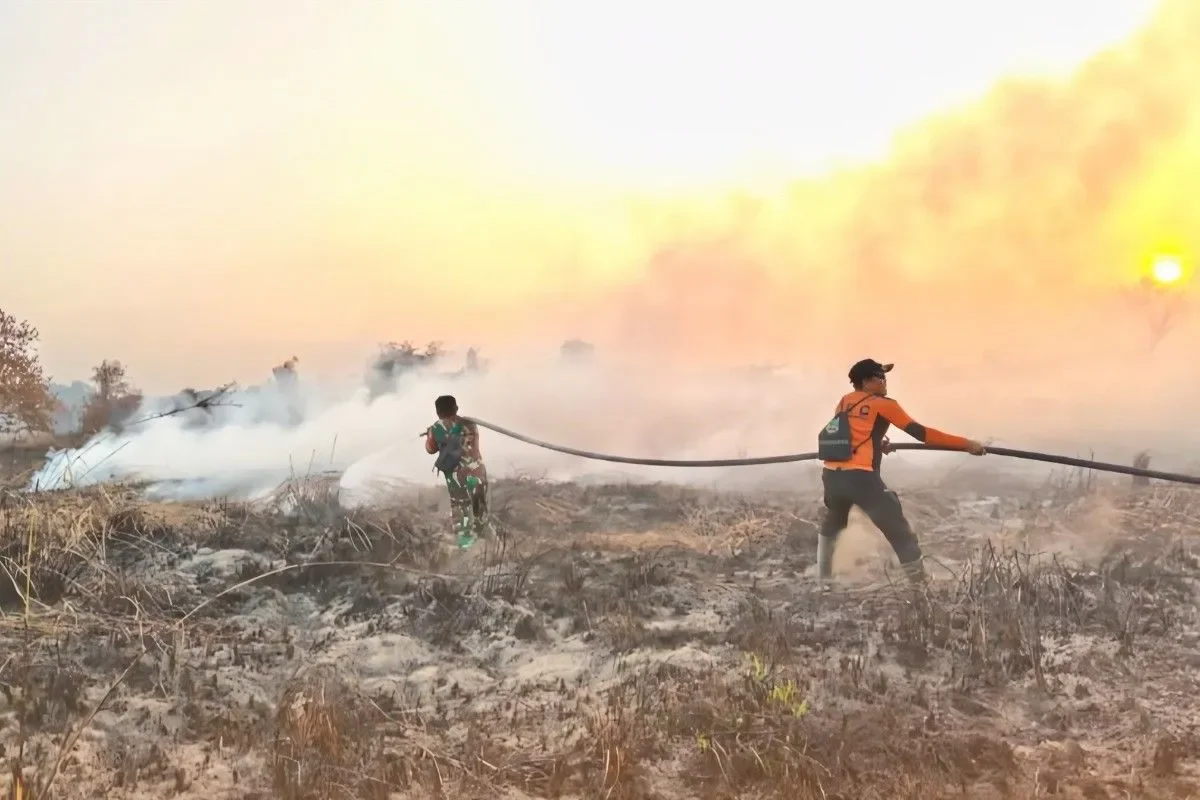
RRI.CO.ID, Jakarta – September marks a critical phase in forest and land fire mitigation, as it often coincides with the peak or late dry season when vegetation and peatlands become drier and fires can spread more easily.
The Ministry of Forestry is strengthening early detection and response speed to prevent fires from spreading and to reduce their impact on communities and economic activities.
Head of the Public Relations and Foreign Cooperation Bureau at the Ministry of Forestry, Ristianto Pribadi, said operational efforts would focus on areas with high concentrations of hotspots and active fires, particularly in West Kalimantan and Central Kalimantan.
“September is a very critical phase, so our efforts will focus on regions with hotspot and fire incident concentrations,” Ristianto said in Jakarta on Friday, September 4, 2026, as quoted by Antara.
Preparedness measures also remain in place for other vulnerable regions, including Riau, Jambi, South Sumatra, and South Kalimantan.
“Early detection and rapid response are crucial so that fires can be handled before they spread, thereby mitigating their impact on communities, health, the environment, the economy, and transportation connectivity,” he said.
The Ministry of Forestry is strengthening its control center to accelerate response to fire incidents. The center is integrated with the Jaga Rimba Decision Support System.
The Ministry is also enhancing preparedness among Forest Utilization Business License (PBPH) holders, monitoring peatland hydrology, and conducting compliance evaluations and law enforcement.
Forest and land fire mitigation involves collaboration among various stakeholders, including the National Disaster Mitigation Agency (BNPB), the Meteorology, Climatology, and Geophysics Agency (BMKG), Regional Disaster Mitigation Agencies (BPBD), the military (TNI), the police (Polri), local administrations, communities, and the business sector.
Ristianto said operations are adjusted based on fire conditions. These efforts include patrolling, verifying hotspots through ground checks, extinguishing fires on the ground, and creating firebreaks to stop the spread of flames.
“Additionally, operations involve thorough cooling‑down processes, aerial patrols, water bombing, and weather modification operations (OMC) in areas and at times that meet meteorological requirements,” he said.
The government has deployed 53 aircraft across six priority provinces. Nineteen aircraft are used for aerial patrols and weather modification, while the remaining 34 are used for water bombing.
Aerial support has increased, but ground operations remain central to fighting forest and land fires. These operations are essential for isolating and fully extinguishing fire sources, particularly in peatlands where subsurface embers can persist and reignite.
“Ground operations are also continuously being strengthened because they are the primary means of isolating and fully extinguishing fire sources, especially in peatlands where subsurface embers pose a risk of reignition,” Ristianto said. ***
News Recomendation
Loading latest news.....