



Minister Bahlil: Global Geopolitical Turmoil Like Malaria That Can Recur
- 16 Sep 2026 13:01 WIB
- Voice of Indonesia
Key Points
- Minister Bahlil Lahadalia compared ongoing global geopolitical tensions to malaria that can recur unexpectedly, triggering energy supply uncertainty.
- Despite global price fluctuations, the government remains strictly committed to keeping subsidized fuel prices stable to protect public purchasing power.
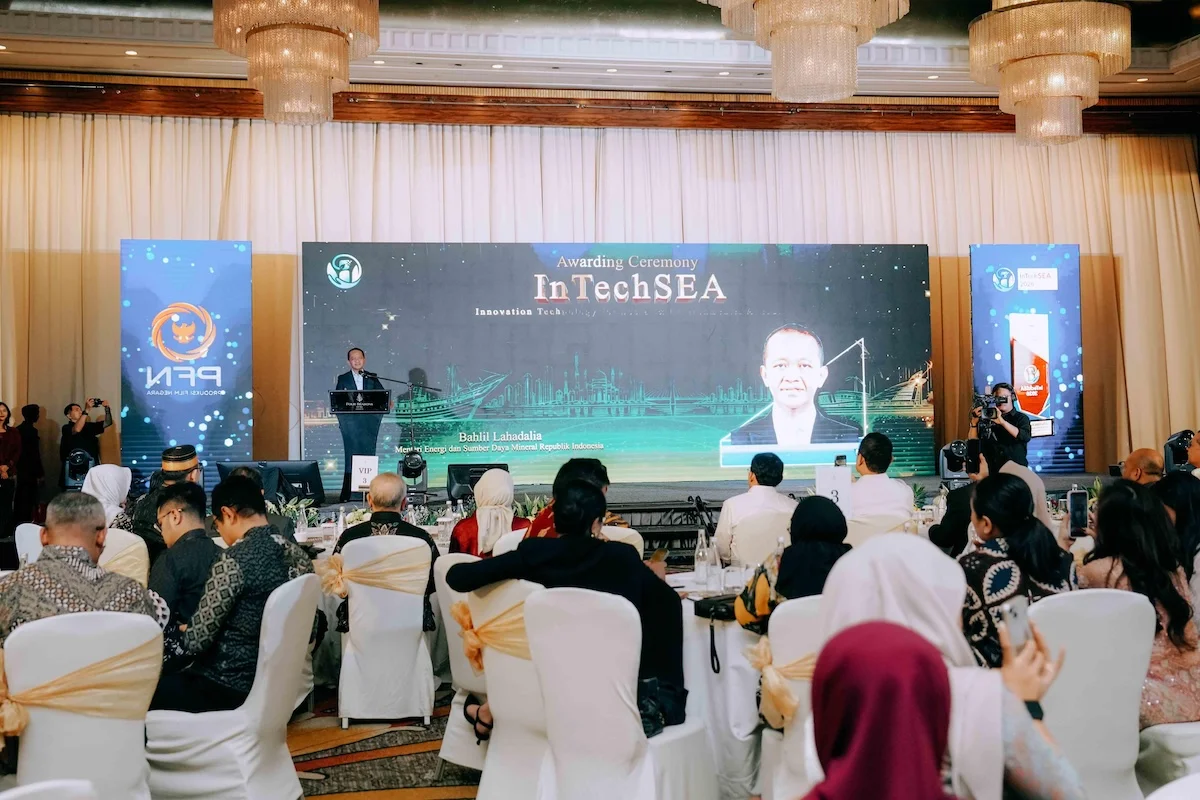
RRI.CO.ID, Jakarta – Ongoing global geopolitical tensions involving Iran, the United States, and Israel have been likened to malaria, a disease that can recur at any time and trigger energy supply uncertainty. Minister of Energy and Mineral Resources (ESDM) Bahlil Lahadalia, made the statement while giving a keynote speech at the Innovation Technology for Social and Environmental Awards (INTECHSEA) 2026 in Jakarta on Monday, September 14, 2026.
"I always analogize this like malaria. It heals in the morning, and it relapses at night," Bahlil stated before high-ranking officials and academicians.
The impact of this global turbulence is felt directly at home because Indonesia's oil demand reaches approximately 1.6 million barrels per day, while national lifting capacity hovers around 600,000 to 610,000 barrels per day. This supply gap forces the government to take strategic steps to secure national energy needs without sacrificing the economic stability of the people.
To cover the domestic supply deficit, Bahlil revealed that he accompanied President Prabowo Subianto on a bilateral visit to Russia to negotiate long-term crude oil supplies. The government ensures that national energy sovereignty remains firmly upheld without any interference from foreign powers.
Even though global oil price fluctuations exceed the assumptions of the State Budget, the government maintains a firm commitment not to raise subsidized fuel prices. This commitment is undertaken to protect the purchasing power of the broader public amidst a pressure-filled global economic situation.
Alongside securing energy supplies, the government is also strengthening economic independence through mineral downstreaming policies that have proven to significantly boost export values year after year. Moving forward, this policy will be optimized by requiring smelters to collaborate with local businesses and micro enterprises, supported by funding from the Danantara Investment Management Agency.
As the culmination of these national resilience strategies, the government expresses full support for Hasanuddin University's establishment of the Critical Mineral Institute to strengthen rare earth metal research in eastern Indonesia. This comprehensive step is expected to empower local communities to become masters in their own land through equitable distribution of economic benefits.
News Recomendation
Loading latest news.....