



OECD Highlights Teacher Quality as Key to Indonesia’s Human Capital Growth
- 10 Sep 2026 09:31 WIB
- Voice of Indonesia
Key Points
- The OECD states that strengthening teacher welfare and quality is essential to improving education outcomes in Indonesia.
- PISA results show that Indonesian students’ performance still needs improvement across core subjects.
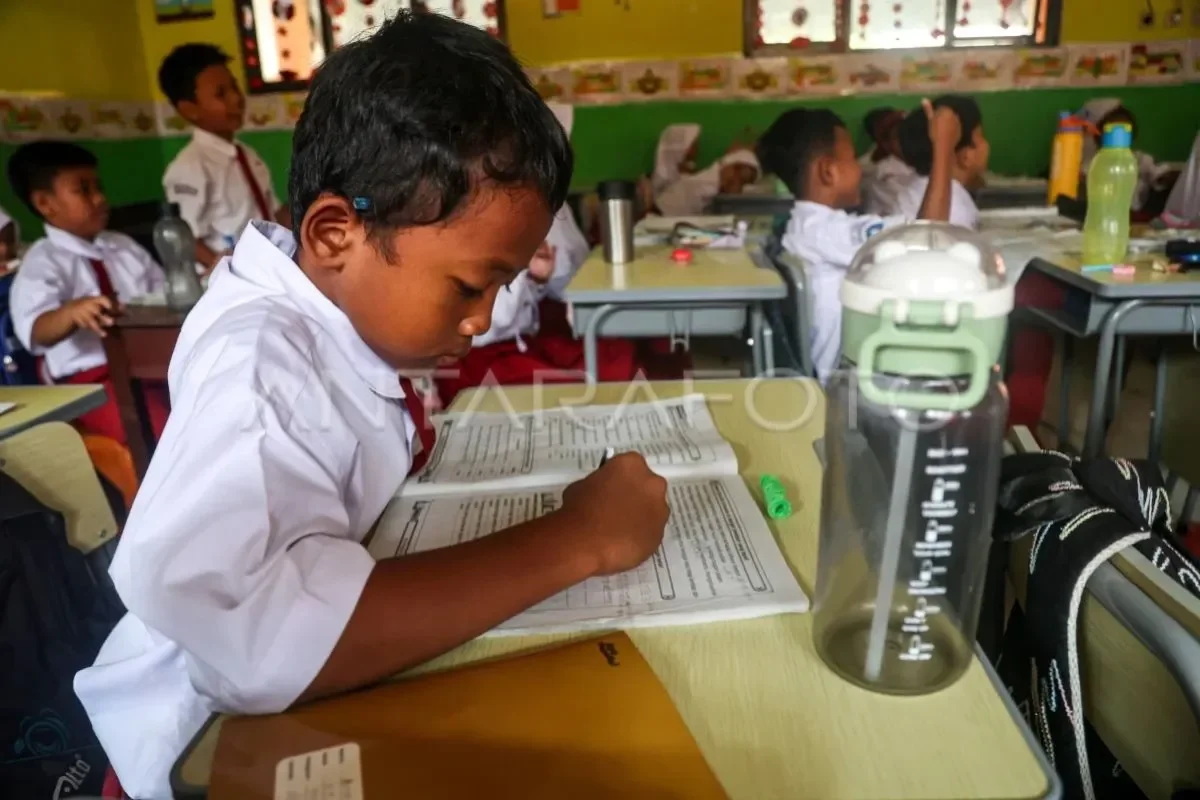
RRI.CO.ID, Jakarta - Improving Indonesia’s education system hinges on strengthening teacher welfare and quality. The Organization for Economic Co-operation and Development (OECD) stresses that teachers play a vital role in boosting learning outcomes and supporting Indonesia’s efforts to achieve high-income status.
Head of the OECD Representative Office in Jakarta, Massimo Geloso Grosso, said teacher quality is a key factor in determining learning outcomes. He emphasized that Indonesia’s education reforms require adequate teacher support to be implemented effectively in the classroom.
“In essence, teacher quality is very important. Teacher quality is a crucial factor in improving learning outcomes,” Grosso said at a joint conference with the Ministry of National Development Planning (PPN)/National Development Planning Agency (Bappenas) and the Asian Development Bank Institute (ADBI) in Jakarta on Wednesday, September 9, 2026, as quoted by Antara.
Grosso noted that Indonesia has made progress in expanding access to education. Access to primary education is now almost universal, while participation in secondary and higher education has increased significantly.
However, expanding access must be balanced with improving learning quality. The Program for International Student Assessment (PISA) results show that Indonesian students’ abilities still need improvement.
Student performance in mathematics, reading, and science remains below the average of OECD member countries. Nevertheless, Grosso highlighted positive developments in reading ability. While many countries have experienced sharp declines, Indonesia’s reading performance has remained relatively stable.
He said improving education requires teaching students to think critically and apply their knowledge--skills that are increasingly important as digital technology and artificial intelligence advance. These technological changes make critical thinking, problem‑solving, and knowledge application essential.
Grosso added that several Indonesian education reforms are moving in the right direction. The challenge is ensuring consistent classroom implementation, including clear guidance and support for teachers and students.
This support must also address capacity gaps between regions, as teachers and schools in remote areas often have limited resources that affect policy implementation.
He stressed that education reform depends on more than curriculum or policy changes. Teachers are the main implementers in the classroom, so improving teacher quality and welfare is essential to support their role.
The OECD also underscores the importance of policy stability. Curriculum reforms take time to implement and produce measurable improvements in student learning outcomes.
Grosso cited Japan as an example, noting its scheduled and predictable curriculum review process. Revisions are conducted every ten years, providing certainty for the education system in implementing and evaluating changes.
Therefore, improving teacher quality, providing adequate support, and maintaining consistent education policies are crucial to strengthening the quality of Indonesia’s human resources. ***
News Recomendation
Loading latest news.....