



Istiqlal Mosque: Symbol of Independence and Tolerance
- 07 Sep 2026 08:58 WIB
- Voice of Indonesia
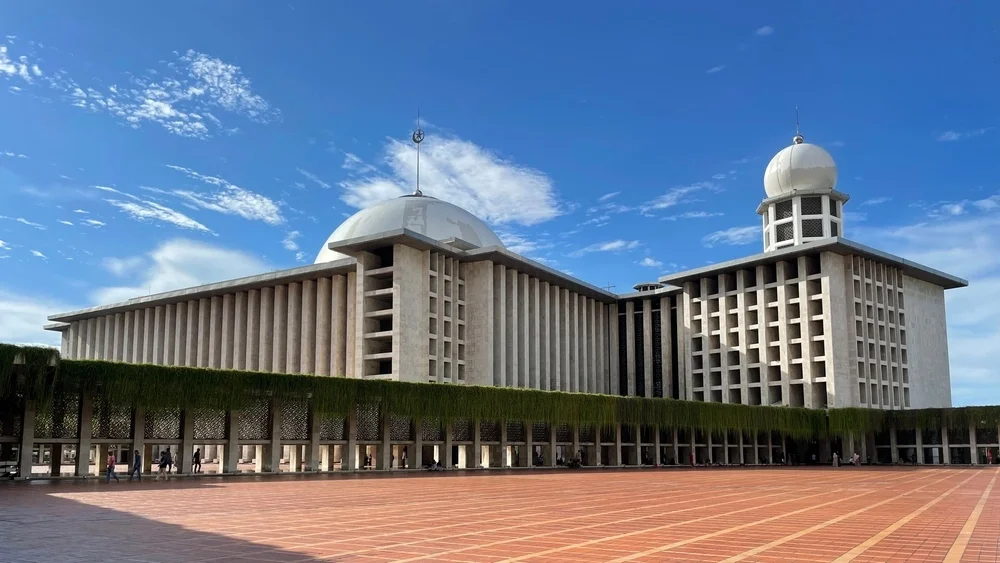
RRI.CO.ID, Jakarta - Istiqlal Mosque in Central Jakarta is recognized as the largest mosque in Southeast Asia, and it serves as a national symbol that brings together the history of the independence struggle, monumental architecture, and the spirit of religious tolerance. The name "Istiqlal" itself comes from Arabic, meaning "independence," reflecting the mosque's origins as an expression of gratitude from the Indonesian people for the independence they achieved.
According to data from Indonesia Travel, the mosque stands on 9.5 hectares of land on Jalan Taman Wijaya Kusuma, Pasar Baru, Sawah Besar, and can accommodate more than 200,000 worshippers at once, making it one of the largest houses of worship in the world by capacity. This enormous scale strengthens its position not only as a place of prayer but also as a national icon that frequently hosts large-scale religious events.
The idea of building Istiqlal Mosque emerged not long after Indonesia gained independence, conceived as a national project that brought together various elements of the nation. Indonesia's first president, Ir. Soekarno, was the key figure behind the project, and the groundbreaking ceremony was held on 24 August 1961.
The construction process took a long time before it was finally completed in 1978, some 17 years after the groundbreaking. That lengthy construction period reflects both the massive scale of the project and the challenges faced during Indonesia's early years of independence.
One of the most fascinating facts about Istiqlal Mosque is its architect, Friedrich Silaban, an architect of Batak Toba descent who was a Protestant Christian. Silaban won the design competition for the mosque in 1955 after beating out dozens of other participants, a fact that is still regarded today as a symbol of Indonesia's diversity from the very start of the mosque's construction.
Silaban's design carried a modern, minimalist architectural concept while remaining monumental, with several elements rich in philosophy. The twelve main pillars of the mosque symbolize the birth of the Prophet Muhammad on the 12th of Rabiul Awal, the main dome's 45-meter diameter represents Indonesia's year of independence, 1945, while the single minaret standing 96 meters tall symbolizes the 99 names of God known as Asmaul Husna.
Beyond its architectural value, Istiqlal Mosque also holds several other unique features, such as a giant drum more than a century-old that was brought from Garut, West Java, along with a sophisticated acoustic system in the main hall that makes use of sound reflections from the metal walls. The mosque's location directly beside Jakarta Cathedral further reinforces its image as a symbol of religious tolerance in Indonesia.
Today, Istiqlal Mosque has grown into a leading destination for religious and educational tourism in Jakarta, drawing visitors across faiths and nationalities. Management provides educational tours with official guides who explain the mosque's history, design philosophy, and the national values embodied in the building, complemented by a library and an exhibition space that houses archives of the mosque's construction history.
News Recomendation
Loading latest news.....