



Economist: New BI Governor Must Play a Key Role in Maintaining Rupiah Exchange Rate
- 27 Jul 2026 13:11 WIB
- Voice of Indonesia
Key Points
- Economist Didik J. Rachbini stressed that the new BI governor must play a leading role in maintaining rupiah stability through coordination with ministries.
- BI Senior Deputy Governor Destry Damayanti is serving as acting governor following Perry Warjiyo’s resignation, with the government set to begin the selection process for his permanent successor.
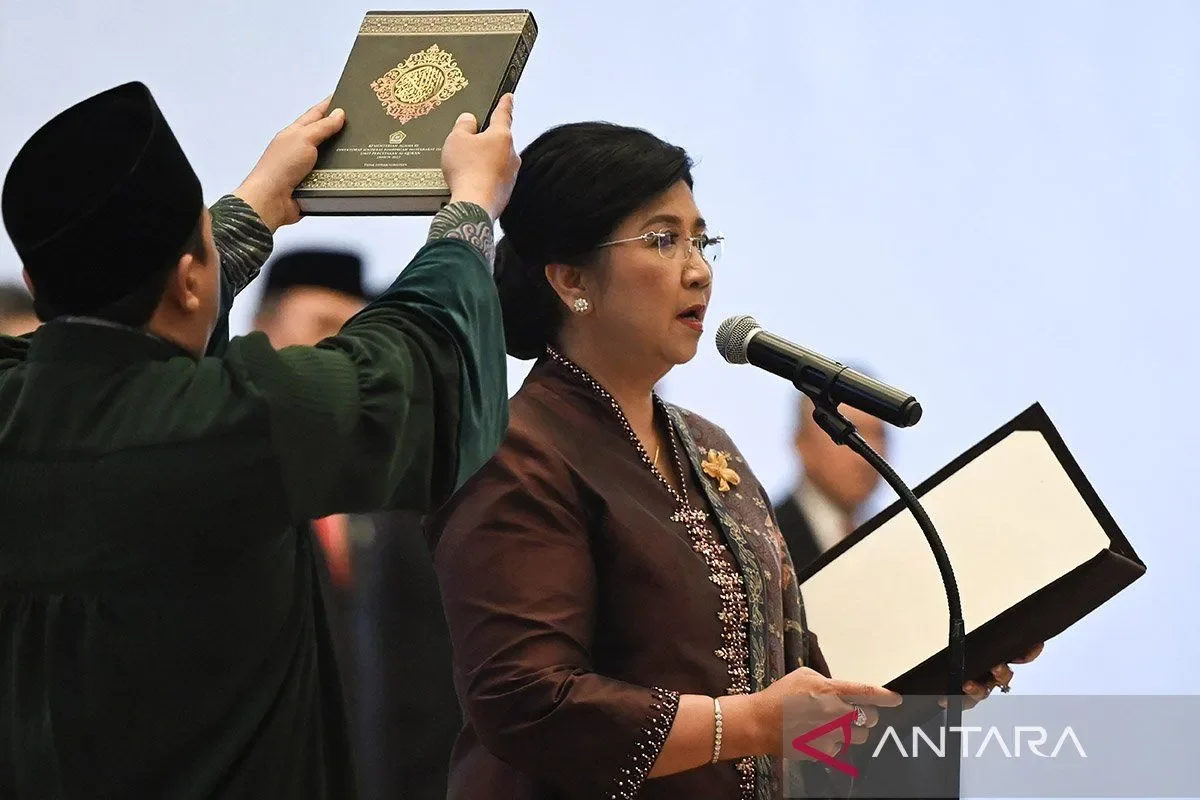
RRI.CO.ID, Jakarta - The leadership transition at Bank Indonesia (BI) following the resignation of Governor Perry Warjiyo is seen as an opportunity to strengthen coordination of monetary, fiscal, and real sector policies to safeguard national economic stability.
Institute for Development of Economics and Finance (Indef) Senior Economist Didik J. Rachbini said the new BI governor must play a more significant role in maintaining the rupiah exchange rate through collaboration with various ministries.
According to Didik, the challenge of stabilizing the rupiah no longer depends solely on monetary policy but is also shaped by trade, investment, industry, and fiscal conditions.
He stressed that the new BI governor should not focus only on monetary duties but must also act as a driving force for broader economic policy coordination.
“Coordination is a must and is absolutely Bank Indonesia’s responsibility to maintain the exchange rate. The new governor must not be passive in this coordination but needs to play a leading role with other ministries,” Didik said in a written statement in Jakarta on Monday, July 27, 2026, as quoted by Antara.
He emphasized that the next BI governor will play a critical role in safeguarding the rupiah by strengthening coordination with the Ministry of Finance, the Ministry of Trade, and ministries overseeing investment and industry to reinforce the country’s economic fundamentals.
Didik also argued that bolstering Indonesia’s foreign exchange reserves should be a shared priority for BI and the government. Strong reserves, he said, are essential to maintaining market confidence, supporting currency interventions, and meeting external debt obligations.
He noted that pressure on the rupiah is not driven solely by monetary factors but can also stem from trade and current account deficits, as well as weaknesses in the real economy. Maintaining exchange rate stability, therefore, requires close policy coordination rather than monetary measures alone.
Didik called for joint efforts to boost value‑added exports, reduce import dependence, strengthen industrial competitiveness, and attract foreign direct investment to increase foreign exchange inflows.
“Bank Indonesia’s task is not limited to setting monetary policy, adjusting interest rates, or maintaining the payment system. When the exchange rate comes under pressure, BI must take the lead in coordinating with the government,” he said.
BI Senior Deputy Governor Destry Damayanti is currently serving as acting governor following Perry Warjiyo’s resignation. The government is expected to issue a presidential decree formally accepting Perry’s resignation before beginning the selection process for a permanent successor.
Under the Bank Indonesia Law, the president will nominate a candidate for BI governor, who must undergo a fit‑and‑proper test by the House of Representatives’ Commission XI. Following parliamentary approval, the nominee will be formally appointed and sworn in as the next Governor of Bank Indonesia. ***
News Recomendation
Loading latest news.....