



House Urges Stronger Legal Protection for Migrant Workers Abroad
- 17 Jul 2026 22:11 WIB
- Voice of Indonesia
Key Points
- Commission IX urges stronger protection for Indonesian migrant workers (PMI), especially those abroad without proper procedures.
- Minister Mukhtarudin stresses collaboration, saying handling unprocedural migrant workers requires coordination across ministries and institutions.
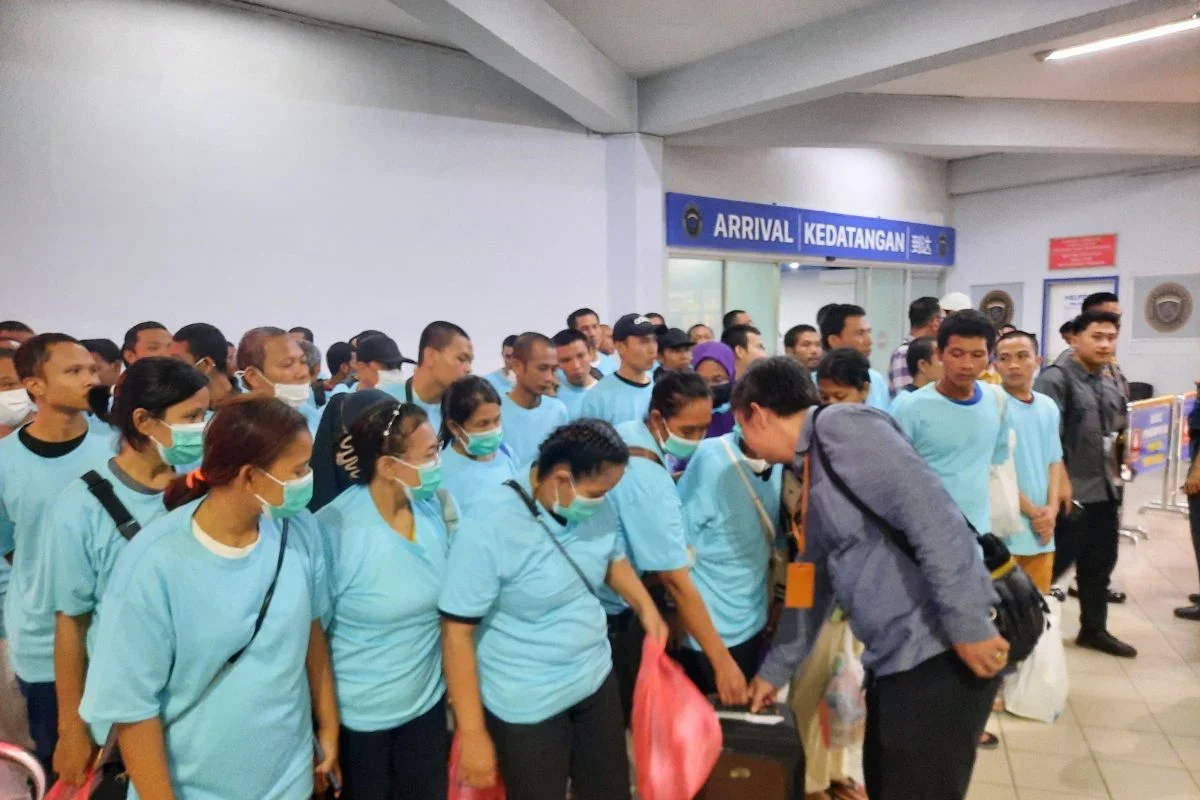
RRI.CO.ID, Jakarta - Commission IX of the House of Representatives (DPR) has urged the government to strengthen legal protections for Indonesian migrant workers (PMI), particularly those who depart abroad without proper procedures.
Lawmakers said this step is crucial to ensure workers continue to receive their rights and justice when facing problems in host countries.
Commission IX lawmaker Irma Suryani Chaniago raised the issue in a meeting with the Ministry of Protection of Indonesian Migrant Workers (P2MI). She noted that many migrant workers are not officially registered, making it difficult for them to obtain legal protection in destination countries.
“It’s difficult for undocumented workers to obtain justice there. They depart illegally and then fail to report their whereabouts, which is why many problems arise,” Irma said at the Senayan Parliament Complex in Jakarta on Thursday, July 17, 2026.
The DPR also called for stronger safeguards against wage deductions by agents and forced labor, particularly in the shipping sector. Irma stressed that better cooperation between institutions is needed to avoid blame‑shifting, as the state has a responsibility to protect its citizens, including migrant workers facing difficulties abroad.
Commission IX commended the Ministry of P2MI for successfully resolving several migrant worker cases that had previously been reported to the DPR.
P2MI Minister Mukhtarudin emphasized that handling non‑procedural migrant workers cannot be done in isolation and requires collaboration across ministries and institutions.
He explained that the line between unprocedural placement and human trafficking is often difficult to distinguish, making an integrated approach essential. “The difference between illegal placement and trafficking is very thin; they can be considered two sides of the same coin,” Mukhtarudin said.
He added that the handling of non‑procedural migrant workers is regulated under a Presidential Regulation on the Human Trafficking Task Force, which involves the police, the Indonesian military (TNI), immigration, customs, and the Ministry of Law.
The P2MI continues to coordinate with all members of the task force to strengthen efforts to suppress and eradicate human trafficking practices involving Indonesian migrant workers. (Misni Parjiati)
News Recomendation
Loading latest news.....