



Minister Zulkifli Accelerates Regulatory Reform to Tackle Urban Waste Crisis
- 13 Jul 2026 12:55 WIB
- Voice of Indonesia
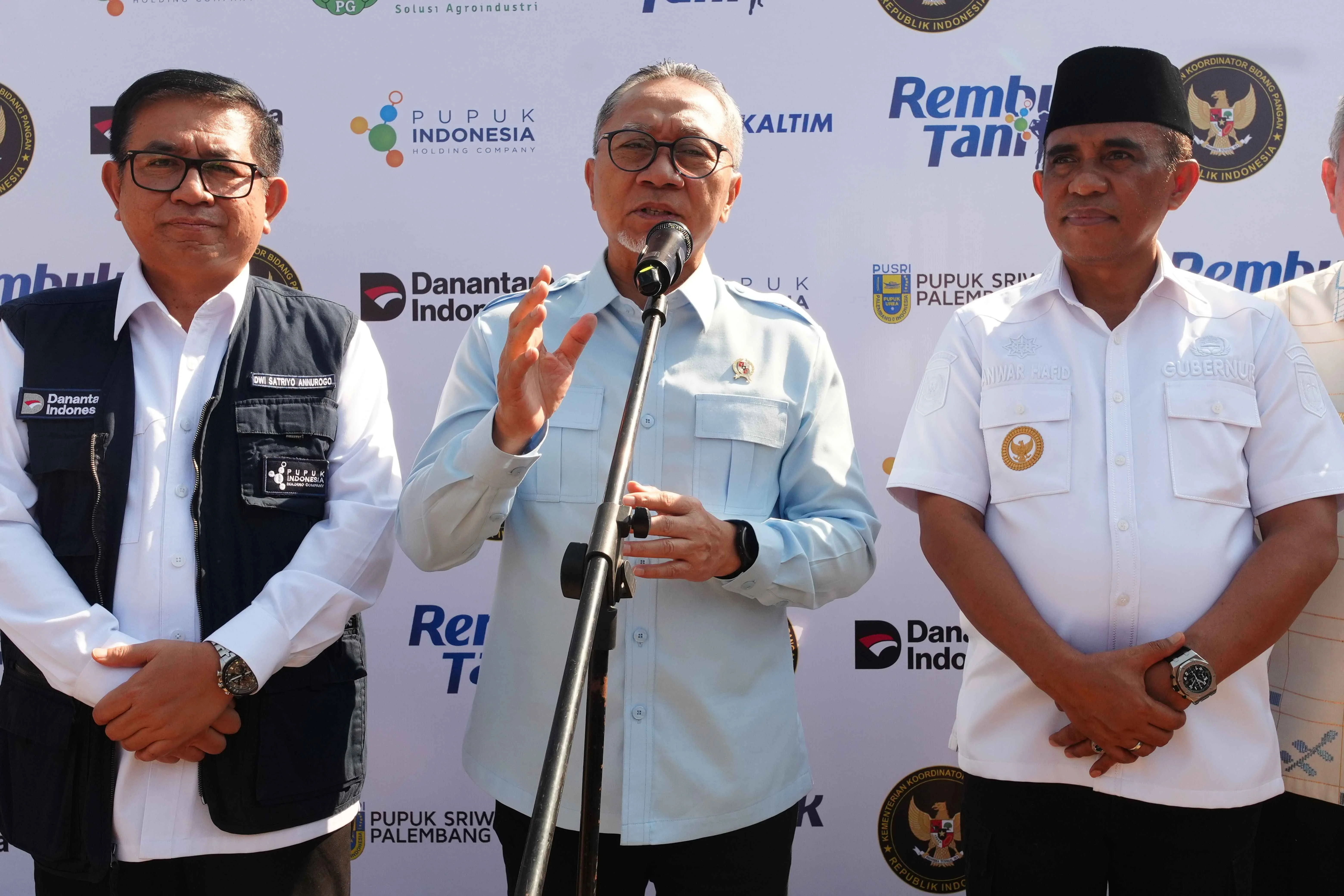
RRI.CO.ID, Jakarta - The Indonesian government is accelerating regulatory reform to improve waste management by simplifying rules that have long hindered the development of waste processing facilities. The initiative forms part of the government's target to resolve waste management problems in major cities across the country by 2028.
Speaking after a discussion in Wonosobo, Central Java, on Sunday, July 12, 2026, Coordinating Minister for Food Affairs, Zulkifli Hasan, said the government has streamlined licensing regulations to speed up the construction of waste management infrastructure. He said the policy aims to make project implementation faster and more effective.
He noted that complex regulations had delayed waste management projects for years. “For 11 years, only two permits were issued for large open-dumping sites handling more than 1,000 tons of waste. One project moved forward, while the other did not,” he said.
He added that the government has significantly simplified the regulatory framework to remove bureaucratic obstacles. “We simplified the regulations. Out of hundreds of rules, only three remain,” Zulkifli said.
According to him, the accelerated program has already covered more than half of the targeted cities. “We have now begun work in 24 of the 40 targeted cities, including Jakarta, Surabaya, Bandung, Tangerang, Palembang, and Medan,” he said.
The government plans to equip all 40 cities with modern waste management facilities capable of reducing waste accumulation while converting waste into energy and other value-added products. The facilities are expected to reduce reliance on open dumping and conventional landfill sites.
He expressed confidence that the project would be completed in stages over the next two years. “God willing, 50 percent will be completed in 2027, and the remaining 50 percent in 2028,” he said.
The government expects the accelerated development of waste management facilities, supported by streamlined regulations, to create a more modern, efficient, and sustainable waste management system. It also emphasized that close cooperation between the central government, regional administrations, businesses, and local communities will be essential to achieving the 2028 target.
News Recomendation
Loading latest news.....