



Women at the Forefront of the Creative Economy Boom
- 29 Jun 2026 16:34 WIB
- Voice of Indonesia
Key Points
- ccording to BPS, approximately 58.4 percent of the creative economy workforce is female, while around 41 percent is male.
- BPS encouraged creative economy businesses to participate in the 2026 Economic Census, with data supporting policies on investment, job creation, and national competitiveness.
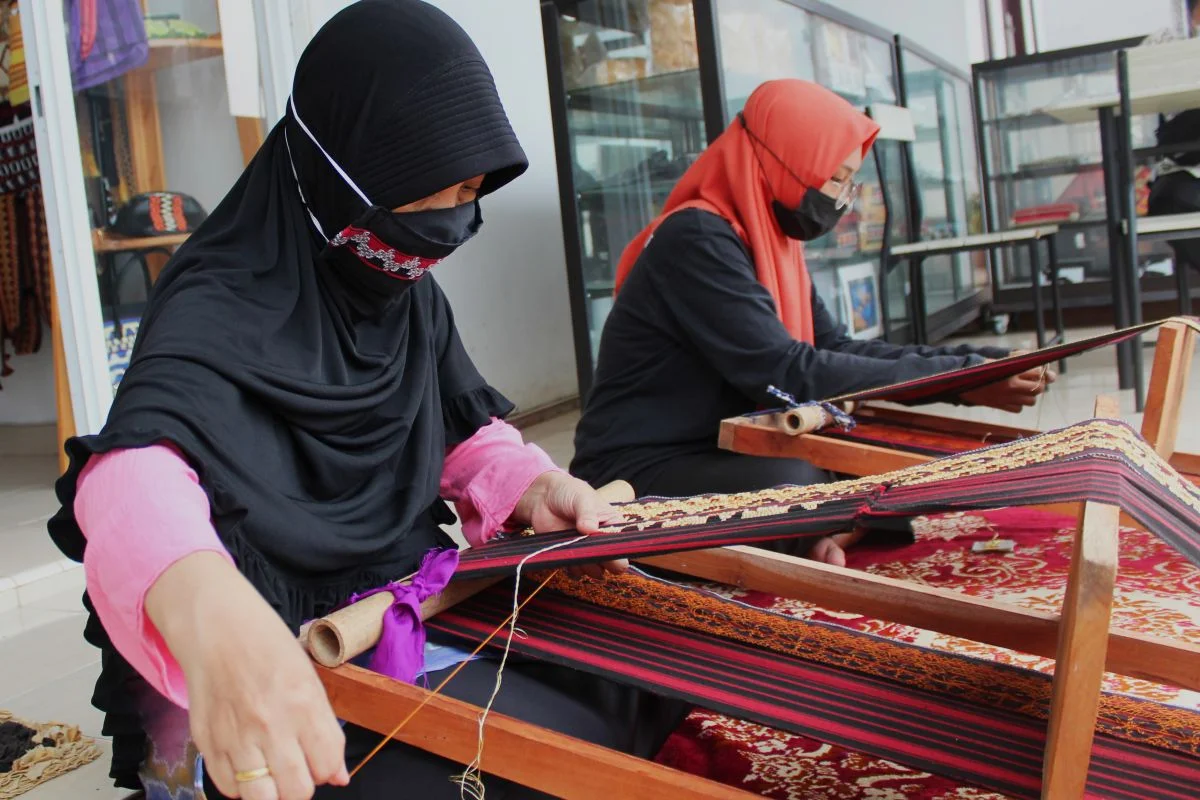
RRI.CO.ID, Jakarta - The creative economy sector has not only recorded higher growth than the national economic average but has also become an expanding space for women’s economic empowerment.
Head of the Central Bureau of Statistics (BPS), Amalia Adininggar Widyasanti, stated that approximately 58.4 percent of the workforce in the creative economy sector is female, while around 41 percent is male.
She explained that this composition highlights the sector’s significant potential as a driver of women’s empowerment. It contributes to creating inclusive employment opportunities and helps alleviate poverty.
“This data shows that the creative economy sector offers strong opportunities for women’s empowerment and, overall, can help reduce poverty,” Amalia said at a press conference on the 2026 Economic Census for the Creative Economy Sector in Jakarta on Monday, June 29, 2026, as reported by Antara.
Amalia noted that the creative economy sector has distinct characteristics compared to other industries because it can grow rapidly while creating inclusive employment opportunities.
“The advantage of the creative economy sector is its rapid and inclusive growth. It not only thrives but also has a significant positive impact on employment, benefiting many people,” she explained.
By 2025, BPS recorded that the creative economy sector employed 27.4 million workers, or about 18.7 percent of the national workforce. In recent years, the sector has also posted an average growth rate of 6.86 percent, around 1.7 percent higher than the national economic growth rate.
The distribution of the creative economy workforce remains concentrated on Java. West Java has the largest number of workers, followed by Central Java and East Java.
Together, these provinces account for 57.81 percent of the national creative economy workforce. Around 70–75 percent of workers are based in urban areas, while about 25 percent come from rural areas.
By subsector, the largest employment opportunities come from culinary, fashion, and crafts. These three subsectors also contributed significantly to creative economy exports, reaching USD 2.61 billion by mid‑2026.
The creative economy workforce is dominated by women and largely comprises the productive age group. Millennials make up 36.63 percent of the workforce, followed by Generation X at 27.94 percent and Generation Z at 26.40 percent.
Amalia added that the sector’s growth trend is driven by culinary, television and radio, fashion, and application and game development subsectors.
She encouraged all creative economy businesses to participate in the 2026 Economic Census of the Creative Economy Sector. The data collected will serve as a crucial basis for formulating policies that encourage investment, expand job creation, develop intellectual property, and enhance national competitiveness.
“Data quality will significantly determine the quality of policies and the effectiveness of future creative economy development programs, serving as a comprehensive foundation for developing adaptive and impactful policies,” Amalia said. ***
News Recomendation
Loading latest news.....