



Ministry Adopts WIPO Data Model to Strengthen National Ecosystem
- 12 Jun 2026 13:28 WIB
- Voice of Indonesia
Key Points
- Indonesia adopts WIPO’s CEDM to strengthen the creative economy.
- The ministry seeks deeper cooperation on intellectual property and creative financing.
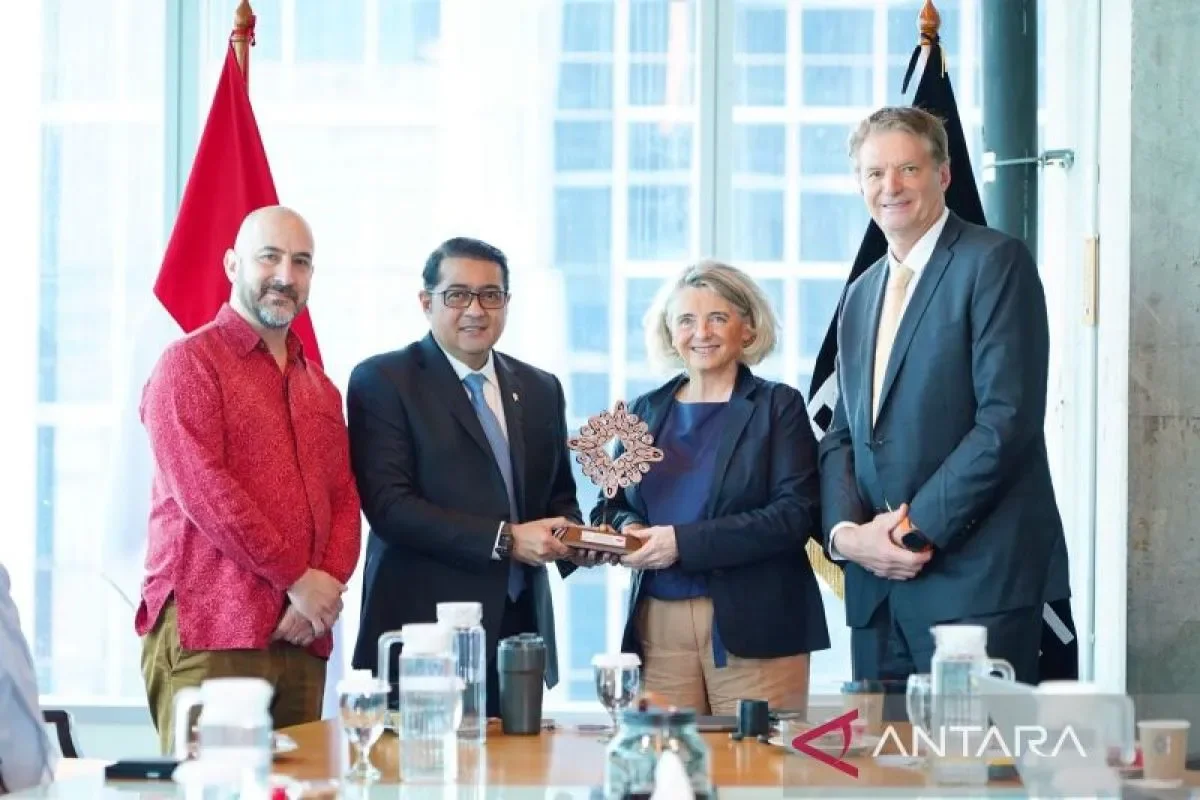
RRICO.ID, Jakarta - The Indonesian Ministry of Creative Economy (Ekraf) is anchoring its long-term development strategies in high-fidelity global standards by implementing the Creative Economy Data Model (CEDM) in partnership with the World Intellectual Property Organization (WIPO).
The joint initiative aims to overhaul Indonesia's current creative metric systems, substituting broad estimates with a comprehensive, scalable, and data-driven measurement framework.
"CEDM will help us map the strengths and gaps within Indonesia's creative economy ecosystem, identify policy priorities, and support evidence-based decision-making," Minister of Creative Economy Teuku Riefky Harsya announced in an official statement on Friday, June 12, 2026, as quoted by Antara.
Teuku added that the model provides an internationally comparable framework. This allows Indonesia to benchmark its domestic progress directly against global standards while preserving and respecting localized cultural contexts.
Developed directly by WIPO, the CEDM systematically maps out how various moving parts within the creative sectors intersect, tracing everything from early-stage institutional support to downstream socioeconomic impacts. The model operates on two primary foundational inputs, beginning with the Creative Environment Input.
This specific metric evaluates the strength of a country’s intellectual property (IP) systems, the clarity of its policy governance, and the socio-cultural environments that foster raw human creativity. Complementing this is the Resources for Creativity Input, which inventories the baseline infrastructure by tracking active creative workers, physical and digital market channels, and the specialized access to capital that collectively turn ideas into commercial value.
By shifting to this dual-input diagnostic method, the government can map out exact economic and social correlations. The system is built to measure intellectual property monetization through royalties and licensing, job creation, direct contributions to Gross Domestic Product (GDP), international trade volume, and the broader accumulation of national soft power on the global cultural stage.
Beyond integrating this statistical blueprint, Minister Teuku revealed that Indonesia is looking to expand its strategic operational lines with WIPO across several critical bottlenecks holding back local creators.
"We also see opportunities to deepen cooperation with WIPO in the areas of intellectual property commercialization, music royalty governance, and intellectual property-based financing for creative economy practitioners," Teuku said, emphasizing that unlocking IP-backed financing is essential to help local creators secure formal bank loans using their copyrighted assets as collateral.
WIPO’s Deputy Director General for Copyright and Creative Industries, Sylvie Forbin, noted during Thursday's meeting that Indonesia has emerged as a leading global voice (referensi utama) in the creative sector. This global standing is largely due to Indonesia's historic role in launching major transnational networks like the World Conference on Creative Economy (WCCE).
"Indonesia has consistently demonstrated that the creative economy is not just a cultural sector. The creative economy is also a strategic driver of economic development and competitiveness," Forbin remarked, praising the state's integration of creativity into its overarching Indonesia Emas 2045 long-term development vision.
Forbin concluded that executing such an ambitious generational vision requires airtight underlying data. Rather than merely observing terminal financial results, the CEDM acts as a diagnostic ecosystem monitor, tracking the underlying institutional conditions, such as skill distribution, market access, and funding health, that ultimately determine whether Indonesia's creative growth can remain sustainable for decades to come. ***
News Recomendation
Loading latest news.....