



House Rejects Uniform Deadline for International Treaties
- 10 Jun 2026 01:30 WIB
- Voice of Indonesia
Key Points
- The House of Representatives says treaty ratification should not be bound by a specific deadline.
- The House stresses caution as international agreements may affect state finances and national interests.
RRI.CO.ID, Jakarta - The Indonesian House of Representatives (DPR RI) believes that the ratification of international treaties should not be subject to a specific deadline, unlike the approval mechanism for Government Regulations in Lieu of Law (Perppu).
Lawmakers argue that each treaty has distinct characteristics and consequences that require in‑depth study before ratification as national law.
The DPR expressed this view during a judicial review hearing of Law No. 24/2000 on international treaties at the Constitutional Court on Tuesday, June 9, 2026.
According to the DPR, the absence of a deadline reflects prudence in protecting national interests, as every ratified treaty creates obligations for Indonesia.
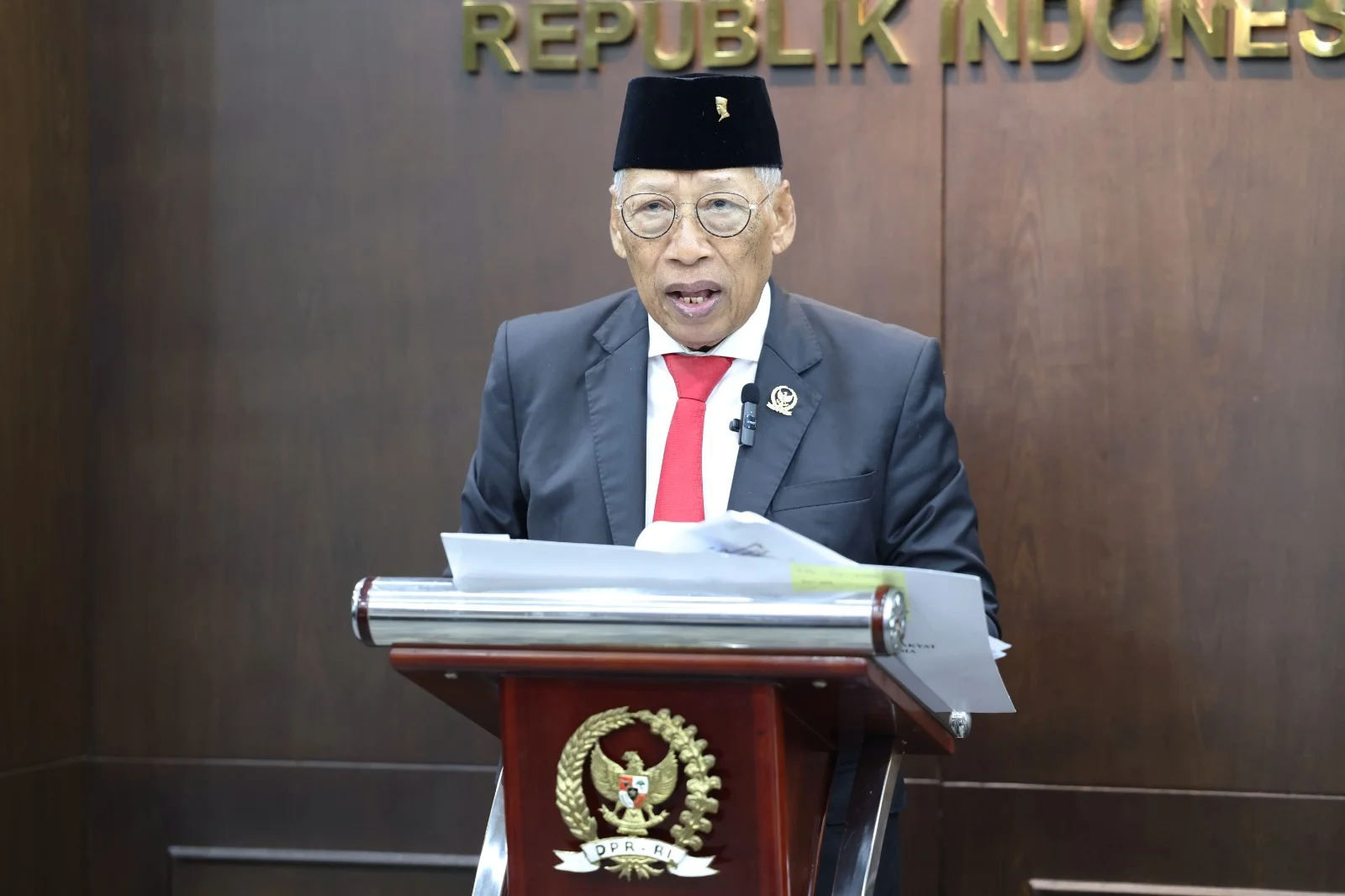
“The DPR RI is being cautious because international agreements could impact state finances and national interests,” said Commission III member I Wayan Sudirta, reading the DPR’s statement as quoted on the DPR RI website.
The DPR rejected the petitioner’s request that ratification be carried out by the next session, as stipulated for Perppu approval. Lawmakers argued that Perppu and international agreements fall under different legal regimes, with distinct constitutional bases, objectives, substance, and consequences.
“Given the varying nature, substance, scope, and legal consequences of each international agreement, their regulations cannot be standardized through a single, absolute approval mechanism or given the same time limit as the Perppu approval mechanism,” Wayan added.
The DPR explained that ratification timelines vary by treaty type. Trade agreements are usually ratified within 11 months to three years, while political, legal, defense, and security agreements can take much longer, sometimes more than 15 years.
While upholding prudence, the DPR acknowledged that Law No. 24/2000 on international treaties needs updating to reflect developments in international relations and current national legal needs. Revising the law has been included in the 2025–2029 National Legislation Program (Prolegnas).
The judicial review petition under examination stems from concerns that the absence of a deadline could create legal uncertainty. Petitioners also questioned Indonesia’s involvement in the Board of Peace (BoP), which reportedly has not yet been ratified.
The DPR emphasized the necessity of flexibility in the ratification process so that every international agreement can be reviewed comprehensively without harming national interests. ***
News Recomendation
Loading latest news.....