



Domestic Worker Protection Bill Nears Ratification After 22-Year Struggle
- 21 Apr 2026 11:13 WIB
- Voice of Indonesia
Key Points
- The House of Representatives (DPR) and the government agreed to ratify the Domestic Worker Protection Bill on Kartini Day, ending more than two decades of delay.
- The bill guarantees comprehensive rights and protections for domestic workers, including fair wages, rest periods, leave, and safeguards against discrimination and violence.
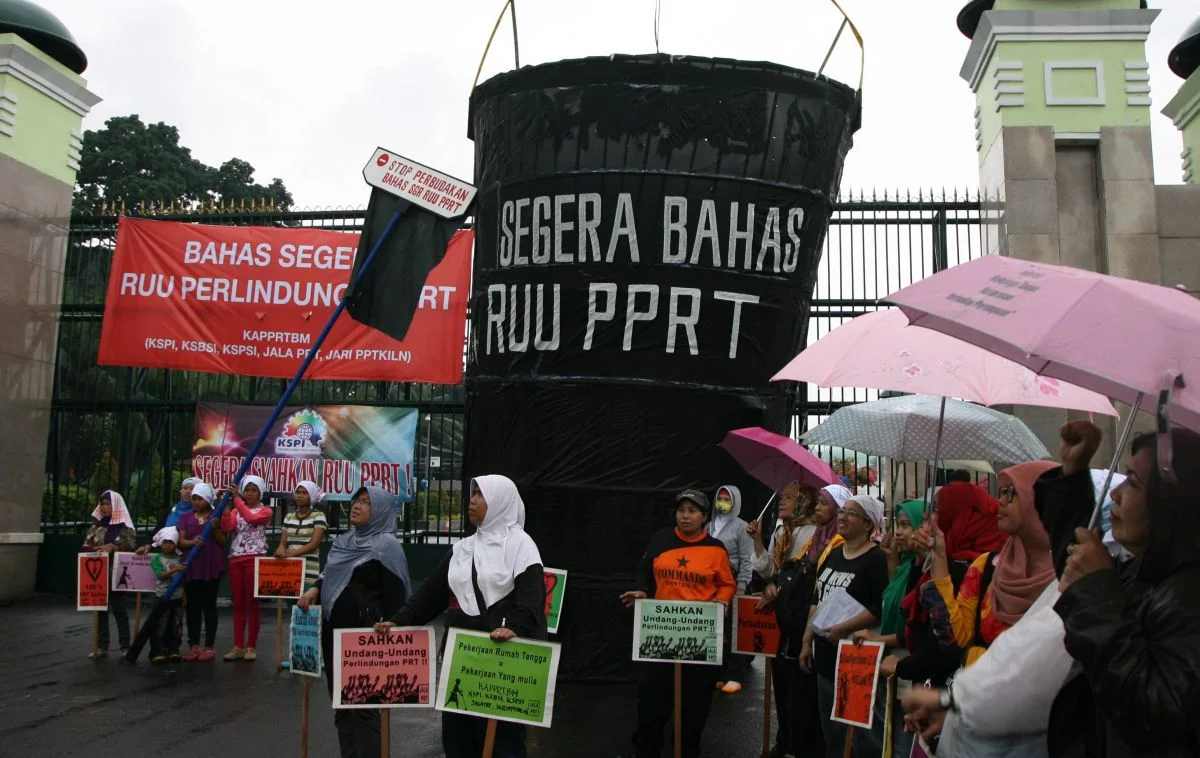
RRI.CO.ID, Jakarta - The ratification of the Domestic Worker Protection Bill (RUU PPRT) is drawing closer, coinciding with Kartini Day and International Workers’ Day (May Day).
The House of Representatives (DPR) has confirmed that this long-awaited regulation will soon be enacted, marking the state’s commitment to protecting one of the most vulnerable groups of workers in Indonesia.
Deputy Speaker of the DPR, Sufmi Dasco Ahmad, described the bill’s passage as a “gift” for women and workers, noting that the deliberations were the culmination of a 22-year struggle.
“A gift for Kartini Day and Workers’ Day. Tomorrow is Kartini Day. This is an important moment, not only symbolic, but also a manifestation of the state’s presence after a long wait,” Dasco said after attending the Level I approval meeting at the parliamentary complex in Jakarta on Monday evening, April 20, 2026, as quoted by Antara.
Manpower Minister Yassierli emphasized that the bill recognizes domestic workers as legal subjects with equal rights to other workers. The ministry has submitted a Problem Inventory List (DIM) to demonstrate the government’s commitment to ensuring the bill’s enactment.
Minister Yassierli stressed that the approach is rooted not only in administrative regulation but also in human rights, providing comprehensive protection from recruitment through employment and post-employment, including mechanisms for conflict resolution.
“The government is committed to recognizing domestic workers as employees with fundamental rights. This protection covers all stages: before, during, and after employment, including dispute resolution mechanisms,” Minister Yassierli said in a statement on Tuesday, April 21, 2026.
The bill acknowledges the unique nature of domestic work, which differs from formal sector employment. It incorporates social and cultural considerations, given the diverse economic backgrounds of domestic workers.
The principle of “Decent Work for Domestic Workers” underpins the regulation, ensuring rights to a living wage, rest periods, leave, and protection from discrimination and violence, including sexual violence. Occupational safety and health guarantees are also included.
The legislation defines domestic workers and the scope of their work, establishes clear employment and placement agreements, and regulates the role of placement companies, vocational training, and access to social security.
Dispute resolution will prioritize deliberation, with neighborhood association leaders (RT/RW) acting as mediators, reflecting the social nature of domestic employment relationships.
The DPR confirmed that labor organizations, activists, and the public were involved in drafting the bill. Both the DPR and the government pledged to oversee its implementation.
Law Minister Supratman Andi Agtas welcomed the progress, noting that President Prabowo Subianto had set a target for completing the bill to meet labor unions' demands. “This is a joy for the government. The bill has finally materialized after being initiated by the DPR,” Minister Supratman said. ***
News Recomendation
Loading latest news.....