



Govt Centralizes National Data Under BPS for Policy Decisions
- 15 Apr 2026 18:58 WIB
- Voice of Indonesia
Key Points
- The government will base future policies on centralized Central Bureau of Statistics (BPS) data.
- Targeting of Health Insurance Contribution Aid (PBI-JK) has improved, cutting the error rate to 0.34 percent.
RRI.CO.ID, Jakarta - Indonesian Health Minister Budi Sadikin said President Prabowo wants national data consolidated under a single, centralized source. The government has agreed that all official data will come from the Central Bureau of Statistics (BPS) and serve as the basis for future policies.
“President Prabowo wants the data streamlined and sourced from BPS,” Minister Budi stated during a working meeting with Commission IX of the House of Representatives (DPR RI) at the Parliament Complex, Central Jakarta, Wednesday, April 15, 2026.
He emphasized that future policies will focus on the bottom 50 percent of the population, or deciles 1 to 5. Deciles group household welfare data into 10 equal categories, from the poorest (Decile 1) to the most prosperous (Decile 10). Of Indonesia’s total population of 289.06 million, about 140.32 million people fall into the bottom five deciles.
This data serves as the government’s primary reference for social assistance programs such as the Family Hope Program (PKH) and Non-Cash Food Assistance (BPNT).
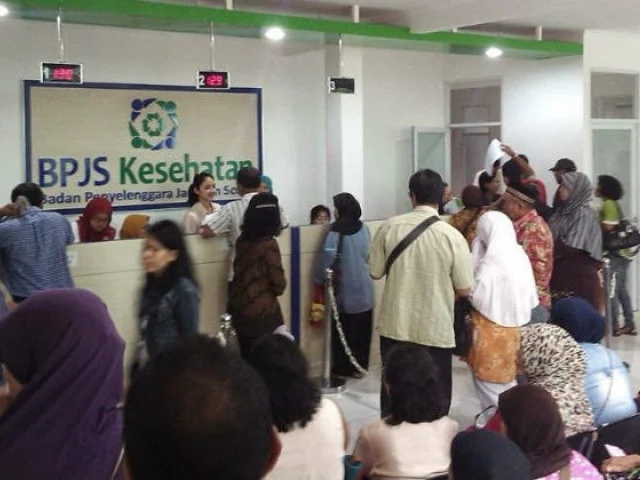
Minister Budi explained that the bottom 50 percent is crucial for planning because it relates to the Health Care and Social Security Agency (BPJS), whose participants’ contributions are partly or fully subsidized by the government.
Currently, the government covers 159.1 million BPJS participants, more than half of Indonesia’s population, through various schemes, including the Ministry of Health’s Insurance Contribution Aid (PBI), Regional Government Non-Wage Workers (PBPU), and joint subsidies from the central government and regional administrations.
However, after integrating BPS-based data, anomalies were found in the distribution of contribution assistance. Some funds went to individuals outside the target groups, including those from higher-income households.
For example, tens of thousands of Ministry of Health PBI recipients, along with millions of non-wage workers and third-class participants, were not properly targeted. The government plans to redirect allocations to more deserving groups to ensure fairer distribution.
“Once this data is integrated, the government wants to distribute PBI funds to eligible recipients. Based on BPS data, the amount is quite large, so we can reallocate it to those who are more deserving,” Minister Budi said.
Meanwhile, Social Affairs Minister Saifullah Yusuf stated that the distribution of Health Insurance Contribution Aid (PBI-JK) is now more targeted, reducing the inclusion error rate to 0.34 percent.
Improvements were made through data transformation from May 2025 to January 2026, shifting membership from ineligible groups to those in need. “State aid should go to those who need it most, not to those who registered first,” he said.
He noted that inaccuracies had previously occurred, with some residents in deciles 1–5 not receiving PBI-JK, while those in deciles 6–10 were listed as recipients. This situation provides the government with a basis for comprehensive data adjustments.
The Social Affairs Minister added that PBI-JK recipient data is dynamic and updated monthly to ensure accuracy. (Misni Parjiati/Lasti Martina)
News Recomendation
Loading latest news.....