



Coordinating Minister Confirms Military Court Jurisdiction in Acid Attack Case
- 10 Apr 2026 20:12 WIB
- Voice of Indonesia
Key Points
- The acid attack case against activist Andrie Yunus remains under military court jurisdiction, as no civilian suspects have been identified.
- Four Indonesian Military (TNI) soldiers, identified as NDP, SL, BHW, and ES, have been named suspects in the acid attack on KontraS activist Andrie Yunus.
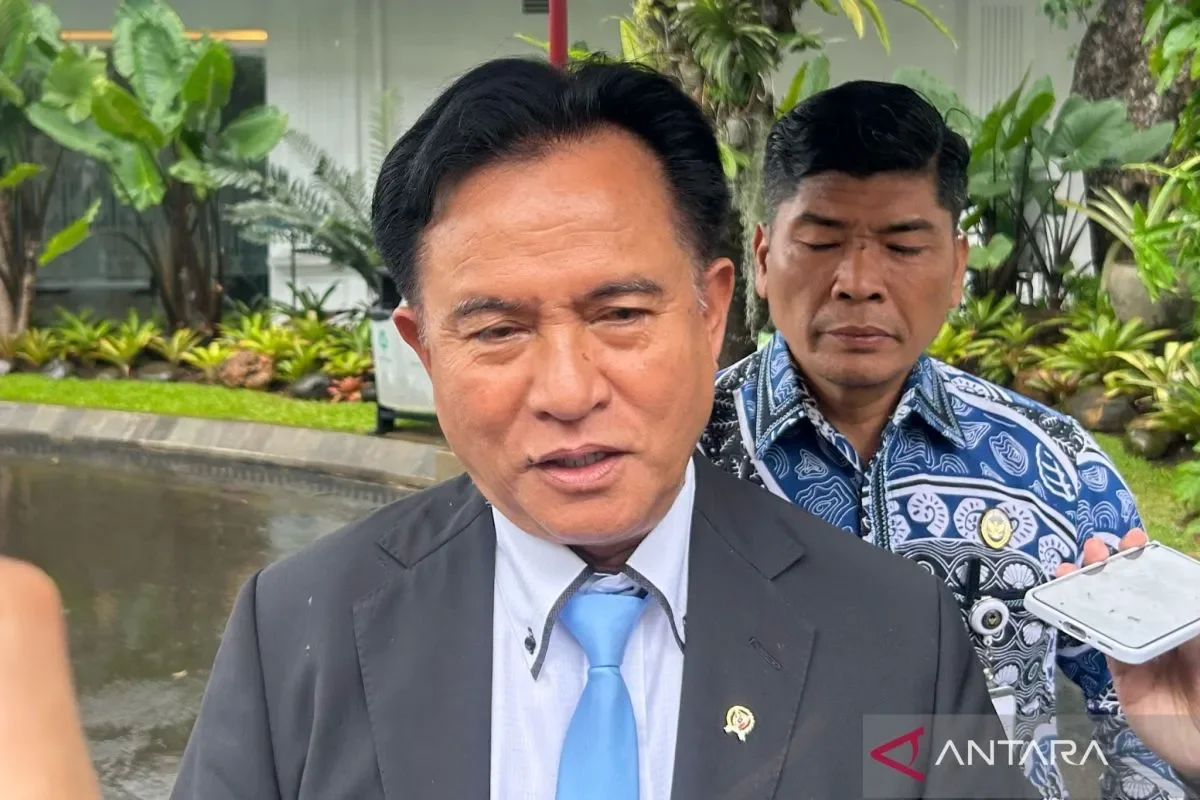
RRI.CO.ID, Jakarta - Coordinating Minister for Law, Human Rights, Immigration, and Corrections, Yusril Ihza Mahendra, stated that the acid attack case against activist Andrie Yunus remains under the jurisdiction of military courts, as no civilian suspects have been identified.
Under the Military Court Law, any active member of the Indonesian Military (TNI) accused of a crime is tried in a military court. Since no civilian perpetrators have been identified, the case will be handled entirely within the military justice system.
Minister Yusril explained that a connected justice system can only be applied if both military and civilian suspects are involved.
“There are provisions in the Criminal Procedure Code (KUHAP) regarding connectedness if there are both military and civilian suspects. But as of today, no civilian suspects have been identified, so the matter will fall entirely under the jurisdiction of military courts,” Minister Yusril said at a press conference at the Presidential Palace Complex in Jakarta on Friday, April 10, 2026, as quoted by Antara.
The Indonesian Military has completed its investigation into four soldiers, identified as NDP, SL, BHW, and ES, who are suspects in the acid attack on KontraS activist Andrie Yunus. The four were handed over to the Military Prosecutor (Otmil) II-07 Jakarta on Tuesday, April 7, 2026.
Regarding Vice President Gibran Rakabuming Raka’s proposal to include ad hoc judges in trials to boost public confidence in the judicial system, Minister Yusril said the government is open to discussing the idea with the Supreme Court.
“Several laws and regulations mention ad hoc judges, but new proposals could allow ad hoc judges to handle a single case. The government will certainly discuss this with the Supreme Court to facilitate the proposals and suggestions put forward by the vice president,” Minister Yusril said.
He noted that ad hoc judges are currently explicitly regulated in certain laws, such as those governing the Human Rights Court and the Corruption Court. Further discussion is needed to determine whether a similar mechanism could be applied to specific cases.
“Hopefully, a solution will be found to accommodate the suggestions and proposals submitted by the vice president,” he added. ***
News Recomendation
Loading latest news.....