



AI Should Be a Learning Aid, Lawmaker Urges Clear Rules for Schools
- 28 Mar 2026 07:27 WIB
- Voice of Indonesia
Key Points
- The Indonesian government is restricting students’ use of artificial intelligence (AI) through a Joint Ministerial Decree (SKB) signed by seven ministries.
- A lawmaker stressed that AI in education should serve as a learning assistant, not replace students’ own thinking processes.
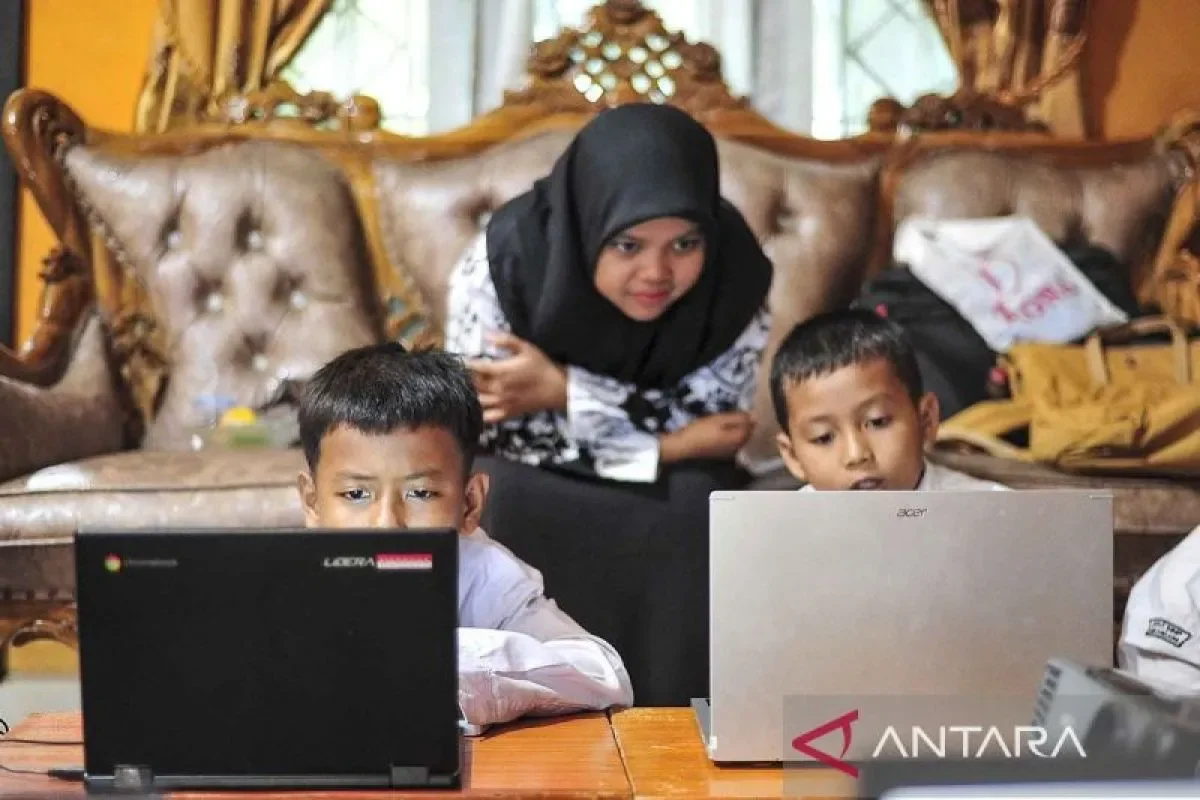
RRI.CO.ID, Jakarta - Indonesian House of Representatives Commission X Deputy Speaker Kurniasih Mufidayati said the use of artificial intelligence (AI) in education should be positioned as a learning assistant, not as a substitute for students’ thinking processes.
She made the statement in response to the government’s plan to restrict students’ use of AI through guidelines in a Joint Ministerial Decree (SKB) issued by seven ministries.
According to Kurniasih, advancements in AI technology offer opportunities to enrich learning, from expanding access to information to encouraging more creative exploration of knowledge. However, without proper regulation, the immediate use of AI could reduce students’ critical thinking and creativity.
“This technology can help students find references, understand complex concepts, or explore ideas. However, the processes of thinking, analysis, and task completion must still be carried out by the students themselves,” she said on Friday, March 27, 2026.
She emphasized that AI in education must remain grounded in religious and moral values and be used for positive purposes. National education, she added, aims not only to foster intellectual intelligence but also to shape character and morality.
Kurniasih urged the government to immediately develop national guidelines for AI use in education with clear boundaries, including distinguishing between AI that supports creative learning and AI that risks replacing students’ own thinking processes.
She also called for the gradual integration of digital literacy and AI literacy into school curricula. “Children need to be equipped with the ability to understand how AI works, its ethical use, and how to safeguard personal data,” she said.
At the same time, she cautioned that technology-based learning platforms must prioritize student data security. The government, she said, should ensure a secure AI-based educational data management system integrated across ministries and agencies.
As part of its oversight function, the House, through the relevant commissions, will continue to monitor the implementation of these policies. This includes the readiness of supporting regulations, digital learning infrastructure, and teachers’ preparedness to adapt to technological advancements.
Earlier, the government officially restricted the use of AI in education. Students from elementary through high school (or equivalent) are prohibited from using AI chatbots such as ChatGPT.
The government has issued joint guidelines on the use of digital technology and AI in education, outlined in a Joint Ministerial Decree (SKB) signed by seven ministers under the title Guidelines for the Use and Learning of Digital Technology.
These regulations govern the use of digital technology and AI across all levels of education, from early childhood to higher education, including non-formal and informal education.
“The use of digital technology and artificial intelligence for children must be done wisely, providing positive benefits and minimizing risks. Age criteria and children’s readiness are crucial in these regulations,” said Pratikno, Coordinating Minister for Human Development and Culture. (Gusti Panji/Lasti Martina)
News Recomendation
Loading latest news.....