



Human Rights Commission Maps Agrarian Conflict Hotspots in Indonesia
- 09 Mar 2026 15:37 WIB
- Voice of Indonesia
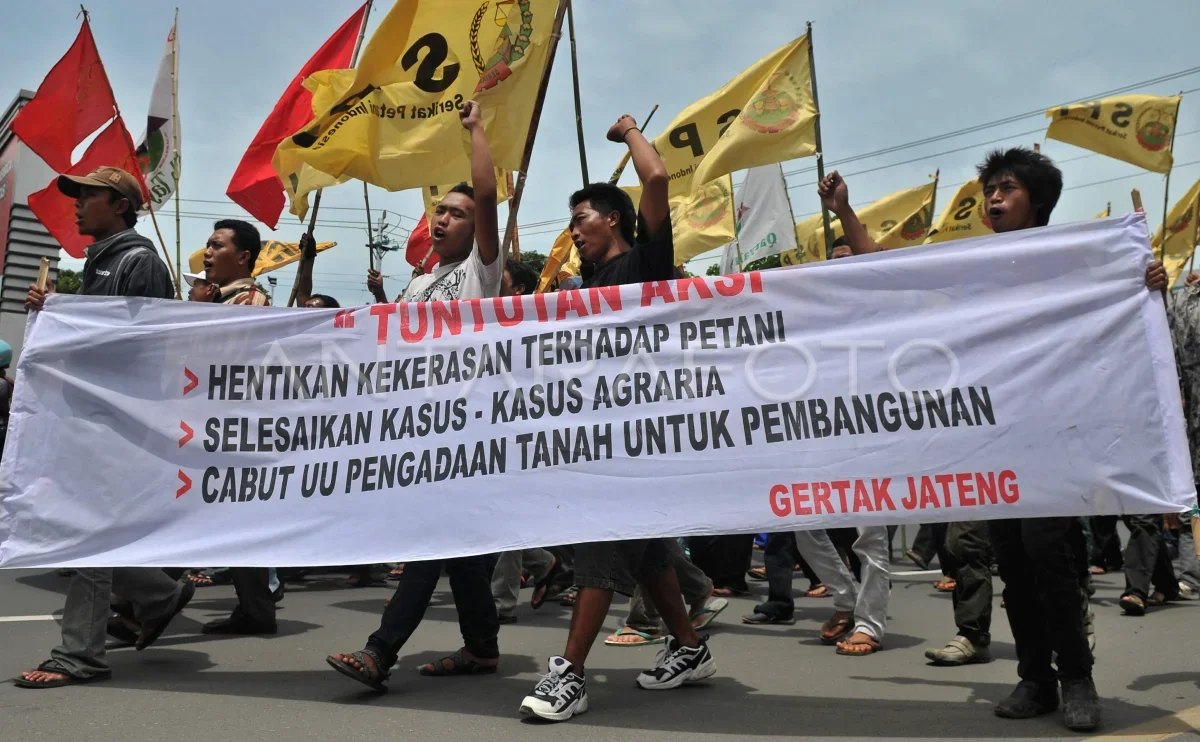
RRI.CO.ID, Jakarta - The National Commission on Human Rights (Komnas HAM) stated that agrarian conflicts in Indonesia are not merely land disputes but structural issues that directly affect the fulfillment of human rights.
In its study of natural resource conflicts for the 2020–2025 period, the institution identified North Sumatra, West Java, and Central Kalimantan as the provinces most vulnerable to agrarian conflict.
Komnas HAM Chairperson Anis Hidayah said these conflicts have broad impacts on human rights. She emphasized that agrarian disputes are not only administrative matters but also involve unequal control over natural resources.
“We all realize that agrarian conflict is a structural issue with widespread impacts. This includes affecting the fulfillment of human rights, land rights, the right to a decent life, and justice for vulnerable groups,” Anis said at the launch and public discussion of the National Police’s Agrarian Conflict Management Study Report in Jakarta on Monday, March 9, 2026, as quoted by Antara.
Anis noted that women, children, and indigenous communities are often the most affected. She added that social dynamics at the community level complicate conflict resolution, requiring a more comprehensive approach. “Complaints about agrarian conflicts are not only about land administration issues, but also involve power relations, inequality in natural resources, and complex social dynamics,” she said.
Komnas HAM Commissioner for Studies and Research, Uli Parulian Sihombing, explained that the three provinces were chosen as the focus of the study due to the high number of public complaints received. “North Sumatra is the most frequently reported province to Komnas HAM, making it one of the top three provinces for agrarian conflicts,” he said.
According to Uli, agrarian conflicts in North Sumatra are generally related to overlapping land use rights (HGU) with community-owned land and forest areas. Disputes often involve large plantation companies operating in areas previously managed by communities for generations.
In West Java, agrarian conflicts are more often triggered by property legality issues in urban areas, including overlapping certificates, land ownership claims, and residential evictions. Cases such as the Tamansari conflict in Bandung and the Dago Elos conflict have involved residents and developers.
In Central Kalimantan, conflicts are largely influenced by unequal land ownership between corporations and indigenous communities. “The characteristic is the imbalance in land ownership, with approximately 4 million hectares of corporate concessions facing much smaller customary territories,” Uli said.
The study also noted that agrarian conflicts are often triggered by overlapping permits, weak recognition of customary territories, and misalignment of land data between government agencies.
Beyond land ownership, these disputes affect community rights to living space, access to food, water, and employment, particularly for vulnerable groups such as indigenous peoples, women, and children.
Komnas HAM considers mapping conflict-prone areas crucial for formulating more targeted policies to resolve agrarian disputes, including mediation, strengthening land administration mechanisms, and adopting a human rights-based approach.
Meanwhile, Veris Septiansyah, Head of the Legal Aid Bureau of the National Police’s Legal Division, said the study is important for the police institution. He hopes it can serve as a reference for improving conflict management. “This is expected to serve as an important reference for improving the quality, policies, and practices of the police, particularly in handling agrarian conflicts. We also hope that communication between theNational Police, Komnas HAM, and all other stakeholders will continue to be strengthened,” he said. ***
News Recomendation
Loading latest news.....