



Govt Taps Universities for Waste-to-Energy Solutions
- 25 Feb 2026 07:30 WIB
- Voice of Indonesia
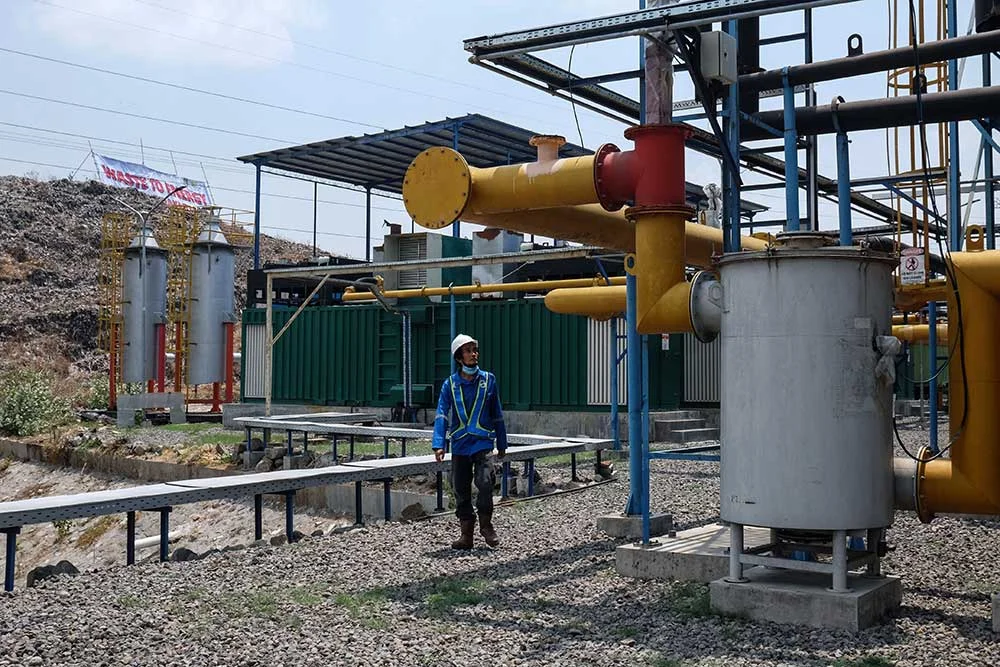
RRI.CO.ID, Jakarta - The Ministry of Higher Education, Science, and Technology is strengthening its strategy to address Indonesia’s mounting waste emergency by promoting research-based development of Waste-to-Energy Power Plants (PLTSa) through cross-sector collaboration.
At a meeting on Tuesday, February 24, 2026, ministry officials discussed technological solutions with representatives from the Bandung Institute of Technology (ITB), international universities, and engineering firm PT Rekayasa Industri (Rekind).
The talks focused on designing integrated waste management models that are both technically effective and sustainable in economic and environmental terms.
Minister of Higher Education, Science, and Technology Brian Yuliarto underscored the importance of basing future infrastructure on scientific and technical studies. “What is important for us is how the design is based on clear and measurable calculations, both in terms of capacity, cost, and sustainability,” he said during the meeting in Jakarta, as quoted on the ministry’s official website.
The ministry views universities and research institutions as key partners in shaping integrated waste management models. It's proposed “hybrid” approach combines micro-scale processing at the community level with centralized, large-scale facilities.
This model is expected to reduce the need to transport waste across cities, improve the stability of Refuse-Derived Fuel (RDF), and strengthen quality control and environmental safeguards.
Data shows that about 55 percent of Indonesia’s waste is organic. Early-stage processing at the household and community levels is considered strategic in reducing the burden on final facilities. Universities are expected to contribute by calculating ideal capacity, regional typologies, and logistics efficiency, ensuring that system designs match local characteristics.
Maintaining the stability of RDF’s calorific value remains a critical challenge for optimal, sustainable plant operations. The ministry is encouraging domestic research and innovation to design combustion systems and emission controls suited to Indonesia’s RDF profile.
The discussions also covered simulations of waste-to-energy capacity and electricity production projections.
Senior Advisor for Business Transformation at PT Rekind, Sudayat, noted that experience in biomass provides a useful reference. “From our experience in the biomass field, the electricity that can be generated is stable, and there is still the benefit of compost that we can also process,” he said.
The collaboration highlights the growing role of universities and industry in developing environmentally friendly, research-based waste management solutions. The ministry emphasized that its contribution will focus on supporting research, strengthening domestic technological capacity, and developing replicable models tailored to regional conditions. ***
News Recomendation
Loading latest news.....