



Indonesia Focuses on Semiconductor Industry at ISS 2026
- 02 Feb 2026 10:24 WIB
- Voice of Indonesia
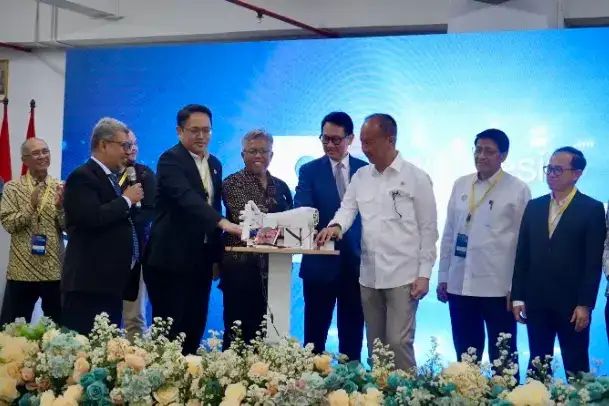
RRI.CO.ID, Bandung - As the global race for semiconductor sovereignty intensifies, Indonesia is signalling its readiness to move beyond being a consumer market. Indonesia Semiconductor Summit (ISS) 2026 was held at the ITB Innovation Park, Bandung over the course of two days, 29-30 January 2026. In this forum, officials and industry leaders outlined a roadmap to strengthen and integrate Indonesia’s semiconductor ecosystem into the global chip supply chain.
According to the press release received on Saturday, 31 January 2026, the summit, organized by the Indonesia Chip Design Collaborative Center, highlighted the current nation's industrial strategy. The government wants to focus on chip design and, through universities, cultivating talents as the primary entry points into the high-tech market.
With over 9.9 million students and 300,000 academics, the government is refocusing its educational pipeline toward specialized semiconductor roles. Furthermore, Director General of Research and Development Fauzan Adziman, stated that it’s necessary to organize talent development in a more focused role on key areas within industry needs, such as design, fabrication, assembly, packaging, and testing.
The Indonesian government is framing its semiconductor push within the current climate of supply chain diversification. Arif Havas Oegroseno, Vice Minister of Foreign Affairs, noted that semiconductors are now at the heart of geopolitical dynamics. He stated that Indonesia needs to develop an entry point to the market and strengthen human resource capacity and access to the ecosystem.
To support this, Indonesia is seeking deeper international cooperation with organizations such as the Asian Development Bank (ADB) and ERIA (Economic Research Institute for ASEAN and East Asia) to secure financing and technology transfer. Furthermore, Indonesian universities are also pushed to have cross-sector collaborations in research, infrastructure, and talent development, in line with industry needs and national development strategies.
Minister of Industry, Agus Gumiwang Kartasasmita, emphasized that this is a gradual approach that takes time. The approach prioritizes strengthening ecosystem foundations of upstream to downstream integration.
"Development of the national semiconductor industry cannot be done instantly, this needs to be taken through a gradual approach by placing talent development and chip design as the main steps at an early stage," he said.
The summit highlighted three "capital assets" that Indonesia aims to leverage. The government planned to utilize the country’s vast mineral resources for component manufacturing. Locally, Indonesia also has massive domestic demand for electronics that possibly attract industrial partnerships. To support this, the government is utilizing its wide human resources to enter the industry.
News Recomendation
Loading latest news.....