



Government Ensures Infrastructure and Housing are Built More Resiliently
- 30 Jan 2026 15:25 WIB
- Voice of Indonesia
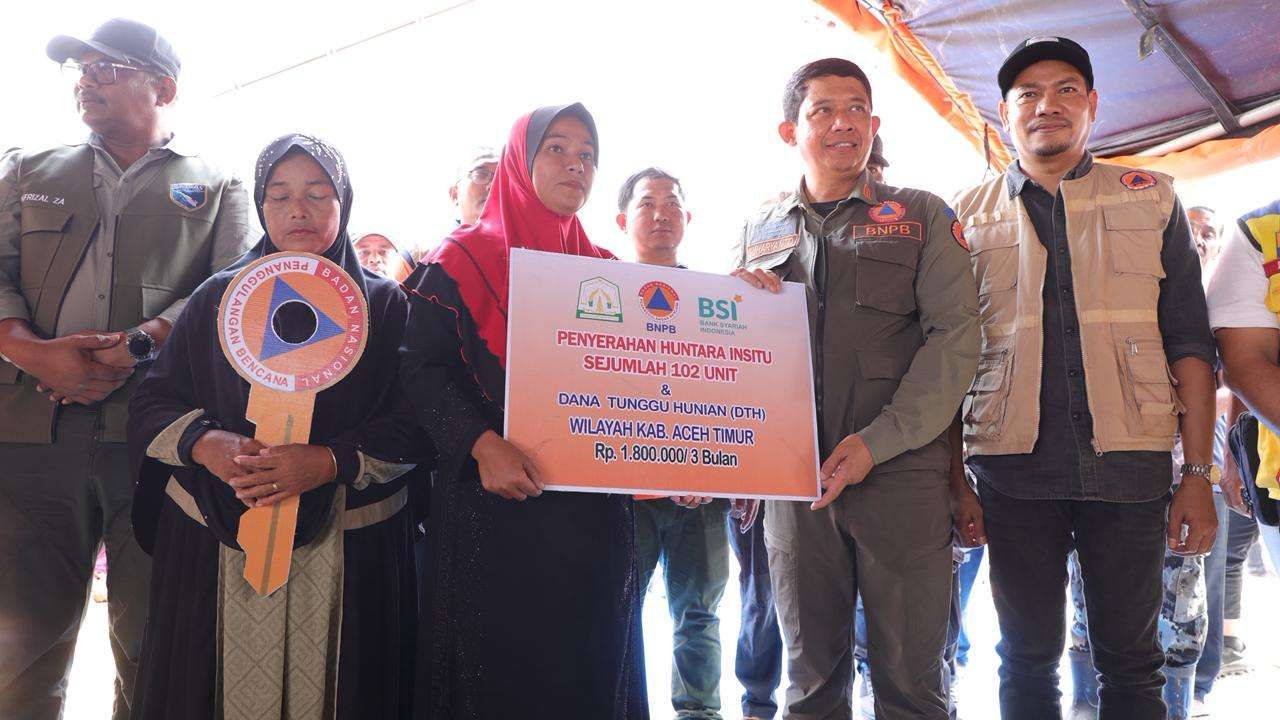
RRI.CO.ID, Aceh - The Head of the National Disaster Management Agency (BNPB), Lieutenant General TNI Dr. Suharyanto on Thursday, 29 January 2026, confirmed that post-disaster recovery efforts in North Aceh Regency were proceeding in an organized manner and were being handled by parties with technical competence in their respective fields. With solid cross-sectoral coordination, the rehabilitation and reconstruction process is expected to restore community life while also increasing regional resilience to future disaster risks.
In order to ensure that field handling needs are in line with real conditions, the Head of National Disaster Management Agency (BNPB) toured a number of affected areas using a trail motorcycle. This step was taken to directly assess the level of structural damage and ensure that the technical recommendations made are truly aligned with the local geographical characteristics and potential risks.

The Head of the National Disaster Management Agency (BNPB), Lieutenant General, Suharyanto (second from right) spoke in Aceh 29 January 2026 (Photo: BNPB)
One of the recovery focuses is rebuilding the suspension bridge in Sawang Village, which was cut off due to the increased river water flow during the disaster. The bridge is a vital access point connecting settlements and also the main economic distribution route for residents.
The bridge reconstruction is aimed not only at restoring connectivity but also at ensuring a design that is more adaptable to potential future floods and strong currents. The series of activities then continued to Tumpok Blang and Babah Krueng villages, areas affected by the accumulation of mud and post-disaster sedimentation.
On that occasion, the Head of BNPB emphasized the importance of managing disaster material waste in a planned and sustainable manner. Proper handling is considered crucial to prevent further risks, such as river flow obstruction, which could potentially trigger subsequent flooding.
In addition to infrastructure, attention is also being directed toward the construction of temporary housing for affected communities. Temporary housing placement is encouraged to consider disaster risk-based spatial planning so that it does not return to vulnerable zones.
The head of National Disaster Management Agency (BNPB) confirmed that the construction of temporary shelters is targeted to be completed and ready for occupancy before the month of Ramadan, so that people can perform their religious duties more safely and comfortably.
"The process is already directed and improving. I request that this temporary shelter can be completed before Ramadan this year," Suharyanto said.
In Paya Rabo Lhok Village, the temporary shelter conditions are confirmed to be safe and capable of supporting the continuity of basic community services, such as access to clean water and sanitation. The recovery of the housing sector is considered the main foundation for rebuilding community resilience after a disaster, both socially and economically.
The presence of the Head of BNPB in North Aceh reflects the government's commitment to ensuring the recovery process is effective and targeted. The state is present not only thru policy, but also thru direct involvement to see the conditions on the ground and ensure that the needs of the affected community are truly met.
This approach affirms a concrete state presence, where the government synergizes with local governments, stakeholders, and the community. Post-disaster recovery is not only about rebuilding physical infrastructure, but also about sustainably strengthening social, economic, and environmental resilience, with the community at the center of every decision-making process.
News Recomendation
Loading latest news.....