



Indonesia Reveals World’s Oldest Cave Art Discovery
- 23 Jan 2026 08:08 WIB
- Voice of Indonesia
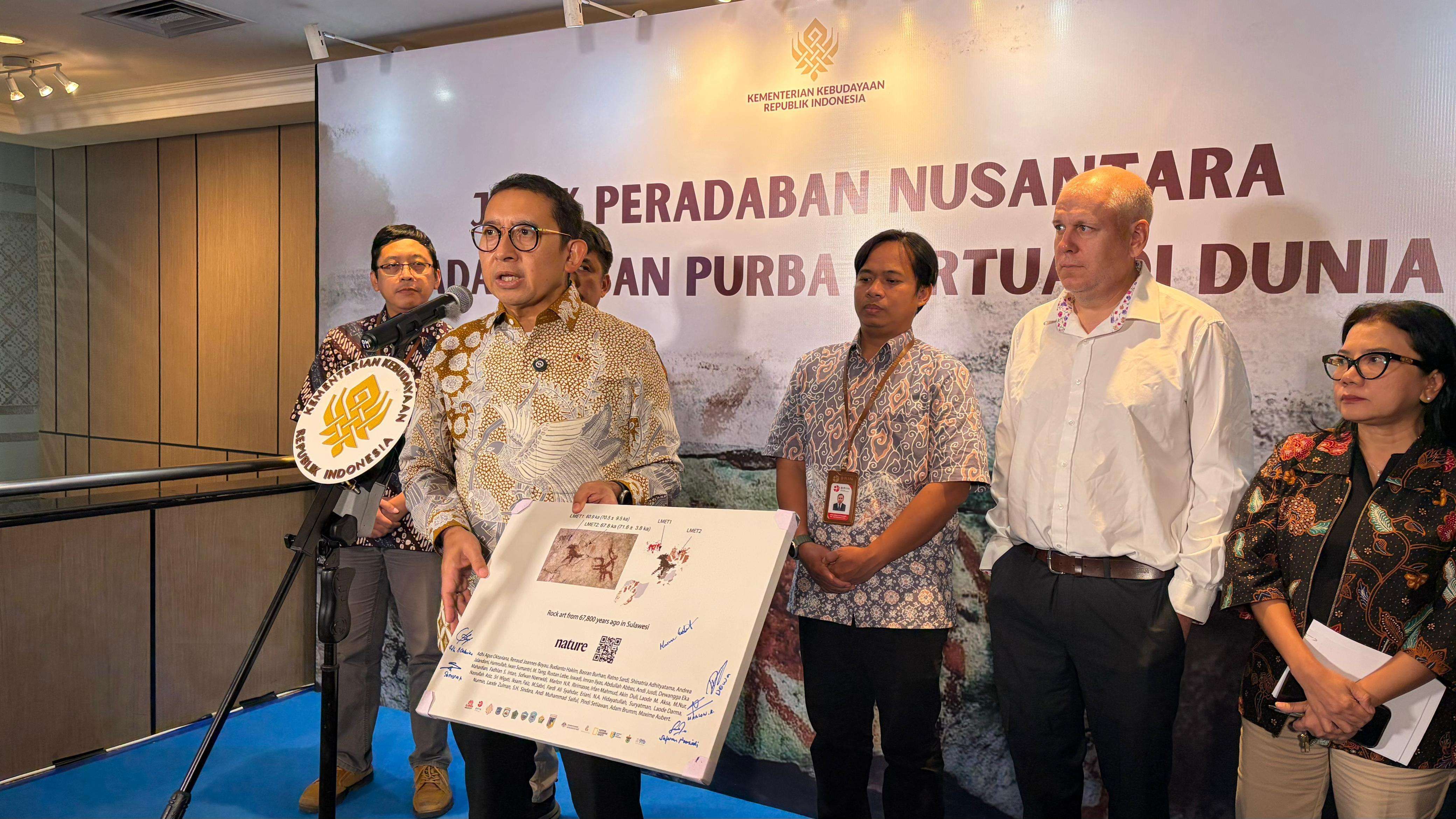
RRI.CO.ID, Jakarta - Indonesia has confirmed the discovery of the world’s oldest known cave art, dated at least 67,800 years old, found at Liang Metanduno cave on Muna Island, Southeast Sulawesi. The finding positions Indonesia as one of the earliest centers of human symbolic creativity and cultural expression.
The discovery was announced by Indonesia’s Minister of Culture, Fadli Zon, following the publication of the research in the international scientific journal Nature in Jakarta, Thursday, 22 January 2026. The study is the result of collaboration between Indonesia’s National Research and Innovation Agency (BRIN) and Australia’s Griffith University.
The ancient artwork consists of hand stencils created by early humans, analyzed using laser-based Uranium Series dating on calcite layers above the pigment. This advanced method confirms the artwork predates similar cave paintings found in Europe by more than a thousand years.
Researchers say the finding challenges long-held assumptions that Europe was the primary birthplace of early symbolic art. Instead, it highlights Wallacea the Indonesian archipelago between Asia and Australia as a critical corridor of early human migration and creativity.
According to the research team, early modern humans passing through Wallacea already possessed advanced cognitive and cultural abilities. This supports the theory that maritime migration toward the ancient Sahul continent involved societies with complex symbolic thinking.
One distinctive feature of the Liang Metanduno hand stencil is a deliberately sharpened fingertip, a characteristic not commonly found elsewhere. Scientists believe this detail may indicate ritual practices or symbolic identities, opening new questions for future research.
The discovery is part of a long-term archaeological program in Southeast Sulawesi that has documented 44 cave art sites since 2019. Researchers emphasize that these findings significantly expand the global timeline of human art and imagination.
Indonesia’s Ministry of Culture plans follow-up actions including site protection, public education, and steps toward UNESCO World Heritage recognition. Officials say the ancient handprints are not only a scientific breakthrough, but a shared legacy of humanity that must be preserved responsibly.
News Recomendation
Loading latest news.....