



Indonesia Addresses AI, Ethics at Egypt Islamic Affairs Conference
- 20 Jan 2026 16:08 WIB
- Voice of Indonesia
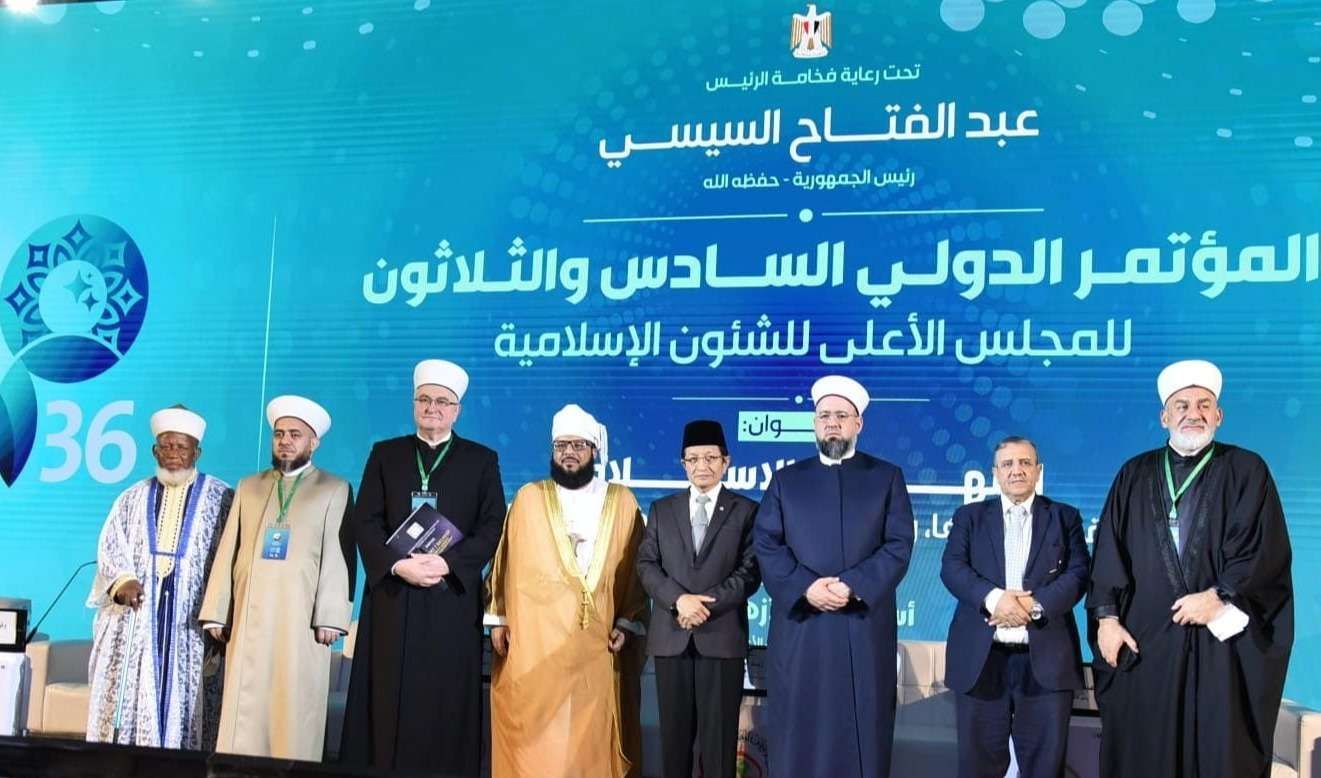
RRI.CO.ID, Cairo - Religious Affairs Minister Nasaruddin Umar addressed the 36th International Conference of Egypt’s Supreme Council for Islamic Affairs, organized by Egypt’s Ministry of Waqf, underscoring the role of religion and human conscience in an age increasingly shaped by Artificial Intelligence (AI).
Speaking in Cairo before an audience of scholars and intellectuals from around the world, he emphasized that while technology advances rapidly, the “human conscience” remains irreplaceable.
Minister Nasaruddin opened his remarks by conveying greetings from President Prabowo Subianto and expressing gratitude to Egyptian President Abdel Fattah El-Sisi for supporting the conference.
He then outlined the concept of ecotheology, which frames humanity’s relationship with the environment as a sacred trust. “In Islam, the earth does not belong absolutely to humans, but rather is a divine trust. Therefore, prospering the earth will not be complete without maintaining its balance,” he said on Monday, January 19, 2026, as quoted by the Religious Affairs Ministry’s official website.
He cautioned that any profession or development path that disrupts ecological balance deviates from the essence of worship and the foundations of civilization.
Minister Nasaruddin welcomed Egypt’s Minister of Waqf's view that building civilization is an Islamic obligation. He also echoed Algerian thinker Malik bin Nabi, who argued that true civilization rests not on material accumulation but on moral and spiritual integrity.
Dependency and value voids, he said, cannot be solved by importing advanced technology alone, but by rebuilding humanity’s connection to values, time, and labor.
Turning to the digital era, Nasaruddin clarified Indonesia’s stance on AI. While acknowledging its analytical power, he stressed that AI lacks the spiritual depth required for religious guidance or ethical leadership.
In Indonesia, extensive scholarly discussions have concluded that AI should serve only as a supportive tool, not as a source of fatwas or independent religious authority. “Artificial intelligence, no matter how powerful its analytical capabilities, cannot replace religious conscience, human ijtihad, and ethical reference,” he remarked.
He emphasized that the real challenge lies in ensuring humans remain in control, guided by reason and ethical responsibility, so that religion continues to provide lived guidance rather than mechanical answers. “Our world today does not lack experts, but rather the values that guide that expertise,” he concluded.
Minister Nasaruddin called for a global shift in which technical competence is balanced by a living conscience, ensuring that, as the world accelerates through AI, its moral compass remains fixed on human dignity and environmental harmony. ***
News Recomendation
Loading latest news.....