



RI Maritime Ministry Monitors Indonesian Seas to Sustain Fisheries
- 20 Apr 2025 17:18 WIB
- Voice of Indonesia
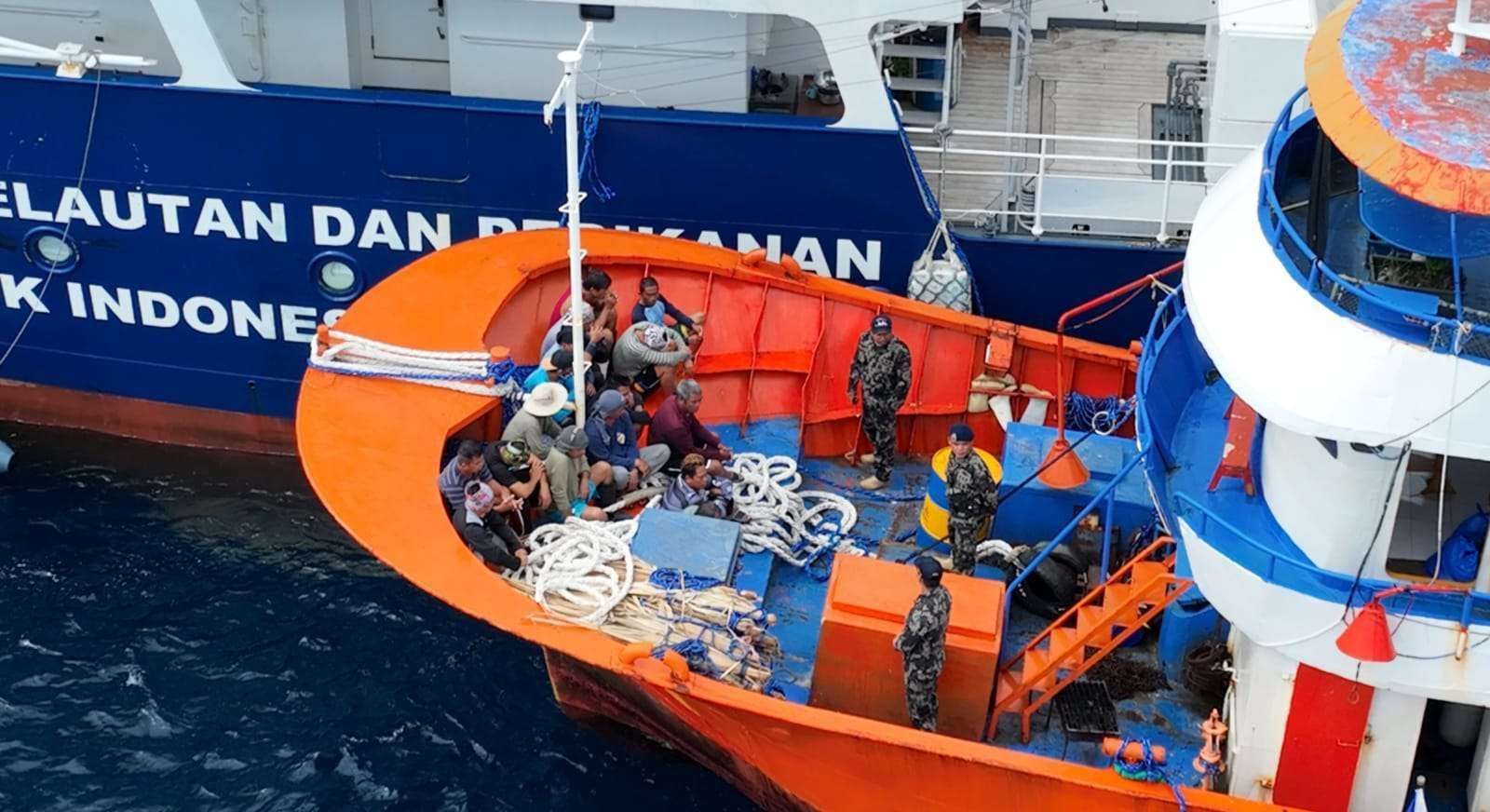
KBRN, Pontianak: The Indonesian Ministry of Marine Affairs and Fisheries (KKP) is enhancing oversight of national marine and fisheries resources to ensure the sustainability of marine ecosystems and secure Indonesia's maritime economic potential.
Halid K. Jusuf, the Director of Fisheries Resources Supervision at the Ministry of Marine Affairs and Fisheries' Directorate General of Marine and Fisheries Resources Supervision (PSDKP), affirmed this during a special dialogue on state-owned radio broadcasting RRI Pontianak, Saturday, April 19, 2025.
According to Halid, as an archipelagic nation, Indonesia boasts a vast ocean area comprising three-quarters of its territory.
With its extensive coastline and abundant biological and non-biological resources, Indonesia's seas hold immense potential that must be protected from overexploitation.
"That is already our primary duty and function," Halid emphasized, as quoted by rri.co.id.
Halid added that the ministry's presence aims to maintain the sustainability of this potential.
Supervision is conducted through the Directorate General of Marine and Fisheries Resources Supervision following several laws, including Law No. 31/2004, as amended by Law No. 45/2009, relating to fisheries, and Law No. 27/2007, as amended by Law No. 1/2014, concerning the Management of Coastal Areas and Small Islands.
"If we don't guard this, many foreign countries will plunder our marine economy and our marine potential, and we will become hosts who cannot explore the potential of our resources," he said.
Halid cited the example of destructive fishing gear, such as trawl nets, which were once widely used and have proven to damage coral reefs, the habitat of marine fish.
Now, through Government Regulation No. 11/2023 concerning Measured Fish Catching, the Ministry is implementing strict regulations on fishing, including fishing zones, industrial zones, and downstream processing.
"It is protected, it is controlled, it regulates the fishing zone, it regulates the industrial zone, and the downstream so that the government can regulate the resources according to the needs of our nation," he said.
Furthermore, Halid revealed that Indonesia's capture fisheries sector has a potential of up to 14 million tons annually. This figure does not include the potential from the aquaculture, seafood processing, and distribution sectors, which also contribute significantly to the national economy. ***
News Recomendation
Loading latest news.....