



Indonesia, Japan Deepen Economic Ties Amid Global Uncertainty
- 17 Jun 2026 23:00 WIB
- Voice of Indonesia
Key Points
- Indonesia and Japan are seeking closer economic cooperation to strengthen resilience against geopolitical tensions, trade fragmentation, energy insecurity, and technological disruption.
- Officials and business leaders from both countries highlighted energy transition, critical minerals, talent mobility, and diversified supply chains as key areas for future collaboration.
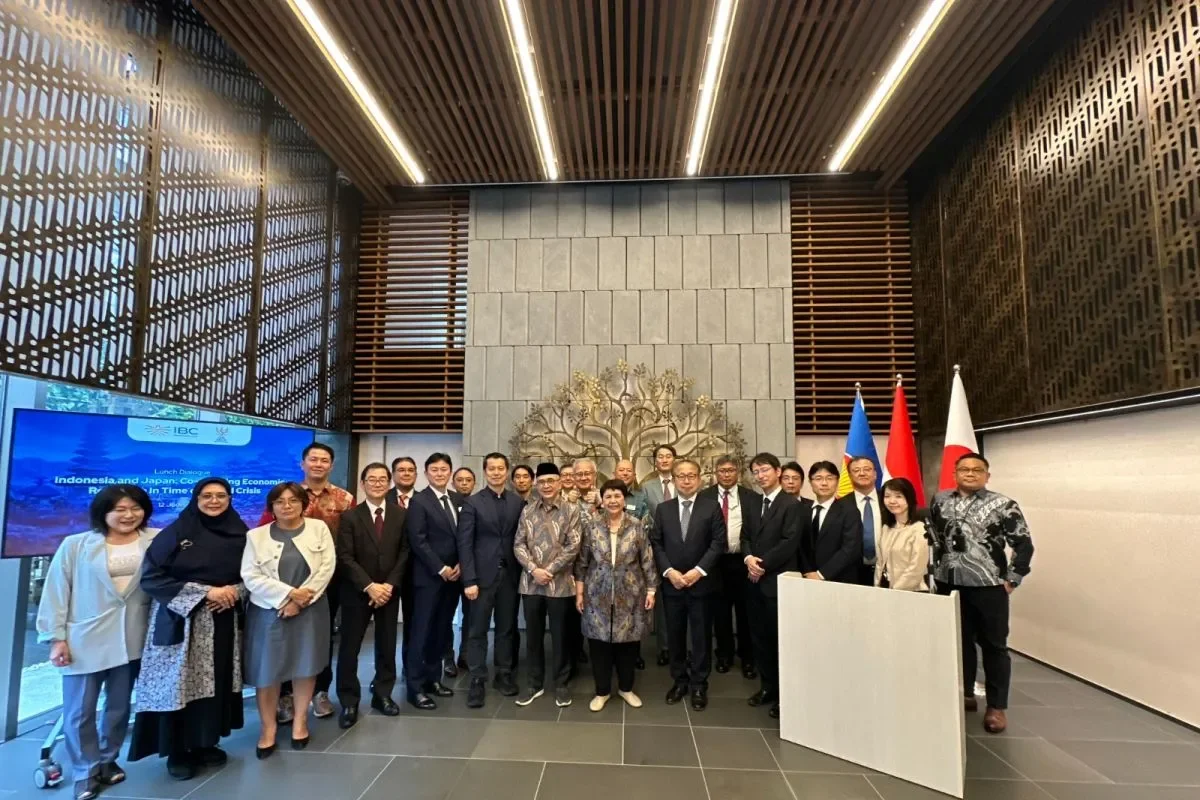
RRI.CO.ID, Jakarta - Indonesia’s envoy to Japan has urged Jakarta and Tokyo to embrace “trusted interdependence” as a strategy to withstand global turbulence, framing the partnership as a shift from transactional ties toward deeper, integrated collaboration.
At a Lunch Dialogue hosted by the Indonesian Embassy in Tokyo and the Indonesian Business Council (IBC) on June 12, Ambassador Nurmala Kartini Sjahrir stressed that the two nations must rely on mutual trust and complementary strengths to navigate mounting challenges--from geopolitical tensions and trade fragmentation to energy uncertainty and climate change.
“The answer for Indonesia and Japan is not isolation, but trusted interdependence,” she said in remarks released by the embassy on Wednesday, June 17, 2026, as quoted by Antara.
Kartini highlighted President Prabowo Subianto’s state visit to Japan in March 2026 as a milestone that reaffirmed both countries’ commitment to transform long-standing friendship into concrete, results-oriented cooperation.
She pointed to Indonesia’s natural resources, critical minerals, market scale, workforce, and strategic location as assets that dovetail with Japan’s technology, financing, standards, and industrial discipline. Together, she argued, the two nations can build secure and diversified value chains.
Energy transition emerged as a central theme. Kartini underscored the importance of collaboration under the Asia Zero Emission Community (AZEC), spanning geothermal, waste-to-energy, LNG, critical minerals, and future energy technologies.
She framed the transition not merely as an environmental imperative but as an industrial strategy to spur growth, strengthen energy resilience, and accelerate decarbonization.
The dialogue also featured IBC Supervisory Board Chairman Arsjad Rasjid, who emphasized the need for closer public-private collaboration to reinforce economic resilience. He called for joint efforts in energy security and talent mobility, identifying them as pillars of future growth.
Rasjid further advocated regional initiatives such as the ASEAN Regional Fuel Stockpiling Framework to safeguard energy availability and affordability, and the ASEAN Power Grid to enhance renewable energy use and regional connectivity.
The discussions reflected a broader consensus: Indonesia and Japan are moving beyond transactional exchanges toward a platform of co-creation, aiming to anchor economic resilience in trust, complementarity, and shared strategic vision. ***
News Recomendation
Loading latest news.....