



Indonesia Highlights Indigenous Forest Commitments at Philanthropy Asia Summit
- 22 Mei 2026 11:49 WIB
- Voice of Indonesia
Key Points
- Indonesia reaffirmed its COP 30 pledge to recognize 1.4 million hectares of customary forests.
- The Indonesian government has established key technical frameworks to accelerate forest land verification.
- A multi-stakeholder pentahelix approach is considered essential for fair forest co-management.
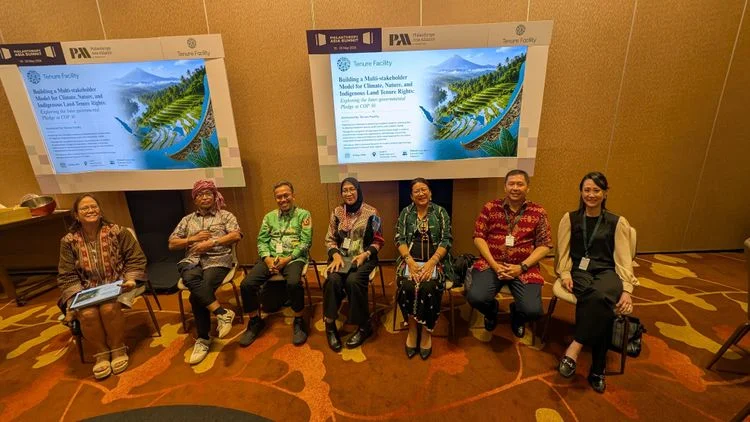
RRI.CO.ID, Jakarta - Indonesia’s commitment to indigenous land rights and sustainable forestry took center stage at the Philanthropy Asia Summit (PAS) 2026, held from May 18–20 at the Sands Expo and Convention Centre, Marina Bay Sands, Singapore.
On May 19, Director General of Social Forestry at the Indonesian Forestry Ministry, Catur Endah Prasetiani, joined global leaders, philanthropists, and civil society organizations in a thematic session focused on building multi-stakeholder models for climate, nature, and indigenous tenure rights.
The session, titled “Building a Multi-stakeholder Model for Climate, Nature, and Indigenous Land Tenure Rights: Exploring the Inter-governmental Pledge at COP 30”, brought together diverse voices.
Participants included NGOs, the Tenure Facility, the Indigenous Peoples of Asia Solidarity (IPAS Fund), the Indigenous Territory Registration Agency (BRWA), private sector representatives from PT Bintuni Utama Murni Wood Industries, and philanthropic actors such as the Earthshot Prize.
Catur Endah reaffirmed Indonesia’s pledge made at COP 30 in Belém, Brazil, to recognize and manage 1.4 million hectares of customary forests. She highlighted lessons learned from inclusive and equitable forest management policies under the Social Forestry program.
“Indonesia remains committed to accelerating the recognition of customary forests, ensuring justice and inclusivity in forest governance,” she said in a press release issued on the Forestry Ministry's official webiste on Wednesday, May 20, 2026.
To support implementation, she outlined technical instruments prepared by the government. These include the establishment of a Customary Forest Task Force under Ministerial Decree No. 121/2026, with an extended mandate until 2029, and the drafting of a Roadmap for Customary Forest Recognition to guide verification and designation processes.
Progress has already been made. As of 2026, 95 proposals covering 1,416,894 hectares across 30 regencies in 15 provinces are awaiting verification. In 2025, 23 proposals were verified, with 12 officially designated as customary forests.
Speakers stressed that success depends on multi-stakeholder collaboration through a pentahelix approach -- an approach engaging NGOs, academia, government, private sector, and media. This model aims to achieve mutual recognition of rights and roles while promoting co-management that is fair to all stakeholders, especially indigenous communities.
The forum concluded with consensus that community-based forest management rooted in local wisdom is vital for climate solutions. Participants agreed that such initiatives deserve greater investment, positioning indigenous-led conservation as a cornerstone of sustainable development.
The Philanthropy Asia Summit itself has become a global platform for dialogue, uniting stakeholders to address pressing issues such as climate change, environmental preservation, and indigenous rights. ***
News Recomendation
Loading latest news.....