



Local Vaccine Innovation Drives Indonesia's National Health Independence
- 03 Jun 2026 18:28 WIB
- Voice of Indonesia
Key Points
- Indonesian biopharmaceutical companies are expanding local vaccine production, including HPV, PCV-13, and meningitis vaccines, to support national health independence.
- The locally developed vaccines are designed to meet international safety standards while carrying Halal certification to strengthen public trust and immunization access.
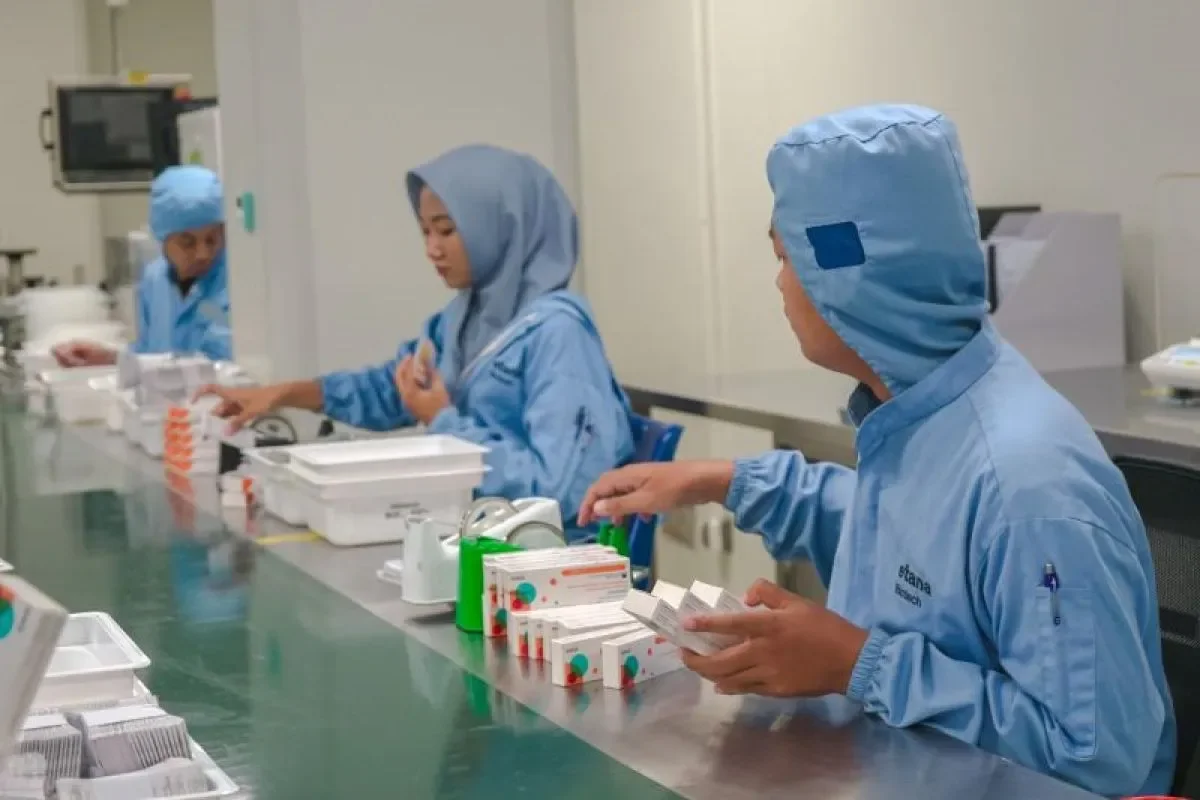
RRI.CO.ID, Jakarta - The continuous development of innovative vaccine technologies by domestic biopharmaceutical companies is playing a critical role in driving Indonesia toward national health independence and significantly improving public quality of life. Local production and research are increasingly framed as essential strategic components in securing a self-reliant healthcare infrastructure.
The Director of the Vaccine and Anti-Infectious Business Unit at PT Etana Biotechnologies Indonesia (Etana), Indra Lamora, reaffirmed the private sector's commitment to boosting national immunization coverage by delivering high-quality, biologically relevant vaccine innovations tailored to local health demands.
"Through the development of theHuman Papillomavirus (HPV) vaccine, the local production of PCV-13, and the presence of the meningitis vaccine, which we have now officially launched, we want to make a real contribution to improving immunization coverage and the quality of life of the community," Indra said in an official press release received on Wednesday, June 3, 2026, as quoted by Antara.
The domestic production pipeline specifically prioritizes critical public health crises that historically account for high mortality rates within the country. A major focal point is the ongoing development of the HPV vaccine. This initiative serves as a strategic solution to prevent cervical cancer, which remains one of the leading causes of death among women across Indonesia.
In tandem with oncology prevention, the company has successfully localized the production of the PCV-13 (Pneumococcal Conjugate Vaccine). Designed to immunize children against pneumonia, PCV-13 has already been integrated directly into the Indonesian government's official National Immunization Program. This domestic manufacturing milestone represents a concrete step toward driving down child morbidity and mortality rates linked to severe respiratory infections.
Furthermore, the biopharmaceutical firm has broadened its medical portfolio by officially launching a newly authorized meningitis vaccine. This product is slated to support wide-scale immunization programs, protect high-risk demographics, and ensure health safety for the country's massive volume of religious pilgrims embarking on annual Hajj and Umrah journeys.
Immunization remains universally recognized as one of the most cost-effective healthcare interventions to control and prevent the spread of infectious diseases. However, sector experts note that the ultimate success of these upgraded immunization programs relies heavily on robust cross-sector synergy.
Continuous collaboration linking the central government, frontline healthcare professionals, academic research institutions, and industrial stakeholders is imperative to guarantee that vaccine distribution and clinical utilization run optimally.
To bolster public trust and drive the national vaccine self-sufficiency mandate, these locally produced innovations are fully backed by official Halal certification issued by the Halal Product Assurance Organizing Agency (BPJPH).
Concurrently, manufacturers are aligning their operations with stringent global standards governing product quality, safety, and clinical efficacy. This dual approach ensures that Indonesian-made vaccines not only comply with rigorous domestic regulations but also possess the competitive edge required to stand out on the international pharmaceutical stage. ***
News Recomendation
Loading latest news.....