



Sunda Green Magpie Proposed as West Java Official Mascot to Prevent Extinction
- 24 Agt 2026 17:36 WIB
- Voice of Indonesia
Key Points
- The Sunda Green Magpie (Cissa thalassina), known as Si Paruh Gincu, is being proposed as an official mascot of West Java to raise awareness about its conservation.
- The endemic West Java bird is classified as Critically Endangered by the IUCN and is reportedly no longer found in the wild around Mount Pangrango.
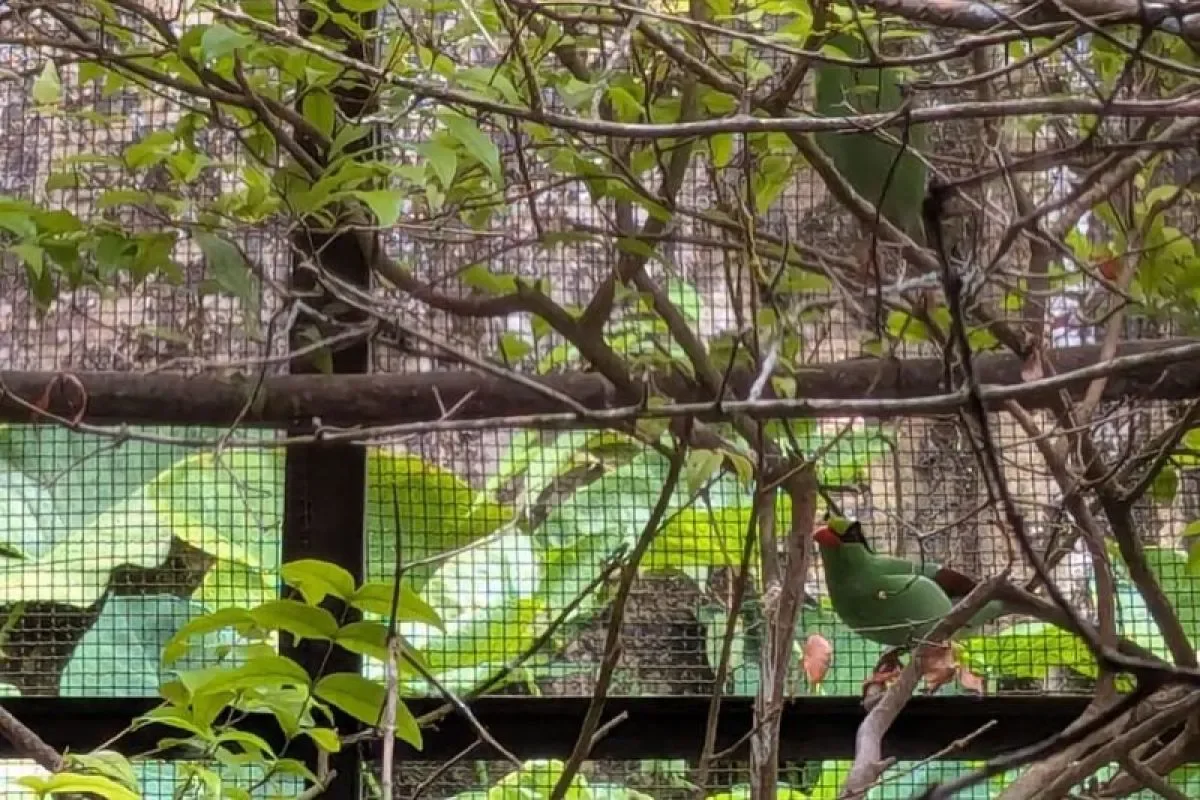
RRI.CO.ID, Bandung - Amid an increasingly real threat of extinction in its native habitat, the Sunda Green Magpie (Cissa thalassina) is being proposed as one of West Java’s official mascots. Designating the bird nicknamed Si Paruh Gincu or The Lipstick-Billed as a regional symbol would be more than an expression of local pride, representing an urgent cultural and political strategy to save this iconic animal of the Sunda region.
Measuring about 32 centimetres long, the bright-green bird has a vivid red bill and legs, along with a black mask-like marking around its eyes. The Sunda Green Magpie, also known as the Javan Green Magpie, is now on the brink of extinction. The West Java endemic is reportedly no longer found in its habitat in the Mount Pangrango area, West Java.
The International Union for Conservation of Nature (IUCN) classifies the Sunda Green Magpie as Critically Endangered. Habitat loss caused by illegal logging is one of the threats it faces. However, over the past decade, trapping for the wildlife trade has become the principal threat to the species’ survival.
Information on the Sunda Green Magpie’s habitat was documented by Bas van Balen, James Eaton, and Frank E. Rheindt in their 2011 study published in Bird Conservation International. The endemic bird is known to inhabit highland forests, particularly montane and submontane forests at elevations of 500 to 2,000 metres above sea level. In West Java, it was once recorded in several areas, including Mount Halimun, Mount Salak, Mount Gede, and Mount Pangrango.
Its body measures approximately 31–33 centimetres in length, including a short, straight tail with a blunt tip. It has a relatively short crest, broad and long wings with relatively understated markings, red eyes, comparatively long legs, and a long red bill. Its crest is also green, with short feather structures.
The bird may be found alone, in pairs, or alongside other birds. Its diet includes insects such as cockroaches, grasshoppers, small beetles, and caterpillars from the order Lepidoptera. It is also believed to prey on other small vertebrates.
Data on its breeding remain limited. However, its breeding season is estimated to fall during the wetter months, especially the rainy season, from around October to April. Egg incubation lasts approximately 23 days.
Founder of Taman Safari Indonesia (TSI), Tony Sumampau, said Sunda Green Magpie population in Mount Pangrango could now be considered nearly extinct, primarily due to hunting. “It can no longer be found on Mount Pangrango,” he said on Monday, 24 August 2026.
Tony expressed regret over the situation. He said the endemic bird is hunted, among other reasons, for use as a master bird, a bird kept specifically to train the songs of other songbirds. The problem is that the Sunda Green Magpie is highly susceptible to stress. When kept as a master bird, it can quickly become stressed, leading to death.
“This bird becomes stressed very quickly, and its life is often short after it is made a master bird,” he stressed, as quoted by Antara.
Amid these threats, TSI currently has four pairs of Sunda Green Magpies in captivity. “The plan is to release the four pairs of Sunda Green Magpies back into Mount Pangrango,” said Tony.
In his view, the bird deserves greater attention. The Sunda Green Magpie could even become a mascot for West Java because of its strong association with the region, particularly Mount Pangrango.
Meanwhile, TSI’s head bird keeper, Nunik Prabawaningtyas, said all four pairs of Sunda Green Magpies currently cared for at TSI came from donations. “They did not come from the wild, they were donated,” she said.
The four pairs of rare birds are housed in an enclosure measuring 4 by 3 by 4 metres. In the future, they are expected to be released into the Mount Pangrango area. The Sunda Green Magpie has another distinctive trait, which is its green plumage in the wild can turn blue when it is kept in captivity.
She explained that the arrival of people can immediately make the birds panic and chirp anxiously. At TSI, the birds are fed crickets, cockroaches, caterpillars, small frogs, and catfish.
Now, hopes of seeing The Lipstick-Billed once again brighten West Java’s forests rest on captive-breeding efforts and the planned release programme. If successful, the bird that was once part of the Mount Pangrango forest ecosystem will not only return to its habitat but also reclaim its place in the natural identity of the Sunda region..
The Sunda Green Magpie has every reason to stand alongside the surili monkey and leopard as a symbol of West Java’s biological richness. There is therefore no harm in the West Java Provincial Administration considering this endemic bird as one of the region’s official mascots.
Giving The Lipstick-Billed a place as a symbol is not merely a matter of pride. At a time when it has nearly disappeared from the wild, a name and greater public attention could help ensure that the bird does not become nothing more than a memory. ***
News Recomendation
Loading latest news.....