



Pupuk Kujang Plants 5,151 Mangroves to Fight Coastal Erosion in Karawang
- 07 Jul 2026 11:06 WIB
- Voice of Indonesia
Key Points
- Pupuk Kujang planted 5,151 mangroves to combat coastal erosion in Karawang.
- The project has helped push the shoreline about 50 meters seaward and reduce tidal flooding.
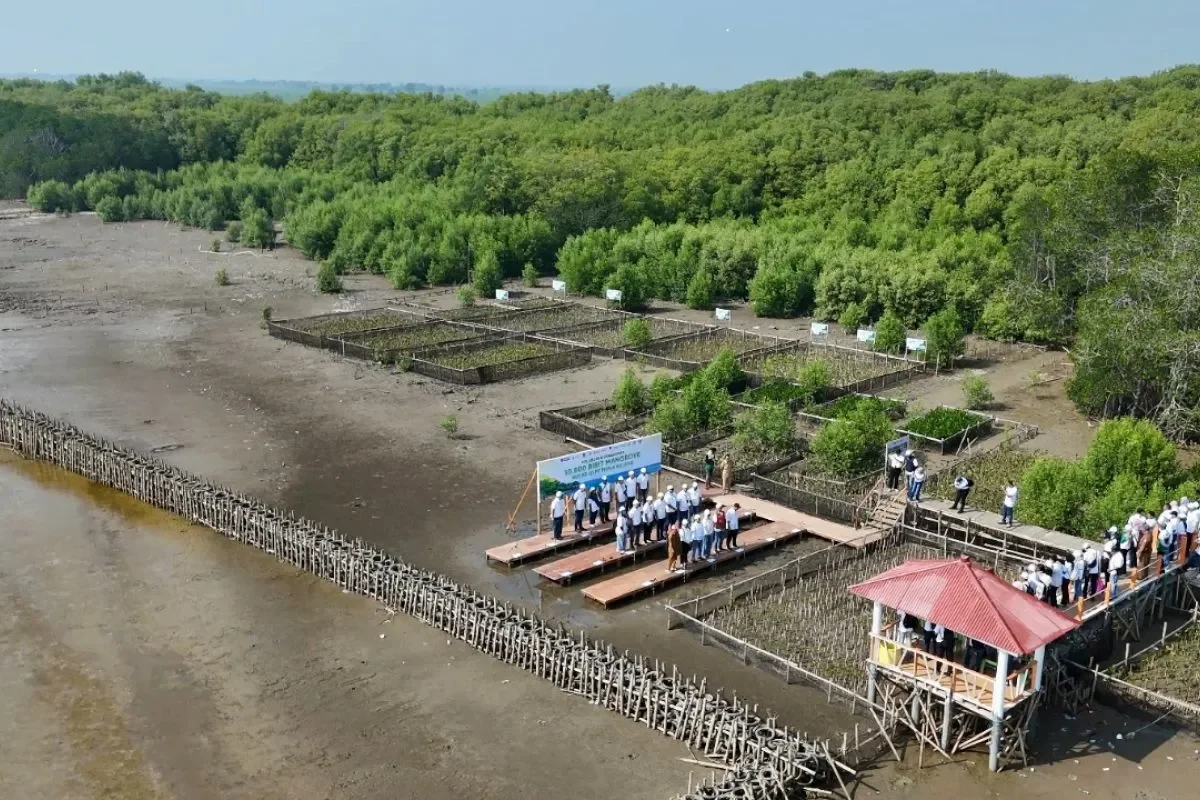
RRI.CO.ID, Karawang - Fertilizer manufacturer PT Pupuk Kujang has ramped up its environmental protection efforts along the northern coast of Karawang, West Java, by planting thousands of mangrove trees to shield vulnerable coastal communities from escalating land loss.
The initiative targets the severe abrasion threatening the region, shifting the corporate social responsibility focus on long-term climate resilience and natural defense mechanisms.
"In addition to planting mangroves, we are also providing assistance to the community in maintaining environmental sustainability in Tangkolak Hamlet, Sukakerta Village, Cilamaya Wetan Subdistrict," Pupuk Kujang Production and Operations Director Arlyza Eka Wijayanti said in Karawang on Tuesday, July 7, 2026, as quoted by Antara.
The company planted exactly 5,151 mangrove trees in Tangkolak Hamlet to mark its 51st anniversary, building upon an ongoing empowerment program initiated by its Corporate Social Responsibility and Environmental (TJSL) department in 2024. Over the past two years, the collaboration has focused on gradually rehabilitating highly critical coastal zones.
"This mangrove planting and assistance program in Tangkolak Hamlet is our desire to contribute to protecting the living space of coastal communities. This activity is also a form of long-term social investment and Pupuk Kujang's environmental responsibility," Arlyza added.
The multi-year intervention has successfully transformed a once-vulnerable shoreline into a thriving mangrove habitat. Alongside the afforestation, local residents implemented innovative geo-engineering solutions by utilizing sediment traps constructed from discarded tires and bamboo slats to catalyze natural land reclamation.
A prominent community leader in Tangkolak Hamlet, Muhammad Fazri Farhani, explained that these sediment traps harness the natural movement of the sea to reclaim lost ground.
“The tool traps marine sediment carried by waves to the land, thus locking the mud brought by the waves so that it is trapped on land and does not return to the sea," Fazri said.
Prior to the program's inception, coastal erosion had advanced so aggressively that the shoreline was on the verge of reaching local houses.
"Before the program was carried out, the shoreline almost touched houses in Tangkolak Hamlet. Then, after the program was realized, it produced reclaimed land, moving the shoreline about 50 meters toward the sea. The land has also expanded, and we continue to plant mangrove trees on this newly formed land," Fazri noted.
The newly formed buffer zone now successfully prevents tidal floods from inundating the village. Local residents hope to continue cultivating the area into a dense mangrove forest that can double as an integrated ecotourism zone, providing economic benefits to the community while serving as a natural shield.
Coastal erosion remains a critical threat across Karawang's northern coast. Data from the Karawang Public Works and Spatial Planning Agency indicates that severe abrasion spans 7.8 kilometers of the coastline across six subdistricts, including Cilamaya.
Over the past 13 years, Karawang's shoreline has receded between 50 and 300 meters inland. In the hardest-hit subdistricts, the encroaching sea has completely severed vital coastal roads and swallowed entire residential areas. ***
News Recomendation
Loading latest news.....