



Three Released Orangutans Thrive in East Kalimantan Forest
- 01 Jul 2026 20:44 WIB
- Voice of Indonesia
Key Points
- Three rehabilitated Bornean orangutans are adapting well after their release into East Kalimantan's protected forest.
- Conservation teams will monitor the orangutans for three months to ensure their long-term survival.
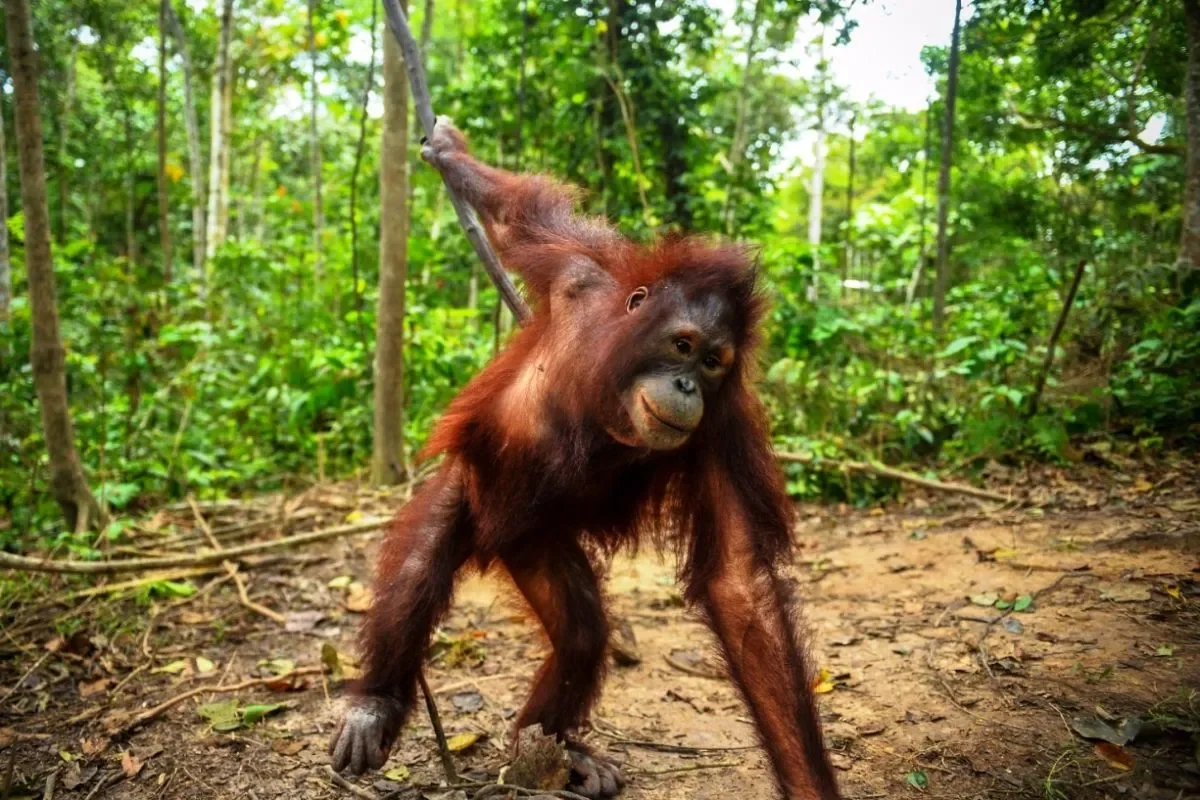
RRI.CO.ID, Samarinda - The Centre for Orangutan Protection (COP), in a joint coalition with the East Kalimantan Natural Resources Conservation Center (BKSDA), confirmed on Tuesday, June 30, 2026, that three newly released Bornean orangutans are adapting exceptionally well to their natural habitat.
Unveiled into the dense canopies of East Kalimantan exactly one week ago on Wednesday, June 24, 2026, the great apes have successfully cleared their initial acclimatization phase, displaying high activity rates and constructing stable arboreal nests within the protected forest ecosystem.
"From the team's observations, the three were observed to be active and still exploring the area near the release point. They were observed building nests not far from the initial release point," COP Director Daniek Hendarto announced in Samarinda on Tuesday afternoon, June 30, 2026, as quoted by Antara.
The three Bornean orangutans (Pongo pygmaeus), individually named Bagus, Eboni, and Ruby, were systematically extracted from their respective pre-release sanctuary islands on June 23 before being safely introduced into the remote Mount Batu Mesangat Protected Forest in the Busang Subdistrict of Kutai Timur Regency, East Kalimantan.
The successful operation is the direct result of a highly synchronized cross-agency task force uniting the East Kalimantan BKSDA, the Kelinjau Production Forest Management Unit (KPHP) under the East Kalimantan Forestry Agency, and COP's dedicated wildlife medical corps.
The operational logistics required to pull off the relocation varied significantly for each animal due to geographic disparities between the regional rehabilitation centers.
"Together with the East Kalimantan BKSDA through the Berau Region 1 Conservation Section team, we transported the orangutan Bagus by land, taking 8 hours by land and 3 hours by river," Daniek noted, charting the grueling 11-hour transport corridor required to move Bagus out of the Bawan pre-release island in Berau Regency.
In contrast, the transfer for Eboni and Ruby was shorter, as both primates had been undergoing advanced wilderness survival training on the Hagar and Lambeng pre-release islands, situated close to the target coordinates in Kutai Timur. Their final transport was heavily secured by the Tenggarong Region 2 Conservation Section, the Kelinjau KPHP, and a specialized team of on-call wildlife veterinarians.
On June 24, the relocation reached its peak when all three great apes were successfully introduced back into the wild across three strategically isolated drop zones to mitigate territorial friction. Bagus was released first, followed by Eboni, and finally Ruby.
"After the door to the release transport cage was opened, the three of them immediately climbed a tree with an average height of over 5 meters and immediately explored their new home, indicating that they were ready to live in the wild," Daniek reported.
Despite their encouraging start, the monitoring task force will not leave the great apes to fend completely for themselves just yet. To accurately guarantee long-term survival rates, each orangutan is currently assigned two dedicated COP field trackers who monitor the animals' behavioral adjustments around the clock—starting from the pre-dawn hours until the animals finish building their sleeping nests at nightfall.
"This process continues for approximately three months after the release date, to ensure that Bagus, Eboni, and Ruby can survive in their natural habitat," he concluded. ***
News Recomendation
Loading latest news.....