



BRIN Converts Palm Oil Waste Into Renewable Bio-Oil
- 26 Jun 2026 13:14 WIB
- Voice of Indonesia
Key Points
- BRIN uses pyrolysis technology to convert palm oil waste into bio-oil, liquid smoke, and bio-char for renewable energy and industrial applications.
- The initiative supports Indonesia's circular economy by reducing agricultural waste while expanding sustainable domestic energy sources.
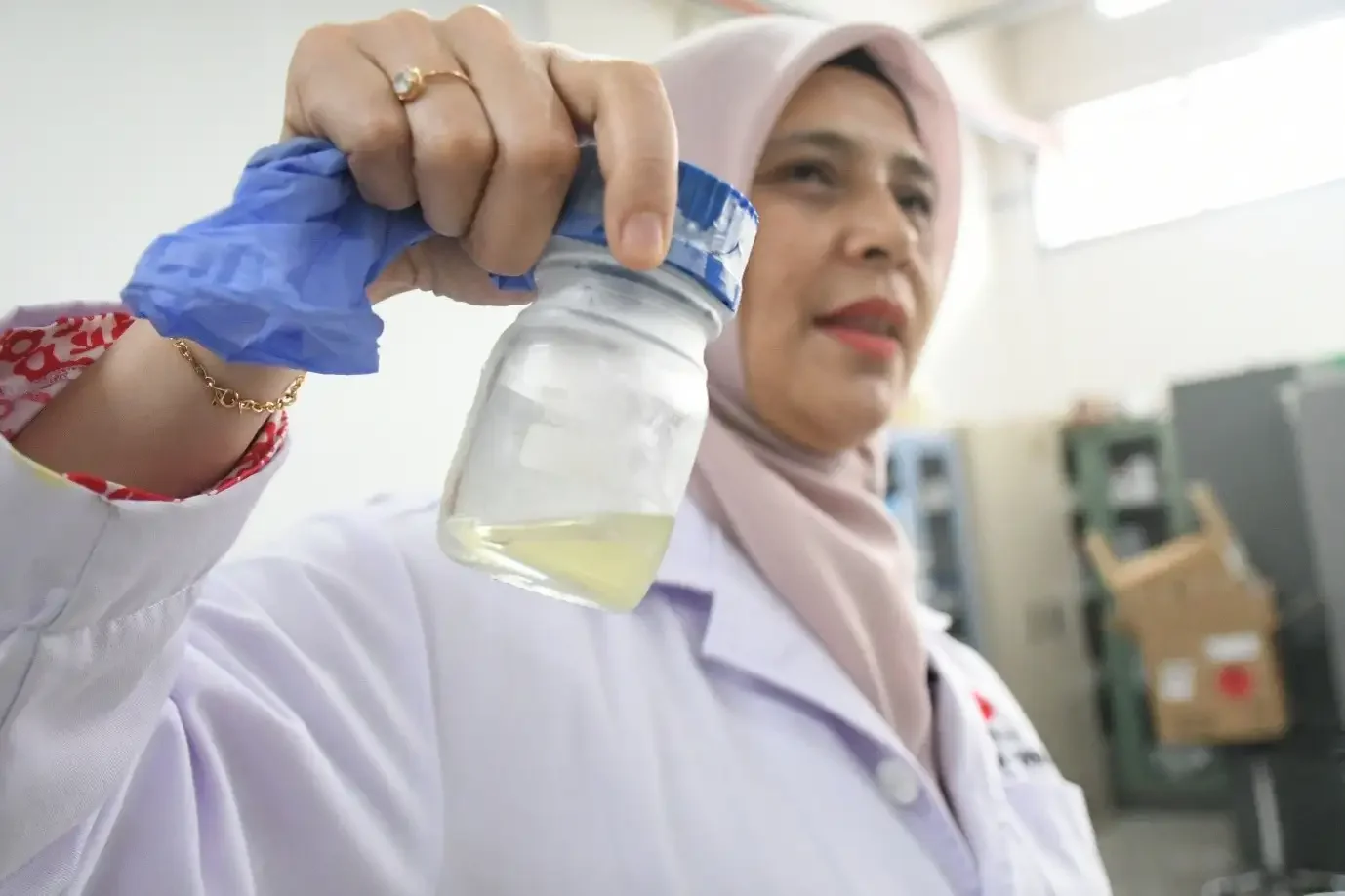
RRI.CO.ID, South Tangerang - The National Research and Innovation Agency (BRIN) is deploying advanced pyrolysis technology to tackle Indonesia's mounting agricultural waste, successfully converting empty palm fruit bunches (TKKS) into high-value biomass oil and chemical additives.
As one of the world's largest palm oil producers, Indonesia faces severe environmental challenges from the staggering volume of TKKS left behind during production. If left untreated in plantations, the dense fibrous waste accumulates rapidly and takes years to decompose naturally. BRIN’s clean-energy initiative seeks to transform this environmental liability into a strategic resource for the nation's green economic transition.
Head of the biomass oil pyrolysis research team at BRIN’s Molecular Chemistry Research Center, Dieni Mansur, said on Thursday, June 25, 2026, that processing agricultural waste into bio-based chemicals and energy is a crucial step toward weaning the domestic industrial sector off fossil fuels.
"Pyrolysis oil is used to support fuel diversification in Indonesia. On the other hand, empty palm oil fruit bunches (EFBs) are a huge waste product that requires optimal management," Dieni said as quoted on BRIN's official website.
Dieni explained that while pyrolysis can be conducted via slow, fast, or ultra-fast heating mechanisms, BRIN’s current reactor infrastructure is optimized for slow pyrolysis, which processes the raw palm waste over a two-to-four-hour cycle.
The thermal decomposition process breaks down the complex organic polymers of the palm waste into three valuable streams: liquid smoke, bio-oil (minyak biomassa), and bio-char. The co-product liquid smoke has already demonstrated significant utility, showing potential as a natural, edible coating to extend the shelf life of fresh fruits, as well as a specialized film material used in medical applications to accelerate the healing of oral wounds.
Furthermore, both the bio-oil and liquid smoke harvested from the palm waste are rich in heavy organic compounds, including phenols, acetic acid, ketones, and methanol, which serve as essential raw inputs for the domestic chemical industry.
"Currently, biomass oil from empty oil palm fruit bunches can be used as fuel for industrial boilers. Although it cannot yet be used directly as a sole fuel for motor vehicles, biomass oil contains chemical compounds that have the potential to be used as additives for liquid fuels such as gasoline. This potential opens up opportunities to utilize palm oil waste as a more sustainable alternative energy source and bio-based chemicals," Dieni added.
According to the research team, the project is a vital breakthrough because it offers a dual solution to two of Indonesia's most pressing structural hurdles: managing massive agricultural industrial waste and securing a decentralized supply of renewable energy. By capturing economic value from industrial leftovers, the method serves as a concrete blueprint for a functional circular economy.
"Going forward, we hope that the pyrolysis of empty oil palm bunches can help address the problem of palm oil waste and become an alternative energy diversification to meet domestic needs," Dieni concluded.
The successful optimization of biomass pyrolysis by BRIN demonstrates that agricultural waste can be systematically re-engineered into a strategic domestic asset. Given Indonesia's vast, unmatched biomass reserves, the research opens up significant commercial avenues to develop localized renewable energy while accelerating the country's broader transition toward a low-carbon economy. ***
News Recomendation
Loading latest news.....