



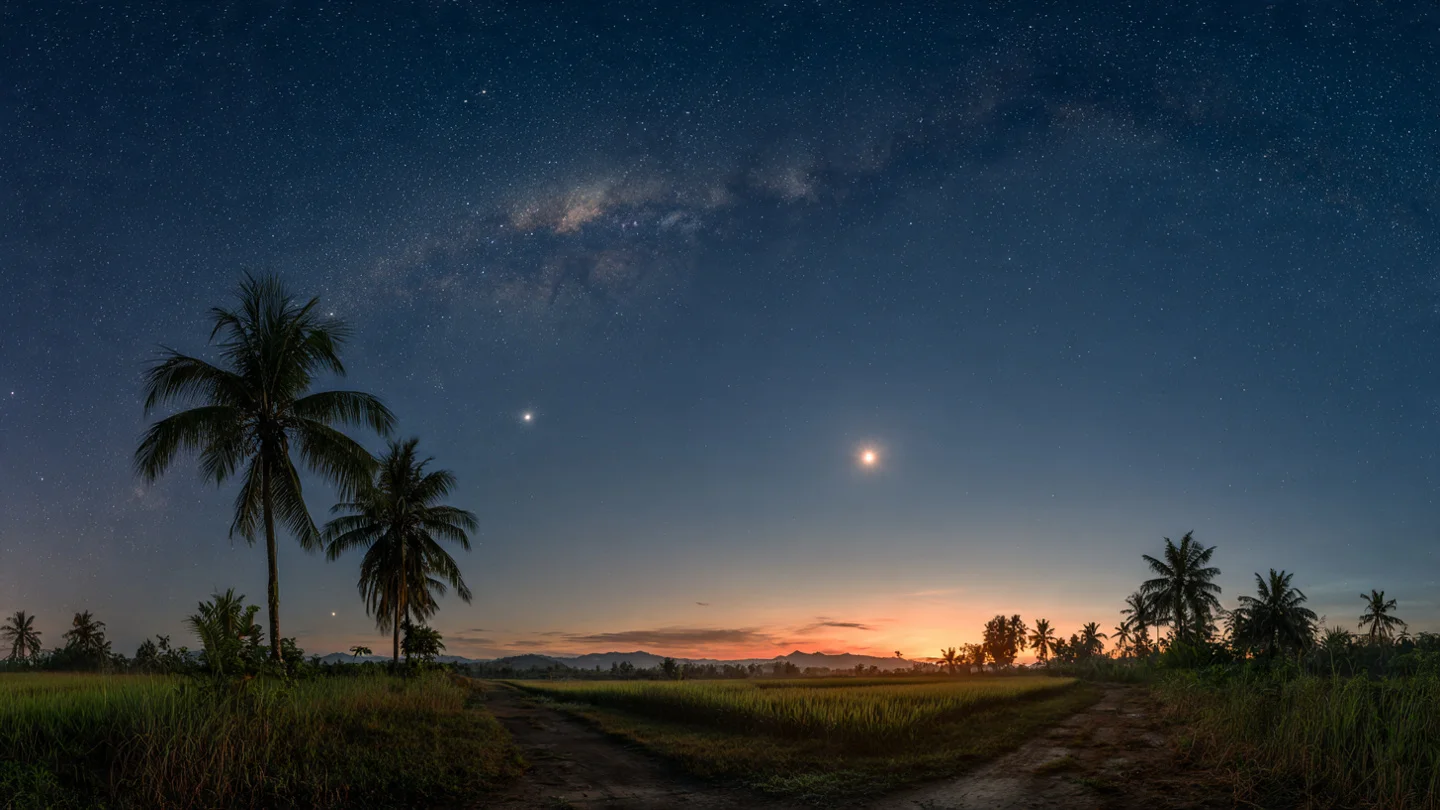
RRI.CO.ID. Jakarta - It’s not too late to enjoy June’s night sky. We still have 15 days left, and plenty of beautiful sights are visible with just your eyes or a small telescope.
June is special for stargazers because the sky offers balance and variety. Planets, the Milky Way, and key constellations pass high overhead all night, giving long hours for viewing.
The highlight this month is the close meeting of Jupiter and Venus on June 8–9. You’ll see them low in the western sky after sunset, just 1.5 degrees apart. That’s about the width of your pinky at arm’s length. They’re close enough to fit together in binoculars.
| Baca juga: The Amazing Homing Pigeon |
Mercury will also sit below them, though it’s harder to spot. Planets rise and set on steep paths here, so this trio sets quickly and watch right after sunset for the best view.
On June 10, Saturn and a thin crescent moon will rise together in the east after midnight. They’ll be about 5 degrees apart, or three finger widths.
They’ll climb high before dawn, giving you hours to watch. June is a great time to see Saturn’s rings with a small telescope.
The next morning, June 11, Mars joined Saturn and the moon to form a tight diagonal line above the eastern horizon before sunrise and all three will be high and clear.
The new moon on June 15 brings the darkest nights of the month. With no moonlight, the Milky Way’s centre shines bright. In June, the Milky Way’s core passes directly overhead around midnight.
This makes it perfect for photos or just watching millions of stars with your naked eye. Find a dark spot away from city lights.
While June 21 is the summer solstice up north, day and night stay close to 12 hours long here. You won’t see a “midnight sun,” but you do get steady, long nights for stargazing. Late June brings meteors and a famous full moon. The Booted meteor shower peaks on June 27.
It’s usually quiet, but can surprise you with 100 meteors in an hour. Look north toward the Boötes constellation after dark. Then, on June 29, the full “strawberry moon” rises. It won’t look pink, but it rises fast and turns golden-orange at the horizon.
All month, the Summer Triangle of Vega, Altair, and Deneb shines high overhead. It points straight to the Milky Way’s core. Finally, from June 27–30, watch the eastern sky before sunrise. Orange Mars will sit near the blue Pleiades star cluster, about 4–5 degrees apart. Both rise high before dawn, closing out June with a calm, colourful view.
Source : Nat Geo
News Recomendation
Loading latest news.....